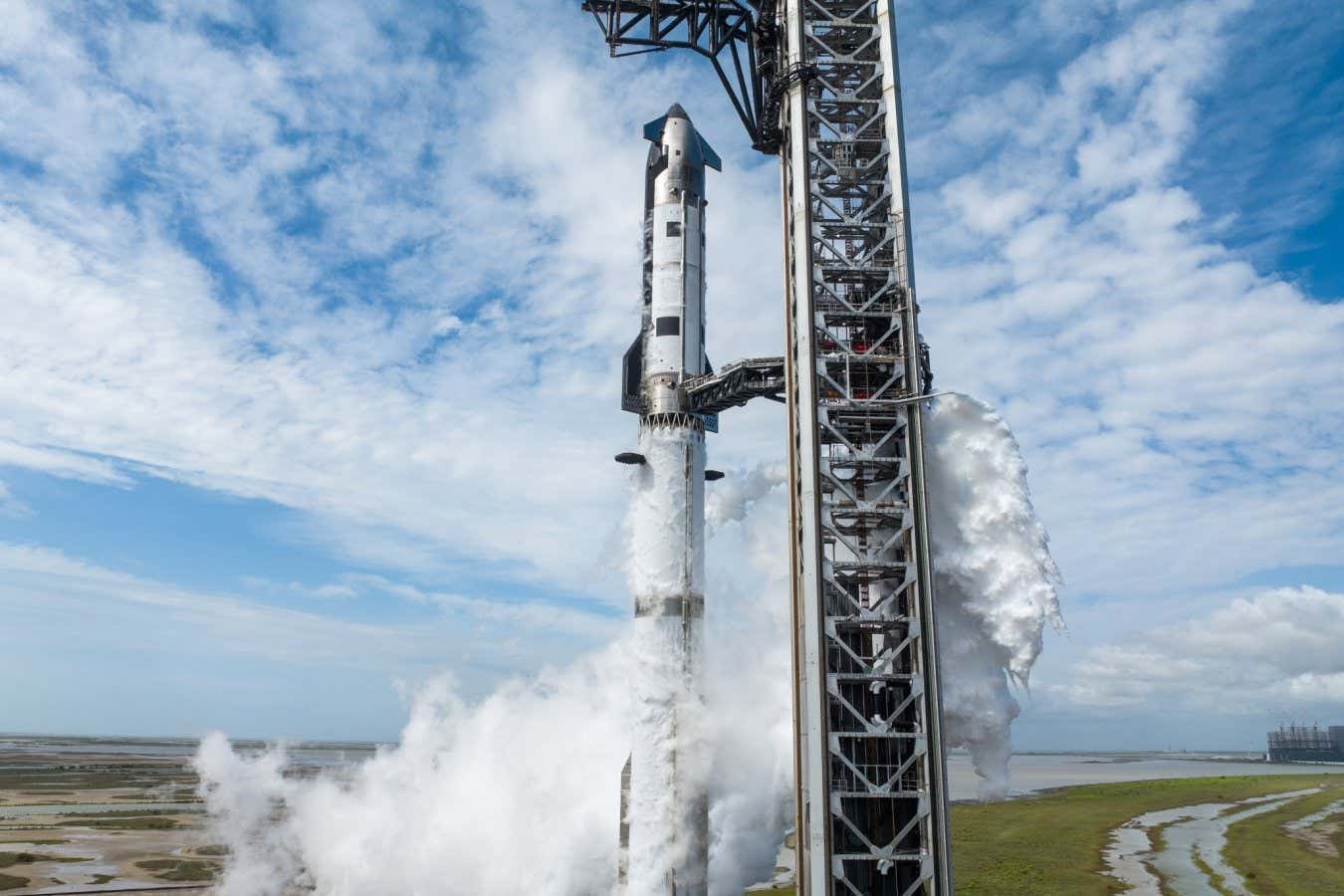
Next week’s launch matters. A lot.
If things go right, SpaceX will send the tallest and most powerful rocket ever built into the sky. It’s not just another test. It’s a pivotal moment for NASA’s dream of putting humans back on the moon by 2028. The agency is watching closely. Starship is the vehicle they’ve bet on.
There are two pieces to this puzzle. The top stage is the Starship. The bottom stage is Super Heavy. Since October, engineers have been tweaking both. Extensively.
The twelfth test flight could happen as early as May 19. It’s happening from a brand new pad at Starbase in Texas. The stakes feel high. New hardware. Fresh concrete. Pressure.
Flipping theHardware Stack
This is version 3. Both stages are upgraded. Both run on Raptor engines that are also version 3. These engines were only briefly tested before. Now they take center stage.
Look at the Super Heavy lower stage. It used to have four grid fins to steer it home through the atmosphere. Now it has three. But they are 50 percent bigger. It’s a different layout.
The upper Starship got a bigger propellant tank. It has gear for refueling in orbit. The heat-resistant tiles are improved too. All these changes add up.
The whole stack stands 124 meters tall. That’s one meter taller than version 2. It dwarfs NASA’s current Space Launch System, which is only 98 meters. It even beats the Saturn V. The moon rocket from the 60s and 70s was 111 meters. This thing is taller.
Raw Power
75,000 kilonewtons of thrust.
That number is almost double what the SLS produces. It’s the most powerful rocket ever launched. How powerful are we talking about?
Alistair John at the University of Sheffield crunched the numbers. The peak output of all those engines combined exceeds the total electricity generation of Germany at any given moment. “It’s massive,” John said.
Elon Musk wants to use it for satellites. He definitely wants to use it for Mars. But NASA sees something else.
Starship was picked as one of two commercial landers for the Artemis program. Blue Origin is the other contender. Jeff Bezos backs them. Competition? Sure. But the goal is the same.
Artemis I sent an uncrewed capsule to the moon in 2022. Artemis II sent four astronauts around the moon earlier this year. Farther than anyone has ever gone.
Artemis III is the next big step. Crew will launch on Orion atop SLS. They’ll rendezvous in low Earth orbit with a lander from either SpaceX or Blue Origin. Or both. The plan is to refuel the lander there. Then head to the surface. Artemis IV aims for 2028.
Fail Fast
This isn’t traditional aerospace engineering. It’s Silicon Valley speed. Break things. Learn fast.
11 test flights so far. Six successes. Five failures.
SpaceX didn’t comment when asked. Neither did NASA. They don’t need to. The data is public.
Peter Shaw from Kingston University London thinks they’re on track. “Rocket science is difficult,” he says. “Can they do it? Yes.” He’s quiet confident about the timeline. Even if there are more failures. Five more? Maybe. They’ll iterate. They’ll fix it.
Version 3 is the key. Alistair John calls it the first test of the production model. The previous versions were prototypes. This one is the basis for the Human Lander System.
The lander will need changes. Different engines for the moon’s weak gravity. No heat shield since it won’t re-enter Earth’s atmosphere. But the core tech? That’s what’s being tested now.
It’s about reliability. Making the monster work. Once and again.