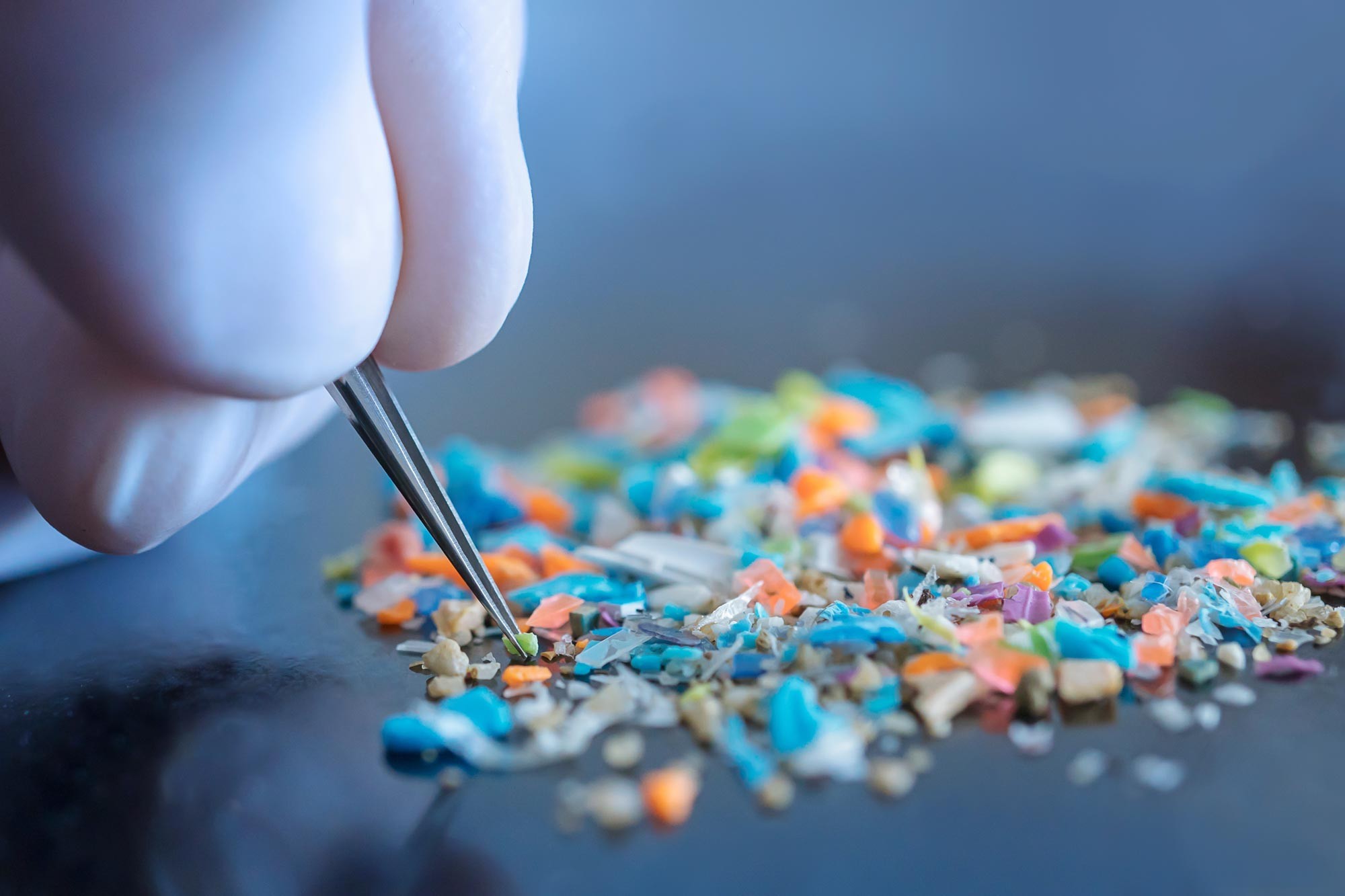
It’s in the wind. The air in Leipzig isn’t just dirty, it’s plastic.
Scientists say 4 percent of urban particulate matter there is synthetic polymer. Not dust. Not soot. Plastic. And most of it—about two-thirds—comes from tires wearing down on the pavement.
We know about car exhaust. We worry about industrial smog. But we are inhaling a constant mist of microscopic shards, and nobody put it on the list until now.
The math is bleak.
The daily dose
If you live on a busy street in Leipzig, you breathe in roughly 2.1 micrograms of plastic every single day.
Sounds small. It is small.
But here is the kicker. That tiny amount links to a 9 percent higher risk of dying from cardiovascular disease. It bumps up the risk of lung cancer death by 13 percent.
More than just breathing bad air. The plastic itself seems toxic.
“This is higher than the risk of general PM2.5. The polymer-specific toxicity may be driving these health risks,” says Ankush Kaushik of the TROPOS institute.
Who knows why. Not exactly.
What we are actually breathing
Plastic isn’t one thing. It is a grab bag of chemicals. PE, PP, PVC, PET, polystyrene, polycarbonate. They all behave differently when burned, worn down, or suspended in air.
For a long time, science couldn’t find it. Not really.
Nanoplastics (smaller than 1 micrometer) and microplastics (up to 1 millimeter) slip past standard filters and sensors. Optical tools can’t see them reliably at that scale. The particles hide in the noise.
So researchers from Leipzig and Oldenburg built their own methods. They used pyrolysis gas chromatography (Py-GC-MS). Heat the sample. Break the polymers. Identify the fragments. It works, but it’s tedious.
They looked at two weeks of air on Torgauer Strasse in late 2022. A traffic hotspot.
They found tire wear particles dominating the sample. Then PVC. Then polyethylene. The sources line up with carbon markers, meaning these plastics travel together through the urban atmosphere.
Why tire dust matters more than engines
Electric cars won’t save us from this.
That is the uncomfortable truth. No engine. No combustion. Just tires scrubbing against asphalt at speed.
The study makes this clear. If you switch the fleet to electric but keep the roads and tires the same, the plastic load stays high.
Two-thirds of the airborne plastic in Leipzig is from abrasion. Not the engine. The tire.
Current air quality rules ignore this. The WHO and the EU have no limits for plastic in air. There is no standard. No threshold. Just silence from the regulators while the data piles up.
Is that intentional or just slow?
Probably just slow. Bureaucracy moves in glacial time. Plastic pollution moves everywhere, instantly.
A blurry future
The study is German. It is detailed. But it is only two weeks on one street.
We don’t know what happens in winter. We don’t know what the levels are in a rural village. Other cities—Kyoto, Shanghai, Graz—have found similar particles, but the data varies wildly. Standardization is missing.
Until we fix that, we are guessing at the risk.
Kaushik and his team plan to measure a full year next. Maybe we will find seasonal spikes. Maybe not.
What is certain is that the particles go deep. Into the lungs. They carry heavy metals. They trigger inflammation. The body doesn’t know how to handle foreign polymer fragments in the bloodstream or tissue.
We have known fine dust kills. We accepted that decades ago. Now we are finding the dust is often made of stuff that never decomposes.
The limits should change. The regulations are behind. The air is already loaded.
What are you doing about the tires?