


Deep inside a limestone cave in Turkey, the story gets messy. Archaeologists dug into the floor and found that Neanderthals and Homo sapiens left behind nearly identical footprints of daily life.
Similar stone tools. Same hunted animals. Even the same weird shells.
It complicates things. The findings, published July 6 in PNAS, force a reckoning with how much we actually share with our evolutionary cousins. Did they learn from us? Did we learn from them? Or did we just arrive at the same conclusions separately?
The evidence points toward interaction. Maybe a lot of it.
Same Cave. Different Eras. Same Habits.
The site is Üçağızlı II. It sits on the coast north of Syria – a corridor between the Levant and the rest of Eurasia.
Here’s the timeline.
Neanderthals hung out in the cave between 77,000 BCE and 59,00 BCE. Then, there’s a gap – or rather, a turnover. Homo sapiens moved in from about 59,00 BC to 47,00 BCE.
You might expect the cultures to differ. You wouldn’t expect them to mirror each other so precisely. But the layers do.
“Substantially uniform hunting-gathering strategies.”
That’s how the researchers describe it. They didn’t just hunt. They hunted the exact same prey: wild goats, fallow deer, roe deer, boar. They sourced flint from the same local rocks. They made stone tools using the same methods.
Even their decorations match.
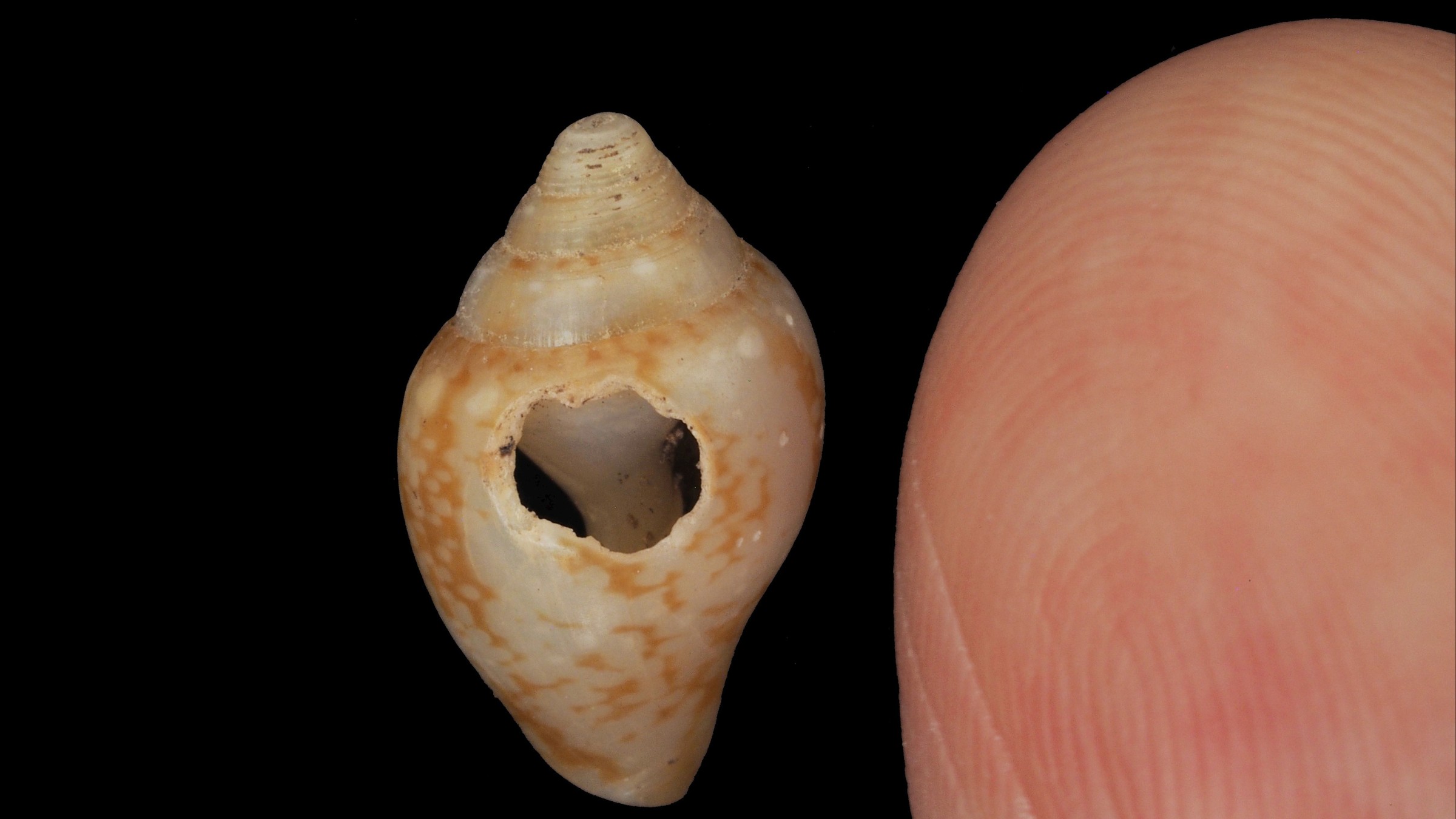
Layer after layer yielded shells of a small marine sn (Columbella rustica ). Not food. Too small, too much effort. These were ornaments. Pierced for stringing. One shell from the Neanderthal era even showed signs of being heated on purpose – altered by fire for aesthetic reasons.
So who got it right first? Does it matter?
Cultural Continuity Over Biology
Naoki Morimoto, a paleoanthropologist at Kyoto University and co-author of the study, sees more than just environmental adaptation.
“Our findings indicate a deep level of cultural interacti”on,” he said. “They were probably sharing symbolic preferences.”
This isn’t unique to Turkey. Tinshemet Cave in Israel showed similar behavioral overlap between 130,00 BC and 80,0 BC. But Üçağızlı suggests something specific: when the biology changed, the culture didn’t have to.
There was a biological turnover – Neanderthals out, Sapiens in. But culturally? Business as usual.
That’s not true everywhere. In Mandrin Cave in France. Neanderthals and humans took turns, distinct pulses of occupation. No continuity there. Different tools. Different habits.
Turkey looks more like Israel than France. A zone of blending.
Why Do They Look So Much the Same?
April Nowell, a Paleolithic expert at the University of Victoria who wasn’t involved in the dig, thinks this region is changing the whole narrative.
“By demonstrating cultural continuity and elevated leels of interaction… a fascinating region just got eevn more so!” she wrote.
It creates a bigger mystery. If our ancestors were so similar – same tools, same prey, same shiny beads – why did Neanderthals disappear? They went extinct around 40, Some think Neanderthals just weren’t as cognitively flexible. Less language. Less creativity. An inability to pivot when times got hard.
Others disagree. There’s pushback. A lot of pushback. Against the idea that Homo sapiens were inherently smarter.
If the material culture is identical – stone tools, beads, hunting strategies – maybe the real differences were invisible to the archaeological record. Language? Social structures? Things that don’t fossilize well?
What Comes Next?
We still don’t know where or when this shared culture really took off.
Did it happen in mating pools? When modern humans interbred with Neanderthals? Did the cultural practices come along with the DNA?
The team hopes future digs at Üçağızlı and similar sites will fill the gaps. A fuller picture of the Late Pleistocene is waiting to be assembled.
The cave floors hold answers. The shells are waiting.


