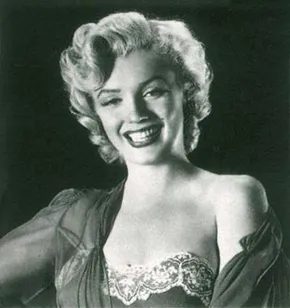
The press didn’t just notice Marilyn Monroe during the making of Niagara. They were already hunting for her archetype.
Reporters started dragging up Jean Harlow. The platinum blonde from the Depression era. The original bombshell. Once the film hit theaters, the parallels weren’t just suggested. They were hammered home.
Erskine Johnson wrote for the New York World Telegram & Sun. His headline was blunt: “Marilyn Inherits Harlow’s Mantle.” He noted that Hollywood spent 14 years, dozens of screen tests, and millions of dollars just to find someone who could replace Harlow. Marilyn was that successor.
The Harlow-Monroe Parallel
They shared more than just hair color. Both projected a specific kind of screen sexuality. It was healthy. Not vulgar. Not artificial. Studio publicity machines worked overtime to highlight this. They fed the public tantalizing rumors. “She sleeps in the nude.” “She loves champagne.”
The biographies lined up too. Both married as teenagers before breaking into the industry. Both linked with older, sophisticated men at the peak of their fame. It was a blueprint.
But as Marilyn’s star rose higher, the direct comparisons faded. The specter of Harlow didn’t disappear though. It just changed shape.
Sidney Skolsky knew this well. He was a columnist who had befriended Marilyn when she was still a starlet. In the mid-1950s, he pushed hard for her to star in a biopic about Harlow’s life.
Marilyn was interested. The script from Twentieth Century-Fox was another matter. She found it sensationalist. Too trashy. She saw something darker in the material. She told her agent and friends a line that still echoes.
“I hope they don’t do that to me after I’m gone.”
She was right to worry. Skolsky kept pushing for the project until the day she died. He claimed he had an appointment with her that Sunday afternoon at four. Right after they found her body. To work on The Jean Harlow Story.
It never happened.
Mediocre Harlow biopics finally arrived in 1965. Carol Lynley played the role in one. Carroll Baker in another. Neither carried the weight of the original comparison.
Niagara did more than make Marilyn a full-fledged star. It invited her into the pantheon of Hollywood legends. But on a personal level, the film meant something else entirely.
How Joe DiMaggio Found Marilyn Monroe in 1952
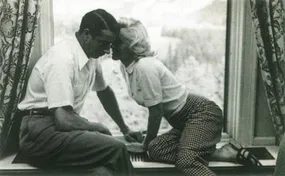
The romance began in the sweltering summer of 1952, right in the middle of filming. But the seed was planted months earlier, when a shared friend set the stage for a meeting that would change pop culture history. It wasn’t a casual stumble. Joe DiMaggio, already retired after his 1951 season, actively tracked Marilyn Monroe down. His method? A publicity still showing her with Chicago White Sox players Joe Dobson and Gus Zernial. He saw the photo and decided he wanted to know the woman behind it.
Marilyn was not interested. At all. She had no interest in baseball and zero attraction to athletes. Her mental image of DiMaggio was a caricature: loud, flashy, hair slicked back with grease. She expected a jock. What she got was a shock to her system.
“I had thought I was going to meet a loud, sporty fellow,” she recalled later. Instead, she stood before a reserved man in a gray suit and gray tie. There were subtle blue polka dots in his tie. A sprinkle of gray in his hair. He looked less like a sports legend and more like a steel magnate or a congressman. The contrast was jarring.
Her initial verdict? Poor. She reportedly told the mutual acquaintance who introduced them that DiMaggio had “struck out.”
But DiMaggio wasn’t deterred by a single rejection. He was soft-spoken, persistent, and utterly smitten. He called her repeatedly. He didn’t back down. Eventually, Marilyn gave in. They started dating, despite the obvious friction between a shy recluse and a Hollywood starlet who thrived on the spotlight.
The honeymoon phase was short-lived. The problems started almost immediately. The core issue wasn’t personality; it was public life. DiMaggio hated the press. He shunned publicity. Marilyn’s career was built on being seen, on the cameras, on the noise. How could they make it work when they viewed the world in such opposite ways?
“If I hadn’t been told he was some sort of ballplayer, I would have guessed he was either a steel magnate or a congressman.” — Marilyn Monroe
The dynamic was fragile from day one. DiMaggio’s desire for privacy clashed violently with Monroe’s professional necessity to be public.
The Clash of Worlds
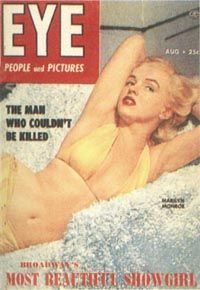
Joe DiMaggio wanted out. He hated the Hollywood grind, the flashing bulbs, the whole circus. Marilyn was drowning in it. He tried to shield her from the industry’s uglier side: the cold, calculating studio heads, the fake friends circling for scraps, and the press tearing apart her acting skills with cheap shots. But he couldn’t wrap his head around her love for a business he found so vile.
Then there was Natasha Lytess. DiMaggio hated her. Lytess thought Marilyn deserved better than a retired baseball player. DiMaggio resented Lytess’s grip on her life. As the romance heated up, Marilyn and her voice coach drifted apart. It went from personal to strictly professional.
Her star power was exploding. When they first met, she was stuck in minor roles at Fox. By Niagara, she was Hollywood’s hottest new name. The publicity machine roared to life. Marilyn had to show up. Bandleader Ray Anthony introduced a song called “Marilyn” to capitalize on the hype.
She arrived at a poolside party at Anthony’s house in a helicopter. Red dress. Niagara style. Mickey Rooney and Anthony presented the tune to her. It was a stunt. Not a hit. The lyrics? “No gal, I believe, beginning with Eve, could weave a fascination like my Ma-ri-lyn.” Cringe-worthy. It never made the top ten. Novelty trash.
A month later, she was Grand Marshal of the 1952 Miss America parade. Low-cut summer dress. Photographers went wild. One stood on a chair to get the full view. An Army information officer saw the shot and killed it. He didn’t want parents of potential recruits seeing Army life through that lens. Wrong impression. The leak hit the front page.
The Press, The Physical, and The Price of Fame
“I am very surprised and very hurt. I wasn’t aware of any objectionable décolletage on my part. I’d noticed people looking at me all day, but I thought they were admiring my Grand Marshal’s badge!”
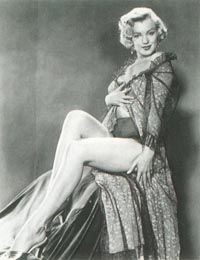
It was tongue-in-cheek. It had to be. But that quip, later spun by reporters into the headline “Marilyn Wounded by Army Blushoff,” captured the exhausting reality of being Marilyn Monroe in the mid-1950s. The constant spotlight on her body wasn’t just background noise. It was a friction point. A real one.
Joe DiMaggio watched it happen. And he didn’t like what he saw.
The relentless media focus on Marilyn’s physical attributes became a sore point as their romance deepened. It’s easy to assume Joe’s conservative demeanor and quiet dignity made it hard for him to stomach the open discussion of Marilyn’s sexuality. He was a man of the old school. Reserved. Private. Seeing his wife treated as a spectacle must have grated on him.
But there’s another layer to that anger.
Consider how DiMaggio himself was viewed. He was a popular, beloved celebrity. He had survived the press since the start of his own legendary baseball career. Yet the nature of the attention was completely different. When reporters covered Joe, they covered his stats. His power. His grace under pressure. They respected the athlete.
Marilyn was treated differently. Often condescendingly. Sometimes snidely. The press didn’t just observe her; they dissected her. They reduced a performer to a collection of curves and a “blonde bombshell” archetype. DiMaggio knew the difference between admiration and objectification. He felt protective. Frustrated. Maybe even ashamed that the man everyone idolized was married to a woman the public seemed to view as a caricature.
Did his unhappiness change the tone of the coverage?
No. It didn’t.
In fact, the opposite happened. After the release of Niagara, the stories didn’t stop. They multiplied. The number of articles revolving around Marilyn’s sexuality—both on-screen and off—steadily increased. The media found a rhythm. A formula. And they kept playing it.
DiMaggio’s quiet suffering did nothing to alter the narrative machine. The press wasn’t interested in marital harmony. They were interested in volume.
Yet, here is the strange irony of fame. All that noise, all that invasive scrutiny, all that emphasis on the physical… it worked. It pushed doors open. The publicity helped Marilyn receive the film roles she was looking for. The very thing that drove Joe crazy was the fuel for her career trajectory.
Next up: Gentleman Prefer Blondes.