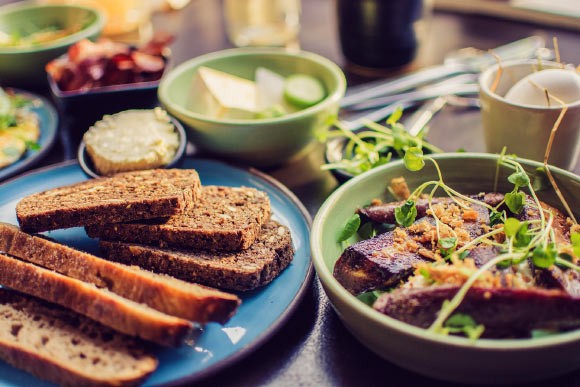
Most people believe breakfast is the most important meal. Evidence says otherwise. Or at least, it did. Until now.
A new six-month clinical trial changes the script. It looks specifically at older teens—those aged 14 to 21—who treat breakfast like an optional snack. The result? Eating a high-protein morning meal significantly improves diet quality.
The study is one of the largest of its kind. It was led by Emma Rose Brown, a doctoral candidate at the University of Texas at Austin. The findings were presented at the American Society for Nutrition’s flagship meeting, NUTRITION 2026.
The Study Setup
Researchers recruited 128 habitual breakfast skippers. These were not random teens. These were young adults who skipped the first meal of the day roughly six days a week.
They split them into three groups.
One group ate a normal-protein breakfast. Another ate a high-protein version. The same calorie count for both: about 350 calories. But the macros were different.
The standard breakfast had 11 grams of protein. The high-protein version delivered 30 grams. The third group did exactly what they usually do. They skipped breakfast entirely.
For six months, the researchers tracked everything. They used detailed food recalls. They also weighed returned food items. This isn’t a survey based on memory. It’s data from what actually went into mouths.
What Changed in the Diet?
Total daily calorie intake stayed roughly the same across all groups. Around 2,200 calories.
So the weight gain/loss equation didn’t change much. But what those calories consisted of? That shifted dramatically.
Both groups eating breakfast consumed more fiber. More iron. More zinc. More choline. All compared to the skippers.
The high-protein group did better. They took in even more iron and choline. And obviously, more protein.
“Breakfast consumption increased intake of most nutrients… and reduced intake of high-fat and high-sugar foods.”
The shift wasn’t just additive. It was also subtractive.
Teens who ate breakfast consumed fewer calories from desserts and candy. This effect hit its peak at the three-month mark.
The high-protein eaters went a step further. They cut back on added sugar more than the other two groups.
Why Protein Matters
Why did the high-protein group outperform the standard protein group?
Protein seems to stabilize cravings. It likely keeps them fuller for longer, steering them away from sugary snacks later in the day. Or maybe the sheer volume of nutrients displaced empty calories.
Whatever the mechanism, the outcome is clear.
Habitual breakfast skippers who start eating, especially with a focus on protein, improve their nutrient adequacy. They eat fewer sweets. They get more iron and zinc.
Most Americans think breakfast matters. Now we have proof. It’s not just about culture or tradition. It’s about biochemistry.
Who Should Care?
Older adolescents are the target here. Ages 14-21.
This is a transition period. College starts. Diets get messier. Fast food becomes accessible. Breakfast often gets cut to save time or money.
But the data suggests that putting 30 grams of protein into that morning window has a ripple effect.
It doesn’t just fix breakfast. It fixes the rest of the day’s eating patterns.
The study stops at six months. We don’t know if the benefits hold at year two. Or if skipping again reverses the gains.
But for now, the message is loud.
Don’t skip breakfast if you can help it. And if you’re going to eat, make it protein-heavy.
It’s a simple lever. One that might just pull an entire diet in a healthier direction.
Whether teens will actually listen to a scientific trial? That remains the variable no one can track.