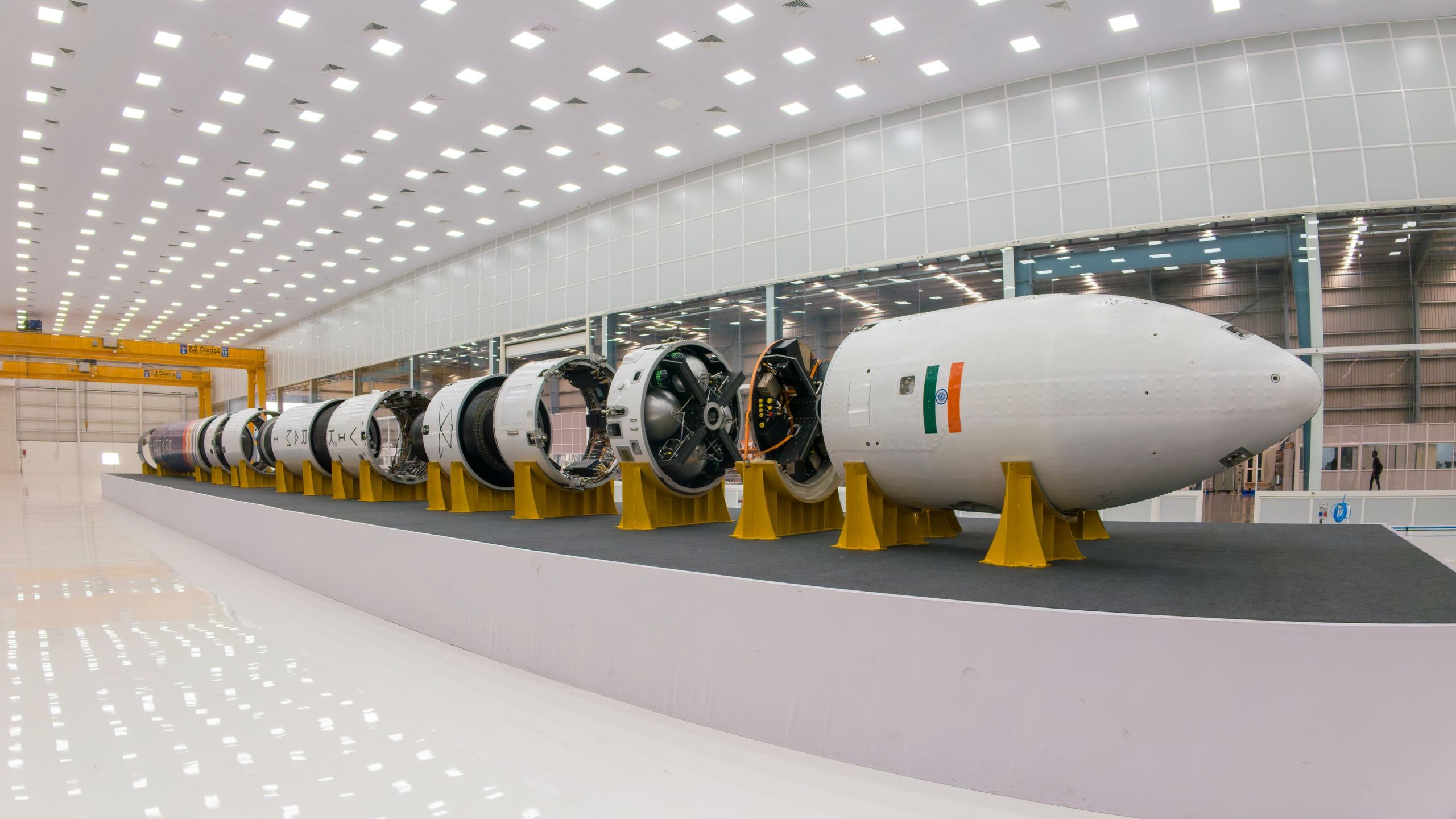
HYDERABAD, India. When I visited Skyroot Aerospace back in February, the rocket wasn’t ready. Not even close.
Inside the massive rocket factory. Fifty-five thousand square feet of noise and focus. Engineers stared at screens. Running simulations. Checking systems on the Orbit Adjustment Module. This is the liquid-fueled top part of Vikram-1. The brain of the operation. Unlike the bottom three stages. Which burn solid fuel like firecrackers. This part restarts. It maneuvers. It puts satellites where they actually want to be.
Back then it was still here. Waiting for an overnight truck ride to Sriharikota. Where the lower stages were already parked.
Fast forward five months.
The thing stands on the coastal pad now. Seven stories high. About two hundred people watching it. That is a fifth of their whole staff. Waiting. The window opens July 12. Closes August 4. No exact day announced yet. Just waiting.
If it works. It writes history. No private Indian company has launched a satellite into orbit. Never.
The mission is called Aagaman. Sanskrit for arrival. The payload is a mixed bag. Skyroot’s own SCOPE satellite. A German tech demo from DCUBED. Grahaa Space’s SOLARAS S3. A robotic arm named Embrace that grabs space debris. And then the weird stuff. A piece of jewelry shaped like a flower. Called Cosmic Bloom. From Cosmos Diamonds. A tiny gold rocket made of 18-karat metal. By artist Ajay Kumar Mattewada. Honoring Sarabhai. Raman. Kalam.
It is not just science. It is symbolism.
“The ‘cab’ market is what we really want to dominate.”
Pawan Kumar Chandana, Skyroot’s CEO, compares their business model to transport. You can take the train. Big. Crowded. Fixed schedule. That is riding as a secondary payload on someone else’s rocket. Or you take the cab. Private. Direct. You go where you want.
Currently. No one offers that reliably in India. Rocket Lab does it in California. Skyroot wants to do it here.
Aagaman is the first step. A development flight. There will be two more like this. Then the commercial rollout starts. The goal. One orbital rocket a month. From these Hyderabad campuses.
“We want as much data as possible. To move fast. Really fast.” Chandana said it simply.
They started dreaming about orbit back in 2022. Or at least the start of the journey. Then Vikram-S flew. A suborbital hop. Only eighty-eight kilometers up. Below the real line of space? Depending on who you ask. But it worked. It validated eighty percent of the tech. Carbon structures. Avionics. Thermal shields.
Four years later. The orbital beast is bigger. Four times the size. It has to hit twenty-eighty miles altitude. And it has to go fast. Eight kilometers per second. Or the stuff falls down. It has to separate stages on cue. Then the top engine fires. Again.
“We thought maybe two years,” Chandana admits. “Three tops.”
Rocket science laughs at optimism.
“We learned on the fly.”
He left ISRO for this. Back in 2018. Along with co-founder Bharath Daka. There was nothing here for private space companies then. No policy. No access to pads. Just a leap of faith. They bet on the equator. Earth spins fastest there. A free push toward space. They bet on local suppliers. Former government engineers.
The bet paid off. The government opened the door. IN-SPACe launched. Private sector got access to the facilities. No need to build everything from scratch. The ecosystem exploded. Four hundred startups now. An eight billion dollar industry aiming for forty.
Skyroot is in it. Valued at one point one billion dollars after a fresh funding round. They want bigger rockets next. Heavier payloads. Reusability.
But right now? Look at the pad in Sriharikota.
The air is tight. Operational stress at a maximum. Young engineers. First launch. Nerves? Probably. But also energy.
“We have prepared for a long time. The mood is energetic.”
They stand there. Waiting for the countdown.