We used to think for sure.
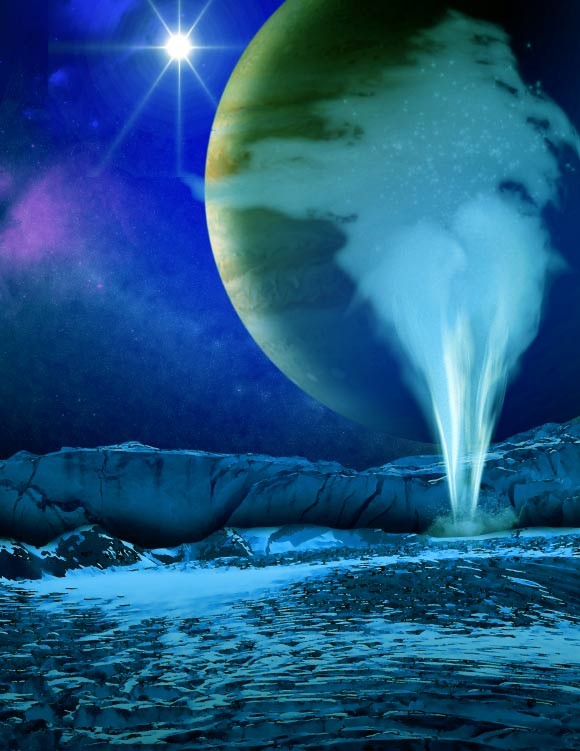
Back in 2014, scientists spotted water vapor blasting off Jupiter’s icy moon. It felt huge. A real find. The kind of discovery that changes how we look at the outer solar system.
“The evidence for water vapor plumes isn’t as strong as we thought,” Kurt Retherford said
Dr. Retherford works at Southwest Research Institute. He helped make that initial claim. Now? He’s backtracking. So is the rest of the team.
A new study digs into old Hubble data. Specifically the stuff gathered by the Space Telescope Imaging Spectrogragh. Dates matter here: 1999 plus chunks of time between 2012-2020.
They looked at Lyman-alpha emission. Ultraviolet light. Hydrogen atoms scattering photons.
It sounds clean enough in a vacuum but placement is tricky.
Hubble is precise but not perfect. The center of the image? That’s a fuzzy concept. Shift Europa’s position by just one pixel. Two pixels maybe. And suddenly the data means something else entirely.
Statistical noise starts to look like plumes. Or rather plumes look like noise.
Confidence dropped hard. We’re talking about going from 99.9% sure down to under 90%. That gap isn’t academic. It’s the difference between “fact” and “maybe.”
“The dataset doesn’t rule it out,” Retherford explained. “It just doesn’t prove it either.”
The phenomena described in that 2014 paper? It doesn’t hold water. Or vapor. Whatever the case may be the previous conclusions feel less sturdy now.
Does that mean there’s no atmosphere? Not even close. The new analysis actually clarifies things. We know more about the neutral hydrogen escaping Europa’s ice surface. It’s out there. Just maybe not in those spectacular fountains.
Enceladus does plumes right. So does Io, shooting sulfur dioxide into space.
We want Europa to be cool. We really do. Finding alien oceans requires some way to sample them. Plumes make sampling possible from a distance.
The hope stays alive.
The paper landed in Astronomy & Astrophysics on May 5th. Cite Roth et al if you need to. But look closely at the data and you see doubt creeping in.
“We still hope to find them”
It’s not a dismissal. Just a pause. The moon sits there quiet under its ice shell. We keep staring through telescopes. Waiting for the pixels to line up again.
Maybe they will.