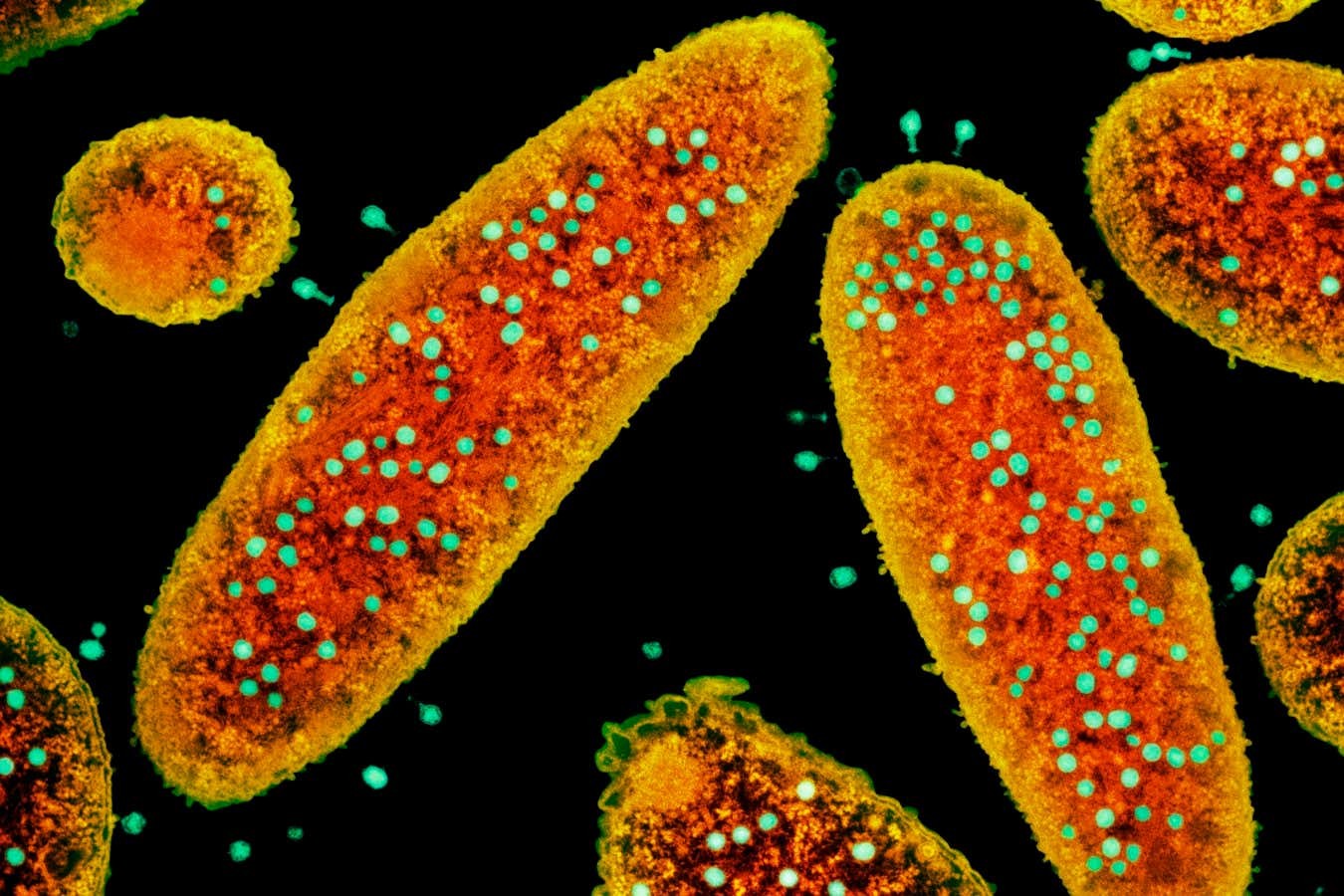
Phages might finally give us the key to hijack existing vaccines. Not to fight germs, but to murder tumor cells.
Immunotherapy has changed the game. It wakes up your body’s own defense forces to wage war on cancer. But here’s the snag. Most of us still don’t benefit. Why? The immune system just doesn’t see the tumor. It ignores the intruder.
Amin Hajitou at Imperial College London saw a way around the blindness. He didn’t build a new army. He recruited one already standing by.
The Trojan horse strategy
The researchers used a bacteriophage. That’s a virus that eats bacteria. Specifically, one that usually attacks E. coli. It sticks to the bacterium, shoots in its DNA, and turns the cell into a factory for more phages before popping the bag open. Dead bacteria. Simple. Efficient.
Hajitou’s team changed the phage.
They engineered it to latch onto integrins. Proteins called αvβ3 and α5. These sit on the surface of many cancer cells but stay away from healthy tissue. A homing beacon.
Then they changed the cargo. Inside the phage DNA, they wrote instructions for a malaria antigen. A molecular flag. One your body knows. One it hates.
“The phage acts like a targeted delivery vehicle.”
So what happens? You vaccinate someone. Their body builds antibodies for that pathogen. Memory is formed. Now you inject the phage. It travels to the tumor. It displays that familiar antigen. The immune system looks, recognizes the target, and attacks.
It redirects old defenses into a new war zone.
Mice with a second chance
They tested it on sixty mice. Each had tumors sitting just under their skin.
The experiment was clean. Fifteen mice got nothing. Fifteen got the malaria vaccine alone. Fifteen got the phages alone.
The other fifteen? They got the combo. A malaria vaccine. Then, two weeks later, six injections of the engineered phage straight into their tails. Systemic. Not direct tumor injection.
The result wasn’t just improvement. It was erasure.
In 44% of the treated group, the tumors vanished. Completely. And they stayed gone for the full year of the study. The others lived longer too. The control groups? No benefit at all.
“Other vaccines, stronger than malaria should work even better.”
That’s the kicker. The mechanism relies on memory. Not the specific bug. If you’re vaccinated for flu. For Covid. The same principle applies. You exploit the standing order of your immune system.
The needle in the haystack problem
David Withers from the University of Oxford called it a significant leap. Most viral cancer therapies are blunt instruments. You have to inject the virus right into the tumor. Which sounds fine for a lump on the skin. But for metastatic disease? When the cancer spreads? You’d need to inject every single cell.
Impossible.
These modified phages float through the bloodstream. They find the cancer. They infect it. Systemically.
It solves the access problem.
What now?
The team is talking to the Medicines and Healthcare Products Registry in the UK. They want to start a trial. In humans. Next year, they hope.
It’s a bold pivot. Turning a defense against a tropical parasite into a sniper’s bullet for solid tumors. We don’t know if the jump from mice to humans holds the same precision. Immunotherapy is notoriously hit or miss in people. The phage might be cleared before it finds a target. Or worse. It might trigger a reaction elsewhere.
But for a few seconds, while those mice were free of disease, the logic was sound. Use the shield as the sword.