我们有黄鼠狼的问题。 在英语文化中,称某人为黄鼠狼是一种侮辱。 这意味着他们是狡猾的、不诚实的或者是骗子。 我们甚至把名词变成了动词。 “逃避”承诺就是欺骗性地逃避责任。 这种语言仇恨并不新鲜。 古希腊人将黄鼠狼视为不祥之兆。 现代流行文化强化了这种刻板印象。 在《疯狂动物城》、《谁陷害了兔子罗杰》和《柳林风声》中,黄鼠狼是卑鄙的恶棍。
为什么我们这么恨他们? 这是被误解的生物学和几个世纪以来的神话的混合体。 真相比我们记忆中的卡通恶棍更加微妙。
Small Bodies, Massive Energy Needs
Weasels belong to the Mustela genus. They are agile, long-bodied predators found throughout Eurasia and the Americas. Some people confuse them with ferrets or polecats. These relatives are larger and less streamlined. There is also an animal in Africa called the weasel, which has skunk-like markings, but it belongs to a completely different genus.
Sizes vary widely. The North American long-tailed weasel (Mustela frenata ) can reach a length of 16.5 inches (42 cm) from snout to tail. The least weasel (Mustela nivalis ) is very small. It is 8.5 inches (21.7 cm) long and weighs only 1.9 ounces (55 g).
Despite their size differences, all weasels have in common an impressive metabolic rate. They cannot store fat like bears. They rely on burrowing rodents to survive. To chase prey through narrow tunnels, they evolved small, slender bodies and short fur.
This body plan comes with a cost. Their fur is thinner and contains less fat, so they retain less heat. They burn fuel rapidly to stay warm and active. A weasel must eat 20-40% of their body weight each day. Otherwise they will starve to death.
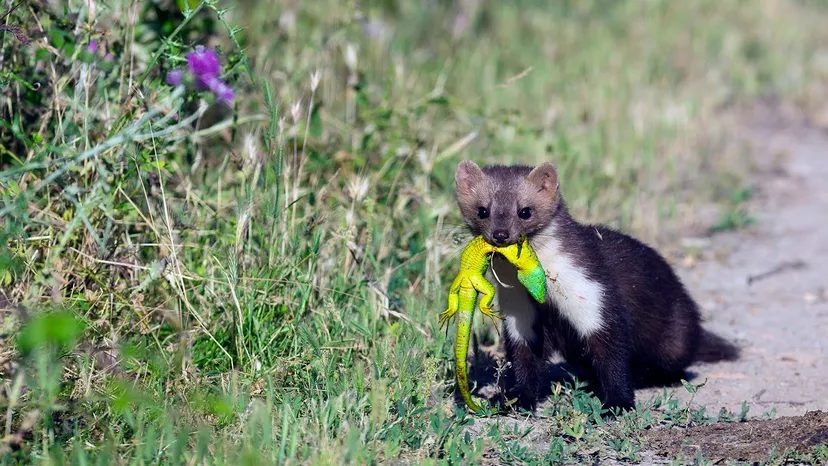
They hunt rabbits, birds, reptiles and amphibians. Watching one hunt is intense. This is not a gentle process.
The Myth of the Sucking Weasel
In 2015, photographer Martin Le-May captured the moment that went viral. He saw the least weasel riding a woodpecker in an English park. It looked like a joy ride. It was not.
The weasel attacked a bird lying on the ground. The bird took off, dragging the predator with it. This was predation, not play. Weasels are aggressive. They can also attack birds of prey. Eagles and buzzards may try to steal weasels for food. This is a mistake. The weasel may bite the bird’s neck or chest. The weasel might survive and kill and eat the bird. In some cases, both can die. This is cruel.
Farmers hate weasels for a special reason. They kill poultry and steal eggs. This led to a persistent myth. It is believed that the weasel sucks the contents of the eggs.
They do not. The short-tailed weasel (Mustela erminea ) makes a small hole in the shell. It laps up the leaking yolk and white. It doesn’t suck it out like a vacuum. Not a breakfast vampire.
The idea that weasels suck eggs dates back centuries. Shakespeare referenced it in Henry V. One character compares England to the Eagle and says that the weasel sneaks into its nest to suck the “prince’s eggs”.
Theodore Roosevelt popularized this myth. In a speech he gave in 1916, he claimed that weasels suck meat from eggs. He used the image of the empty shell to criticize politicians. He called their empty rhetoric “weasel words.” He spread the word.
In doing so, he reinforces his prejudices against the animal itself. Lies become part of a culture’s DNA. We conclude that Itachi committed a crime he never committed.
为什么耻辱持续存在
对黄鼠狼的仇恨不仅仅与生物学有关。 这是关于语言的。 “黄鼠狼”是欺骗的简写。 当我们称某人为黄鼠狼时,我们会想到鸡舍里的小偷的形象。 黄鼠狼的神话与这个故事完美契合。 它将动物描绘成一个狡猾、恶毒的演员。
事实上,黄鼠狼只是一个试图生存的掠食者。 它能吃什么就吃什么。 它可以避免饥饿。 当受到威胁时它会反击。 这并不邪恶。 它是有效的。
但效率并不能成为一个好的吉祥物。 社会更喜欢动机明确的恶棍。 新陈代谢率高的饥饿动物不符合要求。 因此,我们将自己的道德缺陷归咎于黄鼠狼。 我们称骗子为黄鼠狼。 我们称胆小鬼为黄鼠狼。 我们将自己的影子投射到小型而快速的哺乳动物身上。
下次你看到黄鼠狼时,请记住代谢成本。 记得薄薄的皮毛和空空的肚子。 它不是在密谋反对你。 它只是想吃东西。
“黄鼠狼偷偷来到她无人看守的巢穴,吮吸她高贵的蛋。”
莎士比亚的这句话被牢牢记住了。 它描绘了一幅恶意的图画。 现实远没有那么戏剧化。 而且更有趣。
黄鼠狼是一种极端的生物。 娇小的身躯。 极度饥饿。 强烈的生存本能。 它不是恶棍。 它是一个幸存者。 我们只是选择以其他方式看待它。
耻辱依然存在。 我们仍然用“黄鼠狼”作为侮辱。 我们仍然相信这些神话。 动物为我们的语言付出了代价。 对于黄鼠狼来说,这是一个很小的代价。 这对我们来说是一个很大的代价。 我们失去了欣赏复杂捕食者的机会。 我们满足于刻板印象。
是时候承认我们错了。 黄鼠狼不是骗子。 它只是饿了。
Weasels have a reputation for being sneaky, devious and brutally violent. It’s a label stuck to the Mustela genus, which has been around for centuries and colors everysleekg from Shakespearean references to Theodore Roosevelt’s hunting anecdotes. But is that fair?
Historically, the conflict stems from a simple economic reality: weasels are excellent at entering chicken coops. They are sleek, flexible and can slip through gaps that look incredibly small. Once inside, they attack nests or hunt adult birds. Although most weasels actually like rodents and can help farmers by reducing pest populations, they will prey on poultry if the opportunity arises.
This behavior has led to them being labeled as bloodthirsty murderers. This reputation is rooted in their metabolism. Weasels have incredibly high metabolic rates. They often get more prey than they can eat at once.
Cache behavior that looks like massacre
This extra food does not go to waste. Weasel hides it in hiding places, such as abandoned burrows or hollow tree trunks. One documented cache contained nearly 150 dead voles, which were stored for future meals.
From an evolutionary perspective, this impulse to kill additional prey makes sense. It’s a survival strategy. However, when a weasel enters a coop, this instinct can look like indiscriminate slaughter. They can kill any chicken they come across, not because they are hungry, but because they are getting food for later use. This does not make them popular among farming communities.
Invasive species vs. native beneficiaries
Context is important. Weasels are a problem in some places. In New Zealand, introduced least weasels are destroying native bird populations. The government is actively working to eradicate these invasive species, but controlling non-native predators is always a difficult and arduous task.
Although these special cases justify control measures, they do not justify the centuries-long contempt of Western society for the entire genus. Weasels are crafty, have large appetites and fascinating animals. They play a very important role in their native ecosystems, keeping rodent populations in check.
The secret of the Weasel dance
Weasels and ferrets sometimes perform spastic, dance-like rituals. They flail frenetically, twisting and turning in a way that seems almost choreographed.
No one knows exactly why they do this. The general theory is that they are trying to confuse their prey. But sometimes these dances happen when there are no other animals around to observe or confuse. It remains one of the inexplicable peculiarities of these complex little beasts.