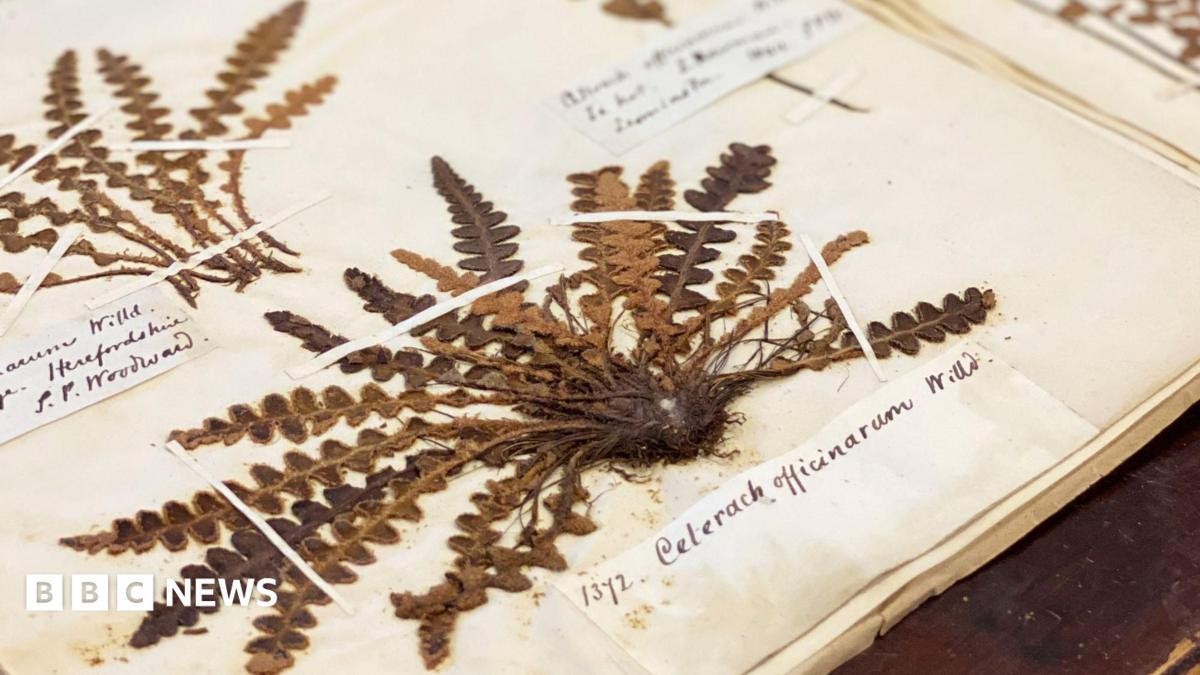
For centuries, dried plants sat quietly on shelves. They were pressed, labeled by hand, and largely forgotten. Now, that silence is breaking.
The Royal Agricultural University (RAU), based in Cirencester, Gloucestershere, is turning its historic UK biodiversity collection into digital data. Over 10,000 specimens are being photographed and catalogued. This isn’t just about saving paper. It’s about unlocking a “hidden” time capsule.
The stakes? Higher than most people realize.
Why This “Hidden” Heritage Matters
Imagine a library where the books have no index. You could spend years shuffling through stacks, guessing what’s inside. That was the RAU herbarium.
Dr. Kelly Hemmings from the RAU puts it bluntly. Without digitization, researchers had no way to know what the collection actually held other than manually reading handwritten sheets. It was a “rich seam of data” effectively buried under its own weight.
Now? It’s accessible.
The goal isn’t just visibility. It’s impact. Hemmings says this shift will allow the herbarium to make a “global impact in research.” Why does that matter? Because these specimens are living records of a changing planet.
They offer clues for:
* Climate change adaptation strategies.
* Habitat management in the 21st century.
* Genetic tracing of native species.
The possibilities branch out further. But the core truth is simple: data you can’t find, you can’t use.
The Scale of the National Project
This local effort isn’t happening in a vacuum. The RAU project is part of a massive national scheme to digitize UK biodiversity records. The figure is staggering: £155 million.
The target? Connecting around one million specimens across various UK collections.
Think about the logistics. One million specimens. Each needs careful handling, high-resolution imaging, and metadata collation. It’s a digital rescue mission.
Herbarium sheets themselves are ancient technology. They originated in 15th-century Italy. If conserved properly, they last hundreds of years. They are essentially two-dimensional fossils of the plant kingdom.
By digitizing them, we aren’t just preserving the physical object. We’re preserving its information in a format that can be shared, compared, and analyzed instantly.
The Darwin Connection
Not every shelf has a history this heavy. The RAU collection includes specimens dating back to 1797. Many are local, sourced directly from Gloucestershire.
But some carry a name that echoes through scientific history.
Samuel Pickworth Woodward. He was a professor at the college during the 1800s. A geologist. And, crucially, a correspondent of Charles Darwin.
Why does Woodward matter to your search results or your science project? Because his collection provides a baseline. A snapshot of what UK flora looked like before the industrial landscape fundamentally altered it.
“Until it is digitised… this rich seam of data is effectively ‘hidden natural heritage