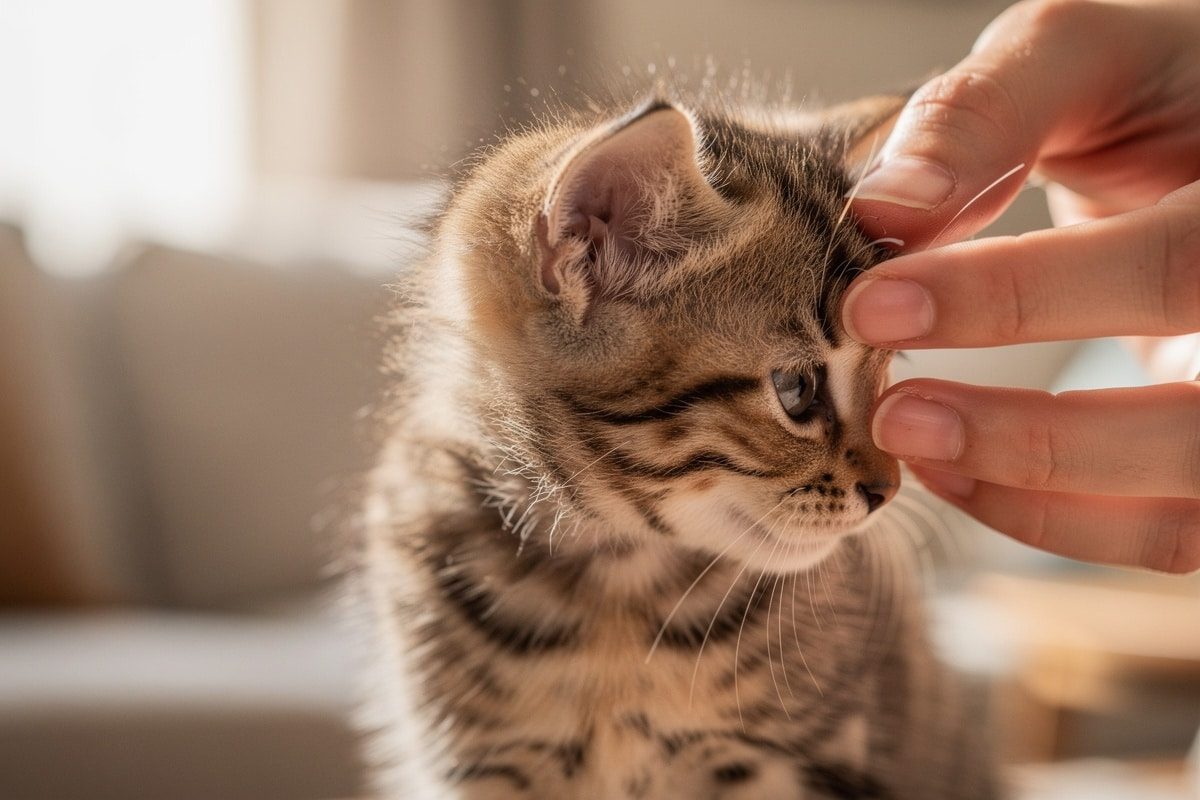
Winter in France turns homes into warm cocoons. Cats spend their days napping on radiators or buried under blankets. Owners want to spoil them. It feels natural to pamper the cat. But there is a small, common error hiding in that affection. Owners often want to clean their cat’s ears too often. It is a well-meaning reflex. It is usually counterproductive.
The danger of overzealous hygiene
As December winds down and holiday attention peaks, the temptation to overprotect spikes. Excessive zeal in hygiene can disturb more than it soothes. Cleaning too frequently disrupts the natural flora of the ear canal. Poorly adapted gestures traumatize sensitive skin. This invites problems. Here is the hard truth: systematic cleaning is not the standard. It is not necessary for a healthy cat.
Knowing when to do nothing
Healthy ears require only observation
Most cats produce a small amount of cerumen naturally. This wax is protective. It is normal. An ear that is clean, odorless, non-red, and free of excess secretion needs no care. A simple weekly visual check is the best prevention. You do not need to intervene.
Spotting the real warning signs
Beware of suspicious dirt. Brown deposits. Crusts. Abnormal discharge. Unpleasant odors. These are flags. A cat shaking its head. Scratching its ear often. Holding its head tilted. These show obvious discomfort. These signs demand attention. Cleaning is just one step in a broader strategy.
When intervention is actually necessary
Certain cats are more prone to ear issues. Breeds with floppy ears. Long-haired individuals during molting. After a wet walk or a hunt by the fireplace, dirt accumulates. Cleaning becomes necessary then. But only if dirt is visible or discomfort appears. Do not turn ear toileting into a systematic ritual.
How to clean safely if needed
Gestures to absolutely avoid
Q-tips are the classic tool of involuntary abuse. They must be proscribed absolutely. They push dirt deeper into the ear. They risk injuring the eardrum. Avoid household cleaners. Avoid 70° alcohol. Avoid anything that irritates. Respecting the delicacy of the feline ear protects its hearing long-term.
What veterinarians recommend in 2025
The advice is clear: intervene only if there is visible dirt, an odor, or signs of discomfort. For effective cleaning, use a specific ear lotion for cats. You can find it at pharmacies or with your vet. Warm the lotion slightly between your hands before applying it. This makes the experience more pleasant for the animal.
The correct steps for a respectful clean
If you must clean, follow this protocol. Prepare the right tools.
- A bottle of ear lotion suitable for cats
- Cotton compresses (never q-tips)
Now, proceed with care.
- Place the cat in a calm spot.
- Pour a few drops of lotion into the ear. Do not insert the nozzle deep.
- Gently massage the base of the ear for about ten seconds.
- Let the cat shake its head. This eliminates excess product and impurities.
- Wipe the ear flap with the cotton compress.
Repeat the gesture only if visible secretions remain. If discharge persists or itching continues, see a vet quickly.
The balance between care and neglect is subtle. You might wonder if you did enough. Or too much. The cat’s reaction is your only true guide.
The Art of Gentle Grooming: Less Is More
Winter is harsh on feline patience. Between the chill of the outdoors and the stress of holiday visitors, your cat is likely on edge. Intrusive handling during this season often backfires. The goal isn’t just cleaning; it’s cooperation.
Start with calm. Speak softly. Do not ambush the cat. A relaxed animal is a manageable one. If you rush in when they are tense, you trigger a defensive response that serves no one.
Watch for subtle signs of distress
Healthy cats are self-sufficient when it comes to ear hygiene. They shake their heads. They groom. They manage their own balance.
You are the observer. Look for deviations. Is the cat scratching more than usual? Do they tilt their head? Are they rubbing against furniture in a way that suggests irritation? These aren’t just quirks. They are data points.
“Your daily observation is your strongest preventive tool.”
Ignore the noise. Pay attention to the behavior. A sudden change in routine is often the first indicator of an underlying issue that requires professional care, not a cotton swab.
Why over-cleaning is a mistake
There is a dangerous trend toward hyper-vigilance in pet care. We want to be helpful. We want to be “good owners.” But constant cleaning disrupts the delicate ecosystem inside a cat’s ear canal.
The natural oils and flora serve a purpose. They protect against pathogens. They maintain acidity levels that discourage yeast and mites. When you scrub away everything, you strip that defense.
Only intervene if there is visible debris, a distinct odor, or clear signs of discomfort. For a healthy cat with clean ears, doing nothing is the correct medical decision. Moderation is not neglect. It is respect for biology.
Trust the animal’s design. They know what they need. Your job is to step back and let nature do its work, stepping in only when the evidence demands it. That is the only way to ensure true comfort during the cold months.