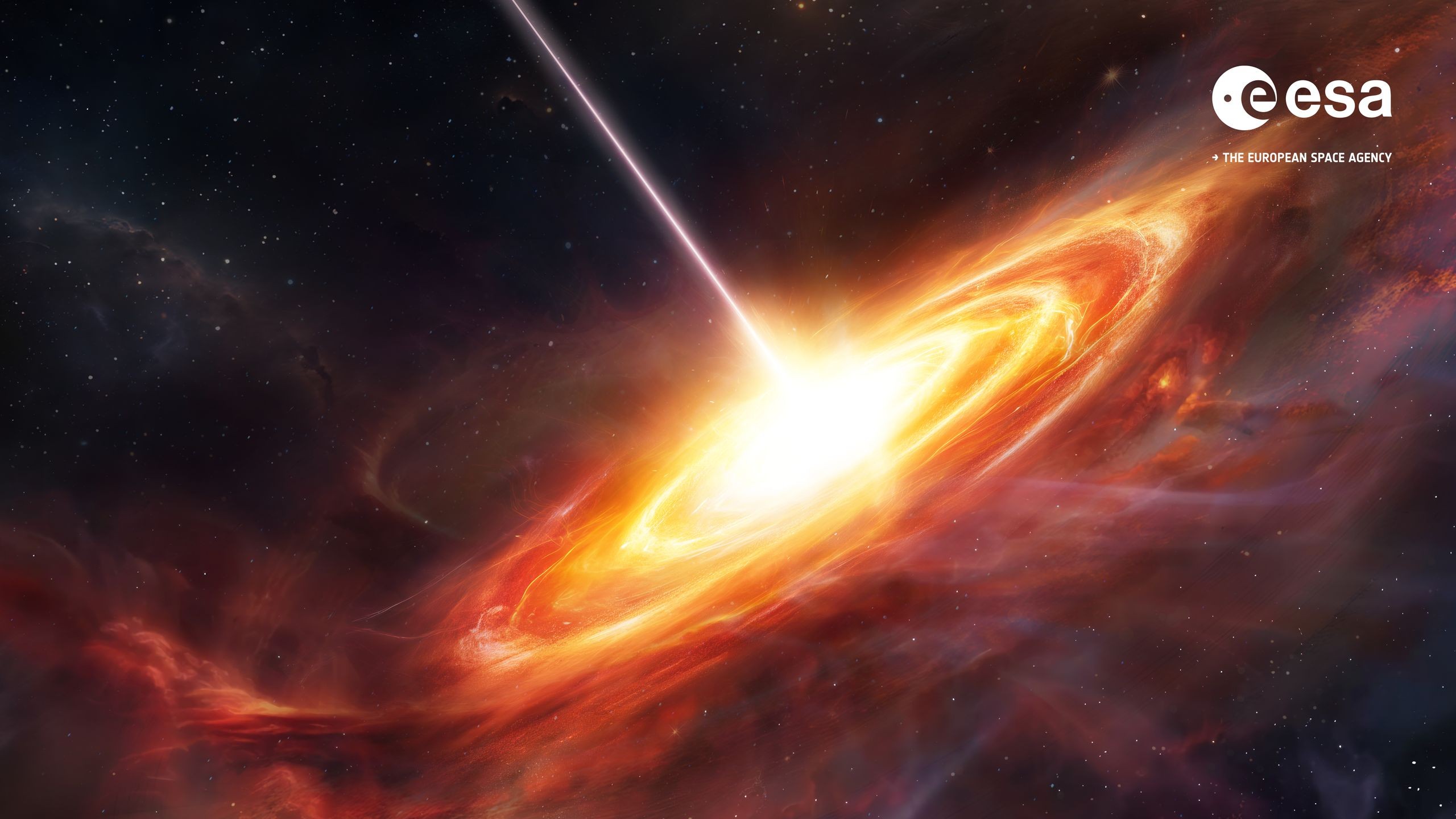
ESA’s Euclid telescope just dropped 31 new quasars into the mix. None of us knew they were there. Two are the oldest ever found. Each burns with the power of a trillion suns.
That’s a lot of light for something so old.
The details came out July 6 in Astronomy & Astrophysics. We have doubled the known population from the universe’s dawn. That helps. Maybe it finally answers how supermassive black holes got so fat, so fast, after the Big Bang. It has been a headache for cosmologists for a long time.
It’s a big step towards understanding these fascination objects on a more fundamental level
That’s Antonio La Marca from the ESA. He thinks we are getting somewhere. Quasars aren’t just stars. They are feeding frenzies. Gas and dust spiral down a galaxy’s central hole, heat up, scream outward. They outshine their host galaxy entirely. The two new giants fit the bill perfectly. They blazed right after the start.
Euclid saw them while staring deep into the dark. Twelve of the find have redshifts above 7. The light took more than 13 billion years to hit the sensor. We are looking back at the first 770 million years of everything. The twins leading the pack have redshifts of 7.8-ish. One is 7.77. The other 7.69.
They shine when the cosmos was 5% of its now. Just 670 million years old.
How do you get a black hole that big that quickly? It defies the odds. Daming Yang at Leiden University says finding these early objects lets us track the growth spurt. It was never easy to find them. They are rare. Distant. Before now we only saw the loudest ones. The ones screaming loudest.
Euclid changes the view. It scans wide. It catches the faint whispers too. This find is a slice. Just a start.
The telescope has a six-year runway. It will cover a third of the sky. It builds the biggest 3D map in history using visible and infrared light. Hundreds of ancient quasars await discovery. We will see how early galaxies and black holes actually evolved. No guessing games later. Just data.
And while it hunts the void? Euclid looks at home. Late June showed it packed the Milky Way center with 60 million stars. A sparkly image. It sees far and near.
Maybe we understand growth now. Or maybe we just see more mystery. The universe rarely gives straight answers. It gives more light instead.