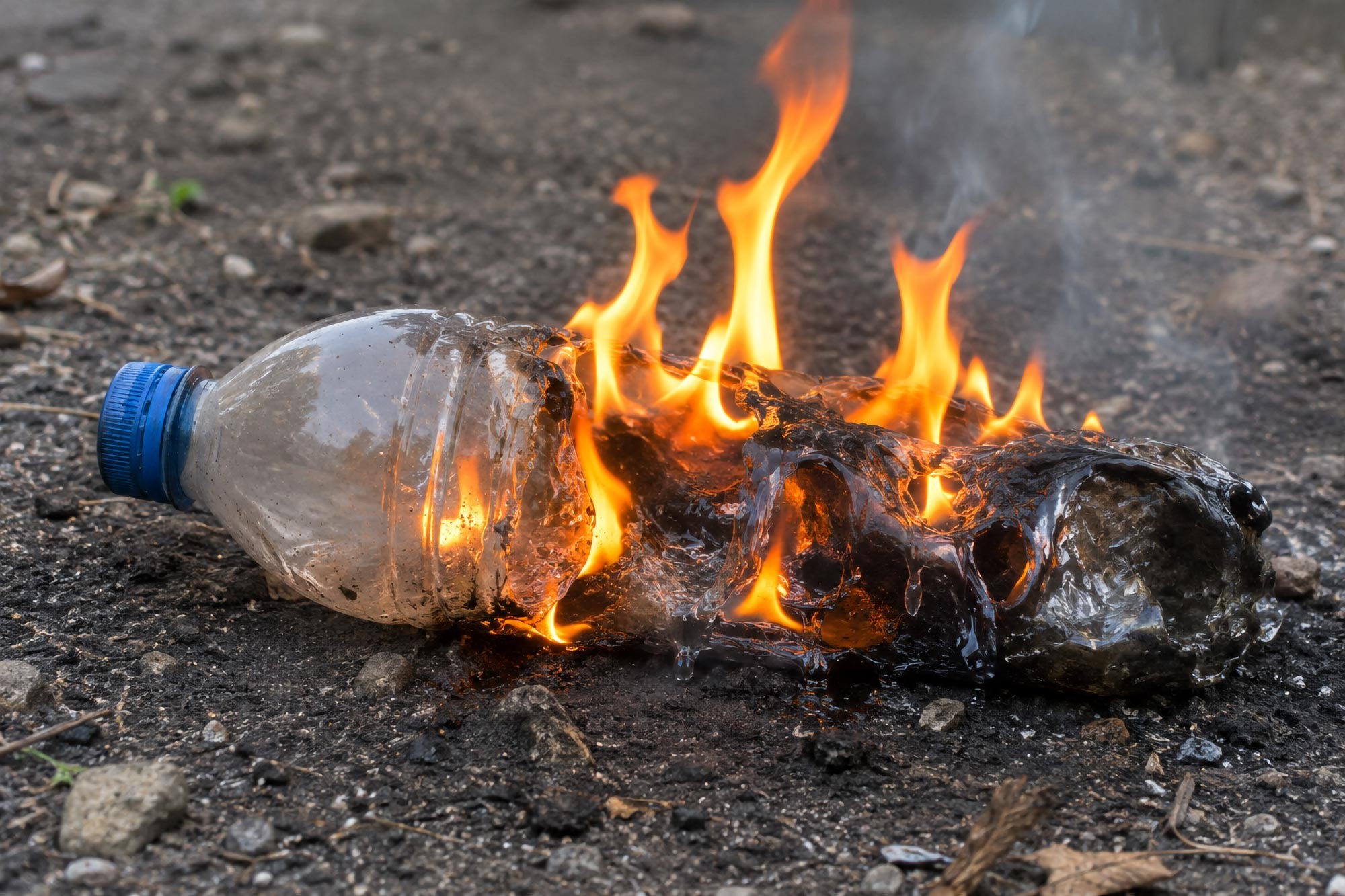
Most people throw plastic away. Others burn it.
New data reveals a grim reality millions live with every day, one that stays hidden behind closed doors and unspoken survival instincts. A study led by researchers at Curtin University, published in Nature Communications, suggests this practice is far more common than we thought. Not just as a disposal method, but as an actual energy source.
They surveyed over 1,000 people. Government workers, researchers, community leaders. Spread across 26 developing countries.
The numbers hit hard. One in three respondents reported seeing households burn plastic. Many watched it happen right next door. Some even did it themselves.
Fuel by Necessity
Dr. Bishal Bharadhazj from the Curtin Institute for Energy Transiton called this the first broad look at a problem everyone ignores until it burns someone’s lungs out.
“When families can’t afford cleaner fuels… plastic becomes both a nuisance and alast-resort energy source.”
It is not about convenience. It is about cooking. Heating. Keeping the bugs away when the electricity cuts out and the wallet is empty. They burn bags, wrappers, bottles, packaging. Everything.
The issue stays hidden. Why? Because it happens in marginalized neighborhoods where eyes turn inward to survive, not outward for global approval. It escapes the news cycle despite the risks being severe enough to shut down a city block.
Smoke in the Kitchen
How do they do it?
Three-stone fires. Charcoal stoves. Makeshift burners found in alleyways or crowded backyards. The result is toxic smoke that has nowhere to go but into the lungs of the people trying to stay warm.
Who pays the price? Women, kids, the elderly, and those with disabilities. They breathe what others escape.
Professor Hari Vuthaluru pointed out a specific villain here. PVC. Polyvinyl chloride.
Burn PVC and you get dioxins. Furans. Pollutants so dangerous they linger in the environment long after the fire dies. They accumulate in the food chain. Cancer. Immune damage. Reproductive disorders.
PVC is the third most common plastic being burned.
Imagine lighting your stove with a chemical cocktail.
Food, Water, Poison
The danger doesn’t stop with the smoke. It sinks.
Dr. Pramesh Dhunganda noted that 60 percent of the survey participants believed contamination was extremely likely. And they are right.
Toxic compounds don’t float away. They settle on crops. They seep into soil samples and water sources near burn sites. Eggs tested nearby have shown signs of contamination. The poison enters the very things people rely on to live, creating a crisis that operates in the shadows.
No Easy Fixes
Professor Peta Ashworth insists we cannot simply tell people to stop.
You don’t just ban a fire when it’s the only heat a family has.
The root causes are structural: extreme energy poverty. Clean fuel prices that feel like extortion. Waste collection services that never come. Plastic production is expected to triple by 206O, so the pile will only get higher.
We need solutions that actually work on the ground. Better sanitation. Affordable cooking energy. Options that make sense culturally.
“It’s essential that solutions… include working with communities on practical, culturally relevent options.”
This research gives us the evidence. But evidence doesn’t pay for cleaner stoves. It doesn’t lower fuel costs.
The fire keeps burning. The question is whether we keep looking away, or finally admit that the smoke coming out of someone’s kitchen isn’t just waste.