Japan found a perfect spot for a commercial underwater gold mine. Or so the scientists think.
Whether they should mine it? That is where the shouting starts.
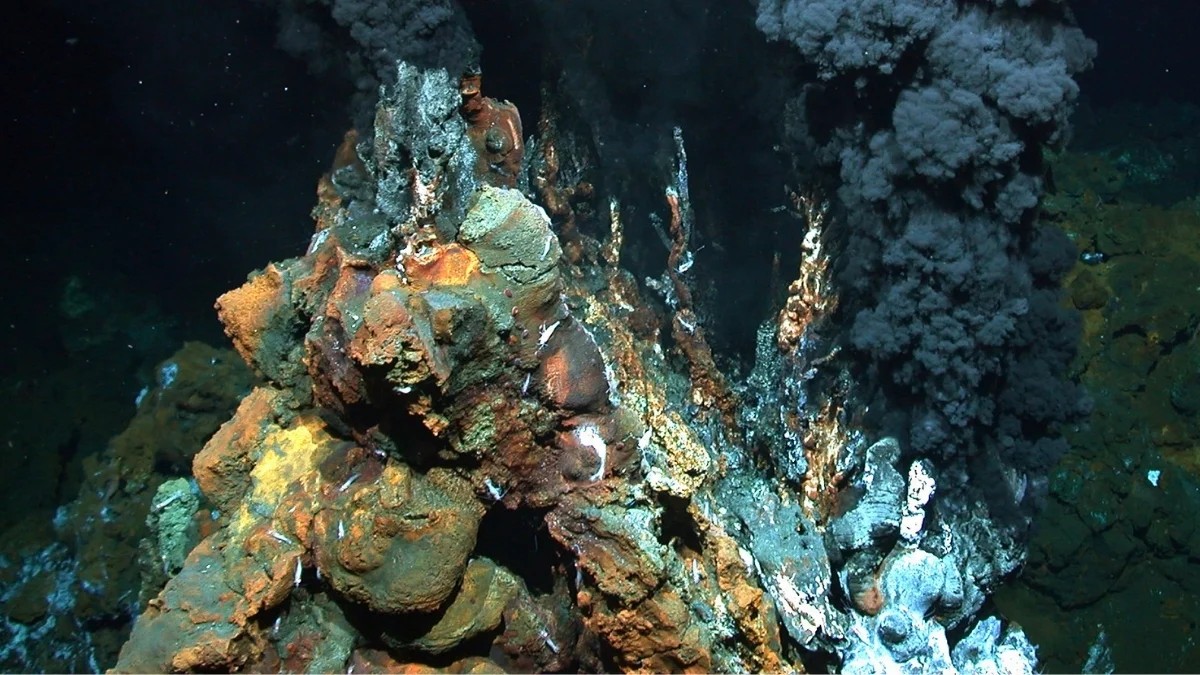
Deep off the southeastern coast, in a submerged volcanic crater, nature is forging gold at record speeds. Black smoker chimneys and hydrothermal mumps spew out the stuff. But here is the twist: most of it is invisible.
You cannot see it with your eyes. Not with a standard microscope, either. The gold is locked tight inside the seafloor rocks, trapped within the chemistry of minerals we know all too well. The concentration? The highest anywhere on Earth.
The Fool’s Gold Deception
Pyrite. Iron and sulfur. Shiny, misleading, and famously called fool’s gold.
But the fool has actually been right along. Real gold was hiding inside the fake stuff the whole time.
Researchers from Shizuoka University, Wiseda University, and the University of Tokeley analyzed rocks from the Higashi-Aogashima vents. Roughly 350 kilometers south of Tokyo, these fields have been known since 2015, but the real wealth was missed. Using secondary-ion mass spectrometry—sensitive enough to catch tiny amounts of trace elements—they found nanoparticles. Individual atoms of gold embedded right into the mineral’s structure.
It is extremely high grade. Hidden in plain sight.
The Money Problem
This isn’t just science fiction. The spot is shallow compared to other deep-sea targets. It is accessible. Rich. Japan sees a mine. The world sees a disaster.
Commercial ocean mining does not exist yet. Not really. We are still trying to figure out how to extract this “invisible gold” cheaply and without turning the seabed into slag.
History says this is a bad idea. Look at Papua New Guinea. A company tried to build an underwater mine there. Financial woes hit. Environmental protests followed. The deal collapsed. The country lost about $85 million. Today, their Prime Minister is pushing for a total halt on deep-sea mining. Other Pacific nations agree, suggesting a moratorium until at least 2030.
Japan is not agreeing. They keep researching. Keep pushing. Despite the protests. Despite the uncertainty.
Riches or Life?
The Higashi-Aogashima fields were already suspected to hold record gold. Now we know it holds even more than we thought. The study, published in Scientific Reports, lands just months after experts warned that active vents need protection from miners.
We still don’t know what marine life lives in these vents. The ecosystem remains a mystery. We just know where the gold is.
The pyrite in this crater boasts the highest gold concentration on record.
So here we are. The technology is nascent. The politics are hostile. The money is massive.
The question isn’t really about engineering. It is about value. Do we want the ocean’s riches or its life?
Nobody has the final answer yet.