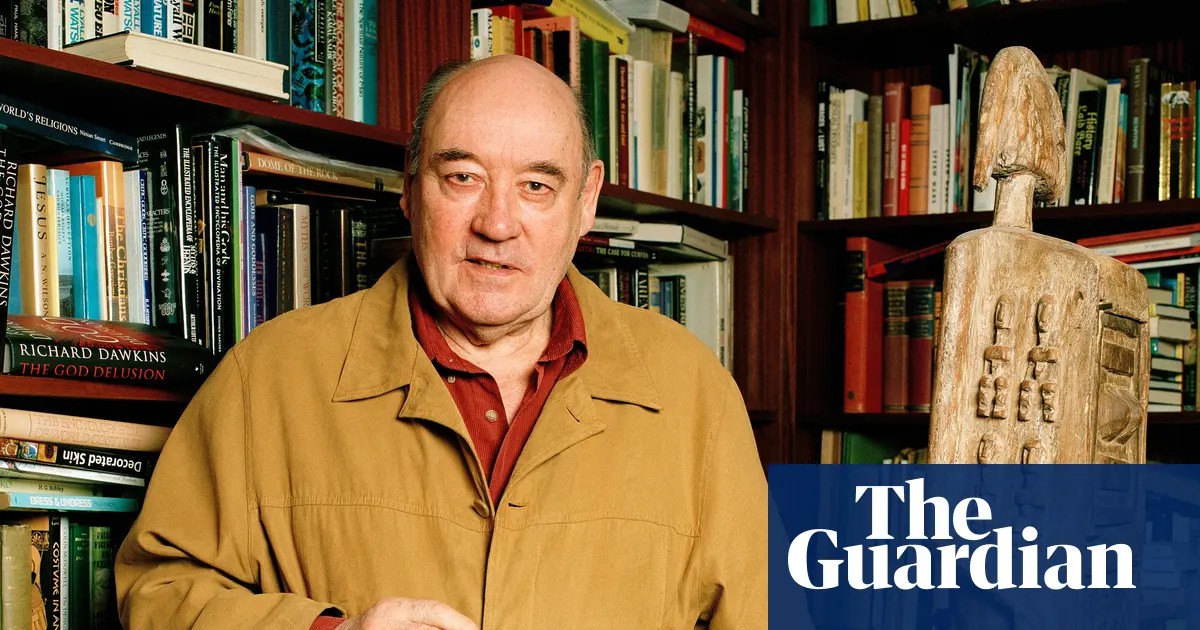
The world of natural history and evolutionary biology has lost one of its most distinctive voices. Desmond Morris, the celebrated zoologist, author, and broadcaster, has passed away at the age of 98.
Morris was a rare polymath who successfully bridged the gap between rigorous scientific study and popular media, making complex biological concepts accessible to millions of people worldwide.
A Legacy of “Manwatching”
Morris rose to global prominence in 1967 with the publication of The Naked Ape . The book was more than just a scientific text; it was a cultural phenomenon that applied the principles of zoology to human behavior. By examining humans through the lens of animal evolution, Morris challenged readers to view our social structures, rituals, and biological drives with a fresh, often provocative, perspective.
This “manwatching” approach defined much of his career. He didn’t just study animals in the wild; he studied the human animal in its own habitat. His prolific writing included numerous follow-up works such as The Human Zoo and The Naked Man, contributing to over 90 academic and popular titles throughout his life.
Bridging Science and Surrealism
Beyond his scientific accolades, Morris led a fascinating “double life” as a surrealist artist. His creative pursuits were not merely a hobby but were deeply intertwined with his scientific observations.
- Artistic Themes: His paintings often reflected his fascination with natural history and the reproductive behaviors of animals.
- Interdisciplinary Exhibitions: In the late 1950s, he organized groundbreaking exhibitions that compared the creative outputs of infants, humans, and apes, exploring the very nature of expression and cognition.
- Creative Discipline: He was known for his intense dedication to his craft, often painting in the early hours of the morning.
This intersection of art and science allowed him to explore questions of instinct and creativity that traditional zoology might overlook.
A Master of Natural History Broadcasting
Morris was a familiar face on British television, helping to shape how the public engaged with the natural world. His career in broadcasting spanned decades and multiple networks:
- ITV: He became a household name through the Granada nature series Zoo Time (1956–1967).
- BBC: He hosted influential documentaries including Life in the Animal World and later produced seminal works like Manwatching (1977) and The Human Animal (1994).
- Curatorship: His practical expertise was grounded in his tenure as the Zoological Society’s curator of mammals at the London Zoo, a position he held for eight years starting in 1959.
A Life of Curiosity
Born in Wiltshire in 1928, Morris’s journey took him from national service in the British Army to doctoral studies in animal behavior at Oxford University. His son, Jason, reflected on this lifelong journey, describing him as a man defined by “exploration, curiosity and creativity.”
“A zoologist, manwatcher, author and artist, he was still writing and painting right up until his death. He was a great man and an even better father and grandfather.” — Jason Morris
Conclusion
Desmond Morris leaves behind a profound legacy that redefined the relationship between humans and the animal kingdom. Through his books, broadcasts, and art, he encouraged the world to look more closely at the biological truths that define our existence.