Fire burns hot.
Rocket Lab just lit the match for its biggest gamble yet. They finished a major qualification run for the Archimedes engine. It is the muscle behind their new heavy-lift rocket, Neutron. While they keep firing off their small Electron rockets on the regular, this new beast has been growing in the shadows. A launch might happen later this year. Or maybe not.
But first the engine.
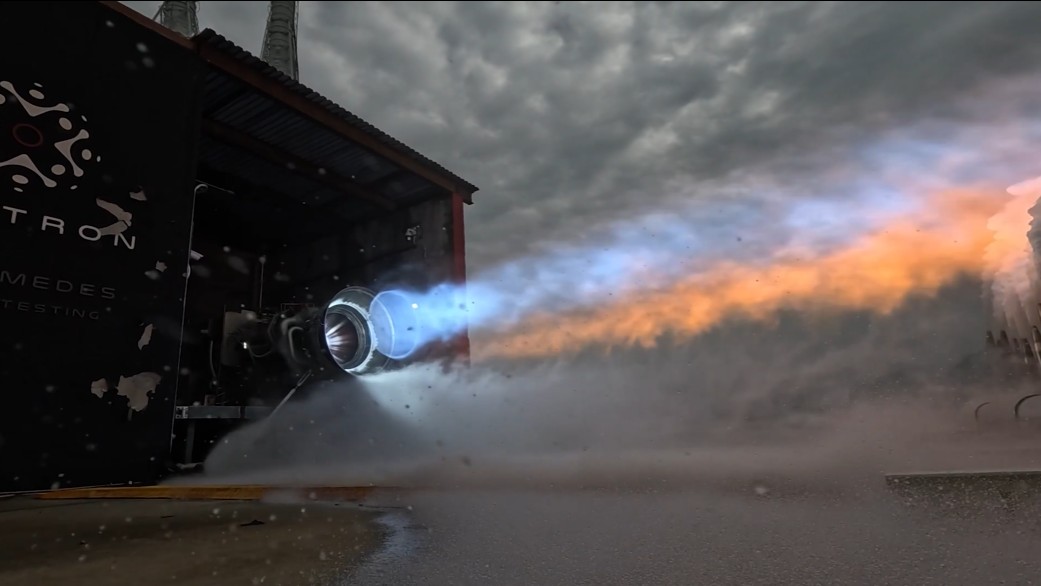
A full-duration burn. Just under five and a half minutes long. It happened at the Archimedes Test Complex down in Mississippi. NASA’s Stennis facility. They wanted it to feel like flight. Real flight conditions.
What a thing of beauty
The company called it that. A critical prep for the first flight. A second-stage unit fired. It worked. Now they can bolt it to Neutron soon enough.
Eight Archimedes engines will line up on the first stage. Together they push nearly 1.5 million lbs of thrust at liftoff. That matches the output of one SpaceX Merlin 1D. Falcon 9 tech levels. And yes Neutron plays the reusable game too. First stage comes back. Lands at the pad or on a ship. Standard stuff these days.
The second stage?
Different story.
Most rockets shove their cargo inside a shell. Then the shell peels off. Gone. Neutron keeps things weird. The fairings split open. Like a clam. Like jaws. Rocket Lab calls it the “Hungry Hippo.” Reference to that old game. Why not?
The upper stage sits out in the open. Sticks its head out of those jaws to push the payload the last few miles to orbit. One vacuum-optimized engine runs the show. The AVac. Its bell stretches eight feet longer than the ones below. Bigger. Stronger in a vacuum. Produces 1.2x the thrust.
For the test they had to cheat a little. Or at least adapt.
They attached a short skirt to the nozzle. Why? Because sea-level pressure would mess up the flow. Full nozzle would go unstable on the ground. So they capped it. To see how the real thing acts up high. It is just math. Analysis. Proof that the big nozzle works when the air disappears.
Dates?
Well.
They said late 2025. Then the world kept spinning. Now it is early 2026. The rocket wasn’t ready last year. Simple as that. Then in January a tank ripped. Ruptured right during a pressure check at Wallops. Ouch. Setback number two.
Does it matter?
Peter Beck doesn’t think so.
The founder keeps saying the same thing. Get to orbit. When ready. Not when a calendar says so. Arbitrary dates don’t put payloads in space. Engineering does.
The fire burned. The test passed. Neutron waits.
Orbits are patient things.