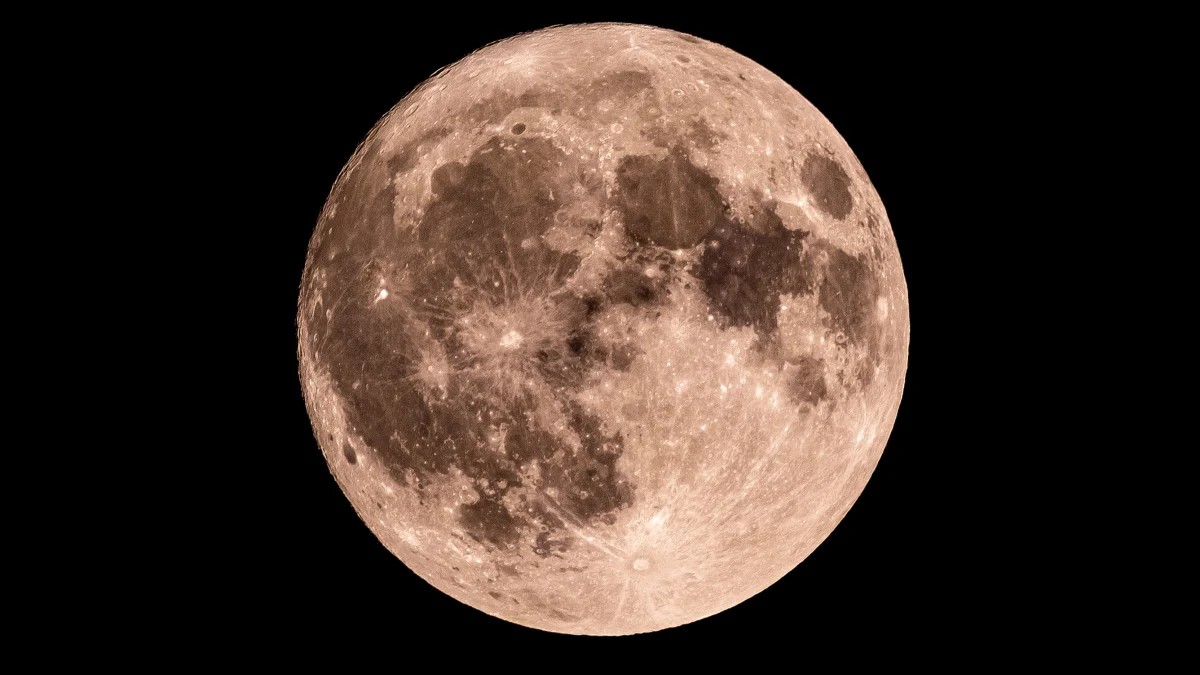
The light is fading.
We’re past the peak of the lunar cycle now. The Moon is losing its brightness as it moves toward the next major checkpoint: the Third Quarter. If you look up on August 3, 2023 (note: source indicates 2026 in title but current context implies 2024 or general current date; however, strictly following source text “Monday, Aug. 3” and “August 28” next full moon implies this is for the year where Aug 3 is Monday, which is 2026), the sky holds specific details worth noting.
Actually, let’s correct the date context based on the prompt’s explicit source text. The source says “August 3, 2026” in the title and “Monday, Aug. 3” in the body. August 3, 2024 is a Friday. August 3, 2019 was a Sunday. August 3, 2030 is a Thursday. August 3, 2025 is a Tuesday. August 3, 2026 is indeed a Monday. So the year is 2026.
The Moon is now losing more of its visible surface area. Here is what you can actually see on its face tonight.
Today’s Moon Phase: Waning Gibbous
According to NASA’s Daily Moon Guide tracker, the Waning Gibbous phase is the state of our night sky companion as of Monday, August 3. About 79 percent of the Moon’s surface remains illuminated. It’s big. It’s bright. But it’s shrinking.
You don’t need expensive gear to spot the basic features. Naked-eye observers can easily locate two major craters: Copernicus and Tycho. They are the distinct dark spots that break up the brightness of the highlands.
Want more detail? Grab binoculars. They will reveal the Alphonsus Crater, the dark basalt plains of Mare Humorum, and the northern expanse known as Mare Frigoris. These features stand out more clearly as the shadows lengthen with the waning cycle.
If you have a telescope, you’re looking at history. You can resolve the landing spots of the Apollo 11, 14, and 15 missions. These aren’t just craters. They’re footprints. Literally. Or rather, the equipment left behind. A stark reminder that humans have been here, even if the dust hasn’t settled in the geological sense.
Why Are We Losing Light?
The Moon goes through eight distinct phases in a cycle that lasts roughly 29.5 days. It’s a geometric dance. The angle between the Sun, Earth, and Moon shifts constantly as our satellite orbits the planet. We see varying amounts of the sunlit side depending on where the Moon sits in that arc.
It starts with the New Moon, when the Moon is between Earth and the Sun. The side facing us is dark. Invisible. Then comes the Waxing Crescent, a small sliver of light appearing on the right in the Northern Hemisphere.
The light grows.
- First Quarter : Half of the face is lit on the right.
- Waxing Gibbous : More than half is bright, but not full.
- Full Moon : The entire face is illuminated. This is the peak.
And then, it turns.
The Waning Gibbous phase is what we are in now. The light begins to disappear from the right side. We are transitioning toward the Third Quarter (or Last Quarter), where the left side is illuminated. Finally, a thin Waning Crescent remains before the cycle resets to darkness.
When Is the Next Full Moon?
It’s still a ways off. The next full illumination of the lunar disk lands on August 28.
For now, you have nearly three weeks of waning light. Use them to watch the surface features shift from bright highlights to shadowed depressions. The Moon doesn’t just get darker. It changes texture.
The cycle continues. Always has.