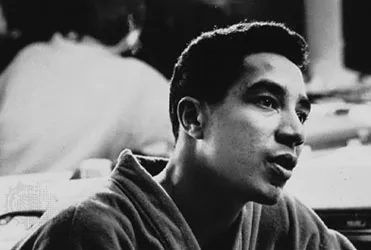
Smokey Robinson wasn’t just a singer. He was the architect of an entire era. Along with his group, The Miracles, he didn’t just participate in the 1960s music scene. They built it. Robinson, born William Robinson in Detroit, possessed a lyrical gift that even Bob Dylan called “America’s greatest living poet.” It wasn’t hyperbole. It was recognition of a songwriter who could balance the joy and pain of love with surgical precision.
The core group included Robinson, Warren “Pete” Moore, Bobby Rogers, Ronnie White, and Claudette Rogers. Each member brought something essential to the table. Claudette was the only woman, bringing a distinct harmony that grounded the sound. Together, they created a template that Berry Gordy would eventually use to build Motown Records. Gordy didn’t just manage them. He was inspired by Robinson’s raw talent. He saw something in the young songwriter that he wanted to package for the world.
From Doo-Wop to Detroit Soul
Robinson’s journey began in the doo-wop era. He was heavily influenced by jazz vocalist Sarah Vaughan. That influence is audible in his phrasing. It’s smooth. It’s sophisticated. He formed the Five Chimes with school friends in the mid-1950s. The group went through changes. They became the Matadors. They auditioned for Jackie Wilson’s manager. They failed.
But Berry Gordy was in the audience. He was impressed. He became their manager. He became Robinson’s mentor. Gordy took Robinson’s unformed composing skills and sharpened them. He taught him how to construct a hit. This partnership was crucial. It led directly to the creation of Motown.
The group changed its name to The Miracles after Claudette Rogers joined. They released “Got a Job” on End Records in 1958. Their first gig at the Apollo Theater was a disaster. They struggled on stage. But luck intervened. Marv Tarplin, the guitarist for the Primettes, joined the fold. Diana Ross led the Primettes. Robinson was friends with Ross. He introduced Gordy to the Primettes. They became The Supremes. The web of Detroit talent was weaving itself together.
The Hits That Built a Legacy
Robinson married Claudette in 1959. The music kept coming. “Bad Girl” peaked at number 93 nationally. Then came 1960. “Shop Around” exploded. It hit number one on the R&B charts and number two on the pop charts. It was the second version of the song that did it. The production was tighter. The vocals were crisper.
While Robinson was writing massive hits for other artists, The Miracles were delivering their own magic. He wrote “My Guy” for Mary Wells. He penned “I’ll Be Doggone” for Marvin Gaye. He crafted “My Girl” for The Temptations. These songs defined the careers of those stars. But The Miracles were no backup singers. They were hitmakers in their own right.
Look at the list of their biggest tracks. It reads like a history book of romance. “You’ve Really Got a Hold on Me.” “Ooo Baby Baby.” “The Tracks of My Tears.” Each song tells a story. Each melody is memorable. Robinson wrote “More Love” after his twin daughters were born prematurely and died. That grief shaped the music. It added a layer of depth that listeners felt immediately.
They weren’t all sad ballads. They had buoyant numbers too. “Mickey’s Monkey.” “Going to a Go-Go.” “I Second That Emotion.” These tracks were designed for dancing. They were designed for radio. They defined the Motown sound. Playful. Passionate. Precise.
Solo Career and Lasting Influence
Robinson left The Miracles in 1972. He wanted to pursue a solo career. The Miracles continued without him. They had moderate success. “Love Machine (Part 1)” hit number one in 1975. But Robinson was already making waves on his own.
He produced solo hits for other artists. “Cruisin’” in 1979. “Being with You” in 1981. He won a Grammy for “Just to See Her” in 1987. His 1975 album A Quiet Storm unintentionally created a new radio format. Smooth soul radio. It still exists today. The format bears his name. It reflects his musical philosophy. Quiet. Intimate. Soulful.
His accolades pile up. The Rock and Roll Hall of Fame inducted him in 1987. The Miracles followed in 2012. The National Medal of Arts came in 2002. The Kennedy Center Honor in 2006. The Gershwin Prize for Popular Song in 2016. These aren’t just trophies. They are acknowledgments of a life spent shaping American music.
Robinson’s legacy isn’t just in the hits. It’s in the structure. He showed that pop music could be sophisticated. It could be literary. It could be deeply emotional without being pretentious. He bridged the gap between R&B and pop. He made soul music palatable for everyone, without stripping it of its soul.
The Miracles may have moved on. Robinson may have gone solo. But the sound remains. You can hear it in every smooth ballad. In every carefully crafted pop song. It’s there. Waiting to be found.