Plastic packaging is a mess. It clutters landfills, lingers for centuries, and offers only mediocre protection for what’s inside. Now, a team at Kyushu University in Japan suggests a solution that smells less like a landfill and more like a pumpkin patch.
They turned leftovers into a high-performance nanomaterial.
The ingredient? Pumpkin peels. Yes, those bits usually tossed into the compost bin after carving jack-o-lanterns or slicing pies.
The results, published in Food Research International, are striking. The pumpkin-derived coating didn’t just match plastic. In specific, critical areas, it beat it.
How Pumpkin Nanoparticles Beat Standard Plastic
The research focuses on a specific type of biodegradable pumpkin peel packaging.
The process starts with pressure-heating the peels, followed by freeze-drying. This breaks them down into carbon quantum dots (CQDs). These are tiny black powder particles. When mixed with plant fibers and gelatin, they create a film or sprayable coating.
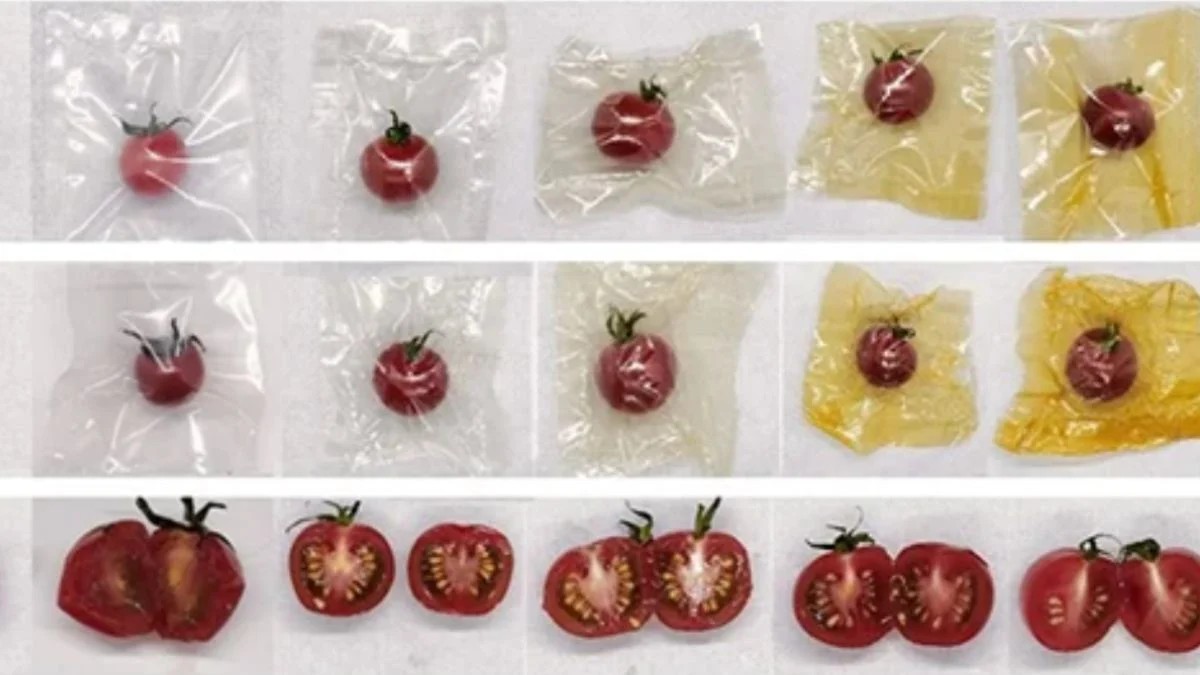
The team tested this on cherry tomatoes. They compared three groups:
* Unpackaged
* Conventional plastic wrap
* The new pumpkin-based material
After 20 days, the data showed a clear winner in three key categories:
1. UV Protection: The pumpkin coating blocked ultraviolet light better than standard plastic.
2. Antimicrobial Action: It curbed microbial growth more effectively.
3. Nutrient Retention: It preserved antioxidant activity better than plastic.
Plastic still held up better regarding moisture loss. But for preventing spoilage and protecting nutrients, the peel-based alternative showed significant promise.
“Our lab has long focused on extending the shelf life… while reducing reliance on petroleum-based plastics,” says Fumihiko Tanaka, food scientist at Kyushu University.
Is This New Packaging Non-Toxic?
Safety is the obvious question. After all, you don’t want toxic nanomaterials leaching into your produce.
The researchers ran cell viability tests. The material was confirmed to be non-toxic below 2 mg/mL.
The actual coating applied to the packaging is incredibly thin—roughly 0.01 millimeters. This is a fraction of the safe threshold. Plus, consumers can easily reduce any potential exposure by washing or peeling the food before eating.
“We understand safety is a key concern,” notes M.A. Reshaka Kavendi, also from Kyushu University.
Why Pumpkin Peels Are Better Than Silver Nanoparticles
Most antimicrobial packaging on the market relies on metal nanoparticles, like zinc oxide or silver. These work, sure. But they have a larger environmental footprint. They aren’t derived from organic matter in the same way.
Carbon quantum dots from pumpkin peels offer biocompatibility that metals can’t match.
Consider the waste aspect. Pumpkin peels make up about 10–12% of the pumpkin’s total mass. Usually, it’s thrown away. Even though it’s edible, it’s rarely consumed. Using it for food packaging turns waste into value.
“Conventional antimicrobial packaging typically relies on… metal nanoparticles,” explains Fumina Tanaka. “Ours are derived from organic matter… something critical for any food contact material.”
Can You Buy Pumpkin Peel Wraps Tomorrow?
Not quite.
The study is a promising start, but it’s not ready for store shelves. It’s been tested on only one type of food (tomatoes). The conditions were limited to a 20-day window.
Scaling up is the next hurdle. The team is looking into incorporating more natural agents to fight aggressive mold. They also want to improve the mechanical properties of the film.
But the potential is there. The material can be sprayed. This allows for spot-treatment of fruits and vegetables, targeting specific weak spots rather than wrapping the whole thing in a sheet.
The Fun Factor: Glowing Packaging
There’s a quirk in the science that the researchers are excited about.
CQDs fluoresce under UV light. The color shifts depending on particle size.
“Beyond the environmental benefits, I’d also love for this material to bring a lot of fun to food packaging,” Fumina Tanaka says.
Imagine packaging that glows in the dark. Or displays text. Or changes color to indicate freshness. It’s not just about preserving food. It’s about reimagining what packaging can be.
The science holds up. The safety data is there. The environmental case is strong. But getting it from the lab to the supermarket aisle? That’s the next challenge.
Until then, save your peels.