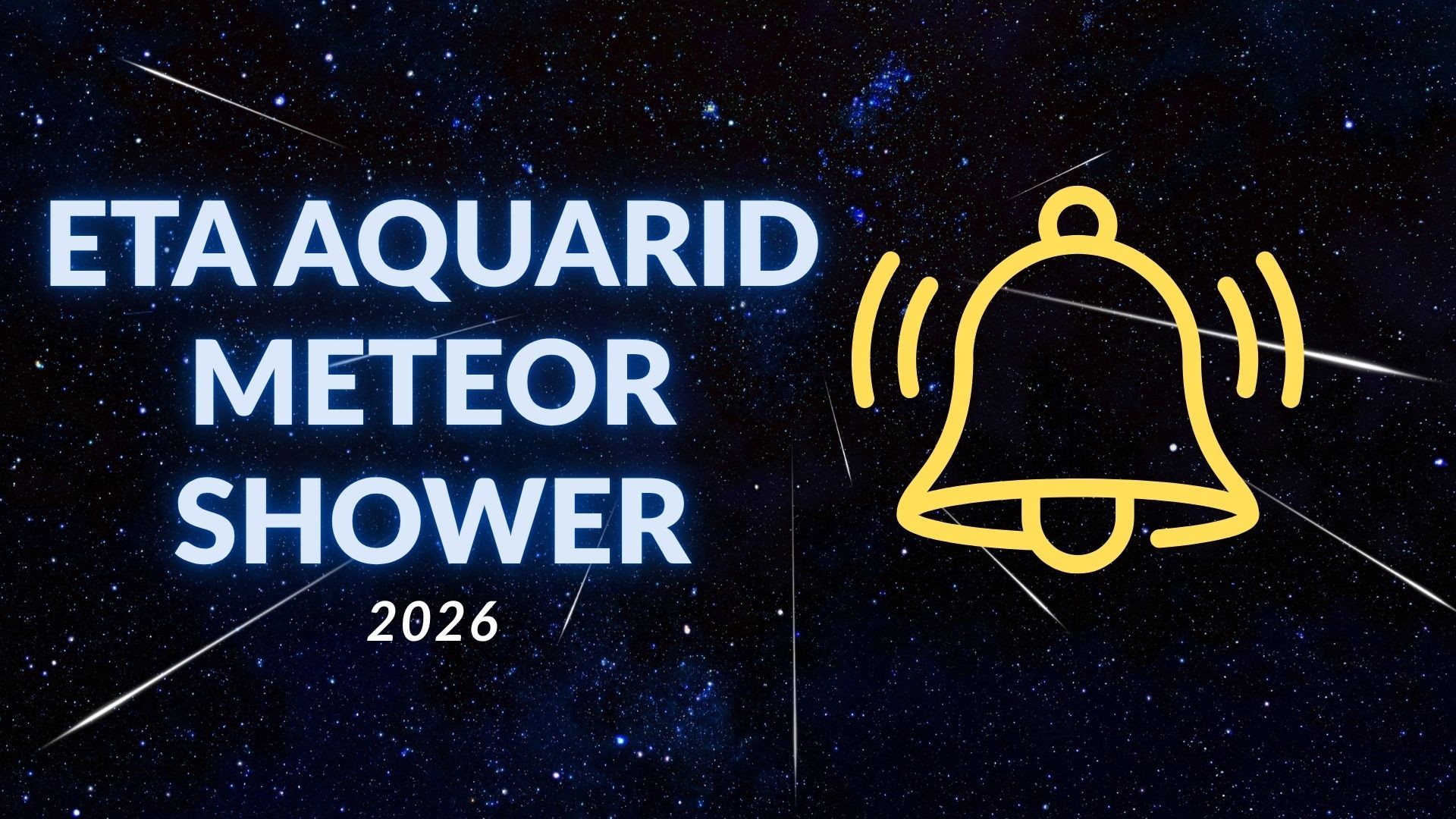
The Eta Aquarid meteor shower reaches its peak tonight, offering skywatchers a rare glimpse of cosmic debris from one of history’s most famous celestial visitors. However, stargazers must navigate significant challenges: a bright moon and a low horizon for northern observers may obscure the show.
Despite these hurdles, the event remains scientifically and visually compelling. The Eta Aquarids are unique among annual showers because they are linked to Halley’s Comet, the only comet visible to the naked eye during a human lifetime.
The Challenge of Viewing Conditions
The primary obstacle for this year’s peak is lunar interference. With the full moon occurring on May 1, the moon will be approximately 81% illuminated during the shower’s peak activity on the predawn hours of May 6.
This brightness creates a “light pollution” effect in the sky, washing out fainter meteors that would otherwise be visible under darker conditions. Consequently, while the theoretical peak rate can reach up to 60 meteors per hour under ideal, moonless skies, actual visibility will be significantly reduced.
Why this matters: The Eta Aquarids are known for producing “Earthgrazers”—bright, colorful meteors that skim the atmosphere at shallow angles. These rare events leave long-lasting trails and are often the highlight of the shower. A bright moon makes spotting these fleeting, high-contrast phenomena much more difficult, raising the question: is the effort worth it for casual observers? For dedicated enthusiasts, the answer is yes, particularly if clear skies allow for the detection of the brighter, faster members of the shower.
Where and When to Look
Visibility varies drastically depending on your location relative to the equator. The shower’s radiant —the point in the sky from which meteors appear to originate—is located in the constellation Aquarius.
- Southern Hemisphere: This is the prime viewing zone. The radiant rises high in the sky, offering an unobstructed view of the shower’s full potential.
- Northern Hemisphere: Observers face a disadvantage. The radiant remains low above the southeastern horizon for much of the night. This geometric limitation means fewer meteors will be visible above the horizon, and atmospheric interference near the horizon can further dim their appearance.
Best Time to Watch:
The optimal window is the early morning hours of May 6, just before dawn. By this time, Aquarius reaches its highest point in the sky (though still relatively low for northern viewers), maximizing the chance of catching any remaining activity before daylight arrives.
The Cosmic Connection: Halley’s Comet
Every meteor in the Eta Aquarid shower is a fragment of Halley’s Comet (officially designated 1P/Halley). As Earth passes through the comet’s orbital path, these tiny particles of ice and dust burn up in our atmosphere, creating the streaks of light we see.
Halley’s Comet is a periodic visitor, returning to the inner solar system roughly every 75 years. It last made its closest approach in 1986 and is not expected to return until 2061. Watching the Eta Aquarids is, in essence, witnessing the lingering legacy of a comet that has been observed by humans for thousands of years.
Tips for Successful Observation
To maximize your chances of seeing meteors despite the bright moon, follow these practical steps:
- Escape City Lights: Light pollution from urban areas compounds the problem of the bright moon. Travel to a location with a dark sky background to increase contrast.
- Protect Your Night Vision: It takes 20–30 minutes for your eyes to fully adjust to darkness. Avoid looking at phone screens or bright lights during this period, as even a brief glance can reset your adaptation process.
- Dress for Comfort: Predawn temperatures can be chilly. Wrap up warmly to ensure you can stay outside long enough to wait for bursts of activity, which can occur intermittently.
- Patience is Key: Meteor showers are not constant displays. Give yourself at least an hour or two to observe, as activity can come in unpredictable waves.
Conclusion
While the bright moon and low radiant angle make the 2026 Eta Aquarid peak challenging, the shower retains its value as a direct connection to Halley’s Comet. For those willing to brave the early hours and seek out dark skies, the possibility of witnessing a rare Earthgrazing meteor makes the effort worthwhile.