


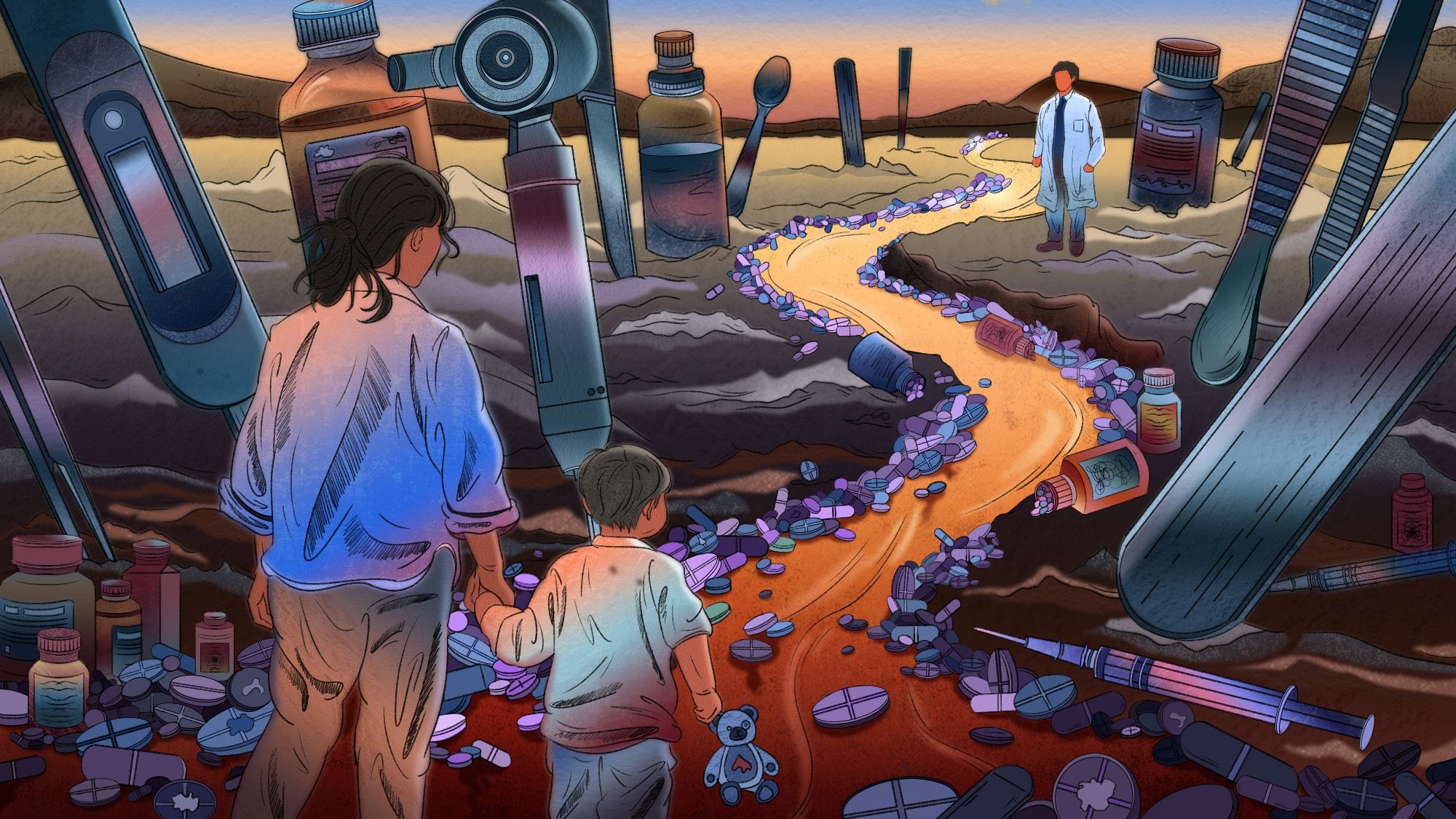
It’s a Tuesday morning. Your toddler’s cheeks are flushed. The nose is runny, the breathing phlegmy. You don’t head to daycare. You head to the pediatrician.
The solution offered? A prescription for antibiotics.
This happens everywhere. In clinics around the world. But here’s the problem: most childhood infections are viral. Antibiotics don’t touch viruses. Yet they keep getting handed out.
Why? Because doctors are human. Because they are tired. Because the system is broken.
In the long run, unnecessary prescriptions breed resistance. Bacteria learn to fight back. “Superbugs” emerge. Potency drops. It’s a slow-motion crisis.
Japan noticed this. Specifically, pediatricians there were prescribing too many antibiotics to young kids. The government didn’t write a stern letter. They didn’t just raise awareness. They offered cash.
Specifically, 800 yen. About five dollars.
Per visit.
For breaking the habit.
The results? They were remarkable. Among kids directly hit by the incentive, prescriptions dropped by 20%. A ripple effect followed. Under-20s as a whole saw a 50% cut in recent years.
I went to Japan to figure out why. To see if the money actually changed behavior. Or if something else was at play. And more importantly: could the U.S. copy this?
A Culture of Overprescription
The baseline in Japan was bad. From 2013 to 1016, over 30 percent of kids with respiratory tract infections got antibiotics. Even though most of those bugs were viral.
The U.S. wasn’t much better. About 23 percent of outpatient prescriptions were unnecessary for similar conditions.
Decades of routine prescribing. Sniffles? Antibiotics. Tummy bug? Antibiotics.
Dr. Takemi Murai, deputy head at Nagano Children’s Hospital, explained why. Medical education didn’t emphasize “superbug” risks. Antimicrobial stewardship wasn’t part of the curriculum when she graduated in 2006.
It was just what you did.
“There was a generational divide,” said Dr. Tatsuki Ikuse at the National Center for Child Health in Tokyo. Older doctors remember a time before widespread vaccinations. They treated serious bacterial infections back when whooping cough and diphtheria were common threats.
Vaccines have changed that. Children are safer now. But the doctors’ instincts? They lagged.
Surveys show doctors under 50 view resistance as an urgent threat. Those over 50? Less so.
And who sees kids in Japan? Clinic doctors. They average 60 years old. Hospital doctors average 40 to 48. Older docs in settings focused on acute care.
Historically, they treated “feverish” diseases with antibiotics.
“If doctors saw a fever and a high CRPS level, they prescribed them,” Murai said.
” Doctors were following such a practice for a longtime, so they didn’t question it.”
Fear of secondary infections drove this too. Pneumonia following a cold? Doctors worried it might happen. Studies show it’s uncommon. But fear is a powerful prescriber.
Is Antibiotic Misuse Still a Problem in the U.S.?
Yes. But less so.
Dr. Sarah Kabbani at the CDC told me prescriptions for young children have “dropped dramatically” between 2011 and2016. A 13 percent overall decline. Driven largely by better habits in pediatrics.
Japan saw a similar drop. Halving outpatient prescriptions for under-20s between 2011 and 1022.
Parents noticed.
“I was taking antibiotics quite often” as a kid, said Tatsuya Kanno in Tokyo. Now? “We don’t get really prescribed those antibiotics easy.”
Gabby Brown, a mom in Colorado, remembers a “bottle of pink stuff” in the fridge. Now? Her pediatrician is hesitant. Her website even states they don’t overprescribe. Evidence-based. Strict.
U.S. pediatricians have had years to adjust. “Antibiotic stewardship wasa core tenant of my residency training20 years ago,” Dr. Morgan Leafe noted.
But the job isn’t done.
Prescription rates vary wildly by state. Rural areas? Higher rates. More inappropriate use. Not because of clinical needs. But geography.
“Regional variations are ‘not explained by clinical factors,” said Julia Szymczak at the University of Utah.
Urgent care clinics? They are hotspots.
One in four kids visits an urgent care in a year. These clinics prescribe antibiotics at higher rates than regular doctor offices. 42 percent vs. 21 percent national average.
Why? They treat everything. Allergies? Antibiotics prescribed 20 percent of the time. Viral upper respiratory infections? 42 percent. Uncomplicated ear infections? 52 percent.
Doctor’s offices write fewer of these inappropriate scripts.
Pediatric urgent cares are better. General clinics are worse. And nurses or physician assistants? Their visits are more likely to end in a prescription than doctors’ visits. Only doctors can prescribe in Japan. This factor is unique to the U.S. system.
Different Systems, Similar Pressures
Japan’s healthcare is nationalized. Choice is high. No referrals needed. Kids’ care is virtually free due to subsidies. Parents can shop around.
But there’s a cost.
“In the U.S. and Switzerland, they try to get toknow you and know your child,” said Reid, a dad in Okinawa. “They don’tatallinJapan.”
90 percent of U.S. kids have a primary care provider. Annual check-ups. Ongoing monitoring.
In Japan? Annual checks are handled by municipalities. Not your doctor.
Japanese pediatric clinics act like U.S. urgent cares. Acute cases only. Serious illness? Go to the hospital.
This fragmentation matters.
Diagnostic Uncertainty
Doctors in both countries diagnose based on symptoms. And time.
In the U.S., minor infections are “assumed viral unless criteria are met,” said Leafe. Criteria from manuals.
This reassures doctors. Even without a sensitive test.
Rapid tests exist for group A strep. Common for strep throat. Underutilized in Japan. Encouraged in the U.S.
“For strep throat, we nevertreat[now,] without a positive test,” said Dr. Jennifer Shu in Atlanta.
But records show not all U.S. doctors follow this.
Tests for flu and RSV exist. But they miss cases. And a positive result doesn’t rule out simultaneous viral and bacterial infections.
Shu’s practice uses a 45-minute panel test. Checks for multiple viruses and bacteria. Including Mycoplasma (“walking pneumonia”).
But it requires special certification. Special equipment. Most clinics can’t do it.
Bacteria can live in the nose without causing symptoms. Detecting them isn’t proof of illness. “That’s where clinical judgment comes in,” Shu said. Combine the test with the timeline.
Time Crunches
Lack of quick, surefire tests creates uncertainty. Uncertainty breeds fear. Fear breeds antibiotics.
“Our number one motivation is tonot harm somebody; that’sthe mainthing,” Dr. Shruti Gohil said.
Worry about a missed diagnosis. A future consequence? Like resistant infection. Doctors prescribe now “in exchange” for peace of mind later.
It’s a gamble.
Time is the enemy.
“PEDIATRIC OUTPATIENTS IN JAPAN are very busy andcan onlysecure a fewminutes foreach patient,” Ikuse said.
Same in the U.S.
“Ihad a pediatrician who said theyhad… itwas like800secondsfor a sickvisit,” Szymczak recalled.
800 seconds.
Given that antibiotics are generally safe, pediatricians are tempted. “Just in case.” Even if the need isn’t certain.
A 2019 review confirmed this. Patients end up taking courses of antibiotics they don’t need.
The cycle continues. Unless the money stops it.
The five-dollar incentive worked because it changed the math. Made the “wrong” choice slightly less attractive. Made the “right” choice the default.
U.S. clinics vary wildly. Rural areas lag. Urgent cares overprescribe. Primary care providers hold the line.
Will cash incentives work here? The system is fragmented. Insurance ties you to networks. Referrals are often needed.
It’s messier than Japan.
But the pressure is the same. Time crunches. Diagnostic uncertainty. Fear of missing a bacterial infection in a sea of viruses.
Doctors aren’t evil. They’re overwhelmed.
The question isn’t whether we should prescribe less. It’s how to make it easier to say no.


