


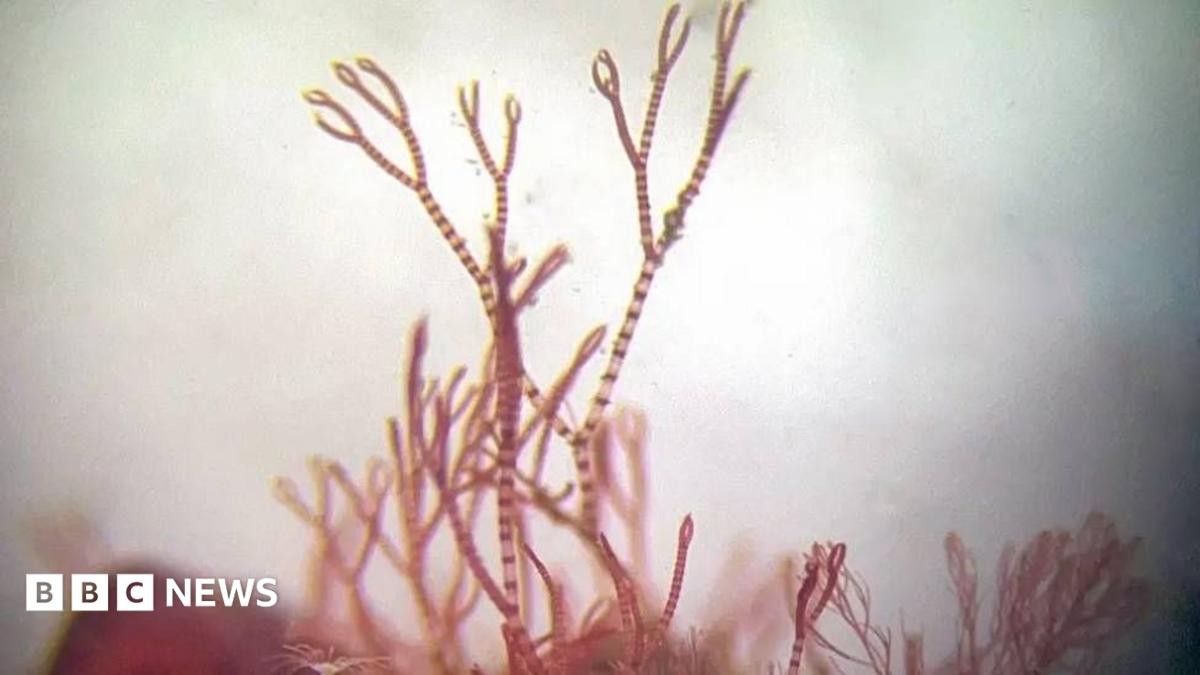
The Great Barrier Reef gets all the headlines. It’s famous. But hide away in UK waters, you’ll find something older, stranger, and equally vital. Maerl beds. They look like coral. They act like coral. But they aren’t. They’re thousands of free-living, calcified seaweed pieces. Interlocked. Forming rich underwater carpets.
And hidden within them is a secret.
Forty years ago, Prof Christine Maggs was studying one of these beds for her PhD. She found a fragment. Pink-striped. Alive on the maerl. Unfamiliar.
It stuck with her.
Most researchers move on. Maggs didn’t. She spent decades chasing this tiny sliver of algae. For years, it was just a hypothesis. A “new species to science,” she suspected, but she lacked the evidence. Formal identification requires mass. She needed a bigger sample.
So, she kept looking.
Even after her PhD. The seaweed haunted her career. She saw glimpses of it. Once, clinging to a sea squirt. Other times, just a hint. Never enough. Just enough to keep hope alive, but not enough to prove a thing.
Then, two years ago, Cornwall.
Researchers surveying local maerl beds pulled up a sample. It looked familiar. It looked like Maggs’ mystery weed.
Did she panic? Maybe. She bought a wine fridge.
Not for the grapes. For the science. The fridge provided a dark, cool, stable environment. Perfect for storing the precious sample while tests confirmed its identity.
“I just kept hoping that I would find it,” Maggs admits. “It’s been over four decades.”
The sample arrived in London. The wait was brutal. The seaweed was so small, DNA sequencing was the only way. She had to grow it. Big enough. Genetic material extracted. Then, collaboration with Prof Beatriz de Barros Barreto. DNA results in.
Puzzle pieces snapped together.
It’s real.
The species is new. Scientifically confirmed. A sample is now in the Natural History Museum’s collection. Maggs shared this exclusively with the BBC. But the discovery didn’t happen in a vacuum. It happened because of specialized divers.
Angie Gall from Natural England leads these surveys. It’s expensive work. Logistically complex. Diving isn’t a hobby here; it’s heavy machinery, safety protocols, and patience.
“It’s such a privilege,” Gall says. “You never get long enough.”
The divers saw spider crabs. King scallops. Starfish. Gobies. And amidst the collection bags, one finding stood out. Cuttings of small red algae. Pink bands. Pincer tips.
Francis Bunker, an independent marine biologist on the team, noticed it first. He carries a magnifying glass underwater. Nerdy? Sure. Essential? Absolutely.
He saw the weed. He suspected Maggs had been looking for it. He gathered what he could. Sent it to London.
“The wait was worth it,” Maggs says. “That’s why it took 40 years.”
The findings are soon to be published in Phycologia. Peer-reviewed. Finalized.
But why does this matter? Why care about a tiny weed in Cornwall?
Seaweeds are ancient. One billion years old. They feed fish. They shelter eggs. Without them, the ecosystem collapses. For humans? Extracts treat acid reflux. They heal wounds. They hold minerals we can’t make.
“We really have to love them,” says Prof Juliet Brodie at the Natural History Museum.
The discovery highlights the health of maerl beds. It shows life is still being found. But it also exposes a gap in protection.
Maerl beds in Britain are rare. OSPAR classifies them as threatened and declining. There are four protected sites. The Fal and Helford Special Area of Protection is one.
But the beds off the south Cornish coast? The ones where this new weed lives?
Not formally protected.
Craig Schneider, a biology professor at Trinity College Connecticut, calls the discovery “significant.” Not just for the taxonomy. But for advocacy. It adds weight to the argument for protecting these beds. They support plants. Animals. Microbes.
Without maerl, you lose nurseries for economic fish. You lose diversity. You lose function.
Maggs’ new species has a scientific name. Ceramium ruenessianum. It honors a colleague. Forty years of study. Recognized at last.
What do the rest of us call it?
The divers have opinions. “Pink-zebra weed” is a favorite. Others suggest “pink-banded bandit.” “Ribbon claw” sounds cooler, maybe?
Maggs is asking the public. What’s in your head?
The seaweed is small. The habitat is fragile. The history is long. But the proof is here. New species still exist. Right under the surface. Waiting for someone with a wine fridge and the patience of a saint to find them.


