It’s one of those classic brain teasers that trips people up until the lightbulb goes on. You get a definition that sounds complicated, but the answer is something you’ve probably seen on a wall or in a glove box a thousand times. If you’re stuck on the clue that points to a map, you’re not alone. These riddles rely on wordplay, so the trick is looking past the literal meaning of the words.
Decoding the Clue
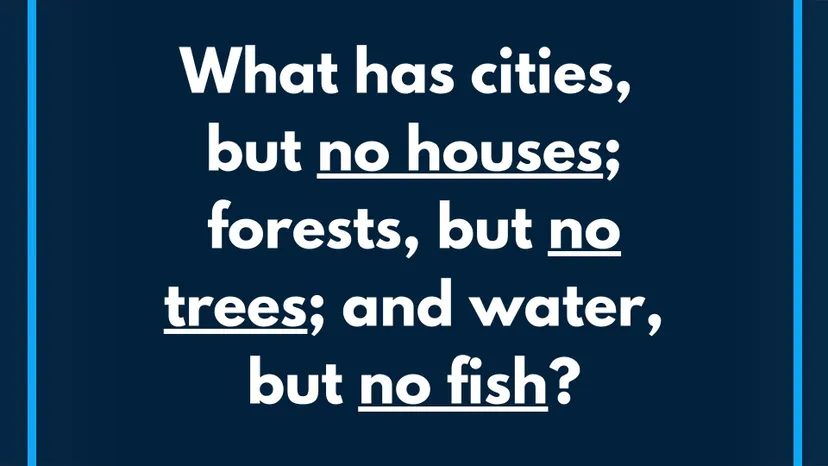
The riddle usually plays on the dual nature of what a map does. It doesn’t just show you where things are; it represents a journey. Think about the common phrasing: “It has cities but no houses, forests but no trees, and rivers but no water.”
That’s the key. A map is a representation, not the thing itself.
If you’re searching for how to solve riddles about maps, the answer lies in abstraction. The object captures the geography without the physical substance. It’s a tool for navigation that exists in ink and paper or pixels on a screen, rather than in dirt and soil.
Why This Riddle Works
People often confuse the symbol with the reality. We see a blue line on a chart and think “river,” but the riddle forces you to separate the two. It’s a test of lateral thinking. You have to accept that the answer isn’t a physical landscape, but a depiction of one.
This type of puzzle is popular in trivia nights and kids’ books because it teaches kids to question their assumptions. It’s also a great icebreaker for road trips, which is fitting, given the subject matter.
Common Variations
You might hear different versions of this question online or in print. Some ask:
– What has keys but can’t open locks? (A piano)
– What has a head and a tail but no body? (A coin)
– What has cities but no houses? (A map)
Notice the pattern? They all describe an object by listing attributes that seem to contradict its actual function. With the map riddle, the “cities” are just dots or names. The “forests” are green patches. The “water” is blue lines.
The Answer is Simple
The answer is a map.
It’s straightforward once you stop overthinking it. The riddle isn’t trying to trick you with obscure geography or hidden codes. It’s just highlighting the difference between reality and representation. Next time you’re planning a trip or looking at a GPS, remember that you’re looking at a puzzle waiting to be solved.
Does it change how you view your morning commute? Maybe not. But it makes the next trivia question a little less daunting.