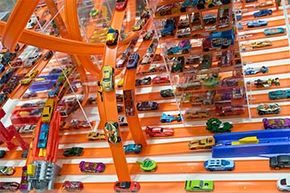
It started with tiny cars. Specifically, Mattel’s Hot Wheels.
In 1969, ABC launched a half-hour animated series simply titled Hot Wheels. It ran for two seasons until 1971. To modern eyes, it might look like a nostalgic cartoon. But let’s be real. It was basically a 30-minute commercial for toy cars.
Was it the first cartoon made to sell an existing toy line? Yes.
Did it just appear out of thin air? No.
According to The Guide to United States Popular Culture, this show was the natural next step in a decades-long shift. Advertisers had been testing the waters on Saturday and Sunday morning children’s programming for years. They were pushing harder. And kids were watching.
The 16-Minute Rule and Early Toy Ads
The trend didn’t start with Mattel’s red-line speedsters. It started with guns.
Mattel’s Burp Gun aired its first commercial in 1955. That was the spark.
By the late 1950s and into the 1960s, the landscape of children’s television had changed. During early morning weekend slots dedicated to kids, it was common to see 16 minutes of advertising per hour.
Compare that to prime time regulations, which capped ads at just 9.5 minutes per hour. The gap was huge.
Advertisers exploited this loophole. They filled weekend mornings with product placements and direct sales pitches. The audience was captive. The regulations were loose.
The FCC Pushback
Mattel tried a clever loophole for their show.
They argued Hot Wheels wasn’t an advertisement. They claimed it was about the cars. It was entertainment. The toy sales were just a happy coincidence.
The Federal Communications Commission (FCC) didn’t buy it.
The regulator’s scrutiny of the show effectively killed it after two seasons. The FCC saw through the “content vs. commercial” disguise. They knew what they were looking at.
This wasn’t the end of program-length commercials (PLCs). It was just the beginning.
The Ban That Stood for a Decade
The proliferation of toy-driven shows continued. You might remember Strawberry Shortcake. Or Cabbage Patch Kids.
These shows were essentially extended advertisements.
In 1974, the FCC issued a policy statement banning them entirely. This stance held firm for a decade.
Then came 1984.
The FCC relaxed the rules. They allowed 10.5 minutes of ads per hour on weekends. Weekdays got 12 minutes.
Congress tried to fight back. They passed legislation to reinstate stricter limits.
But the law didn’t survive.
In 1988, President Ronald Reagan vetoed the bill. He called the restrictions an infringement on free speech.
The Constitutional argument won. The toy-to-TV pipeline remained open.
From Tiny Cars to Blockbusters
The legacy of that 1969 cartoon is everywhere today.
Children’s programming tied to toys is now standard industry practice. It’s not just cartoons. It’s live-action films.
- Transformers: A phenomenally successful mix of toys, TV shows, and feature films.
- Pirates of the Caribbean: Live-action feature films tied to theme park rides.
Even before the Transformers boom, there was Raggedy Ann.