


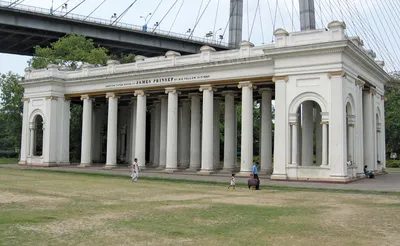
James Prinsep wasn’t just some dusty administrator with a quill pen. He was the guy who finally figured out what those weird, ancient symbols on Ashoka’s pillars actually said. Born in Essex in 1799, Prinsep moved to India and ended up changing how we understand ancient Indian history. He died in London in 1840, but his work lives on in every textbook that mentions the Mauryan emperor.
His career was a bit of a shuffle across India’s financial hubs. He started at the Calcutta mint in 1819. Then he bounced to Benares (now Varanasi) to work as an assay master. That job lasted from 1820 to 1830. He came back to Calcutta as assay master in 1832. He stayed there until his health gave out, forcing him to return to England in 1838.
Prinsep had access to the largest collection of Indian coins in existence at the time. He didn’t just look at them. He studied them.
While he was doing his day job, Prinsep was busy becoming the secretary of the Asiatic Society of Bengal in 1832. This gave him front-row seats to the biggest collection of Indian coins anyone had ever seen. He wasn’t just collecting coins for fun. He was using them to crack the code of ancient scripts. He became the first European scholar to successfully decipher Ashoka’s edicts. That’s a big deal. We might not know what those ancient rulers were saying without him.
He had a background in architecture, too. He took charge of building projects, mostly around Benares. He also tried to make life a bit more organized for everyone in India. He introduced uniform coinage. He reformed the weights and measures system. It was practical stuff. But his legacy in Calcutta is physical. Prinsep’s Ghat, an archway on the bank of the Hugli River, was built there to remember him.
His writings didn’t just disappear when he died. Compilations of his work were published later. The big one is Essays on Indian Antiquities, Historic, Numismatic, and Palaeographic. It was edited by E. Thomas and came out in two volumes back in 1858. It’s the go-to source if you want to know exactly how he went about breaking the code of Ashoka’s inscriptions.
So why does this matter today? Because before Prinsep, those edicts were just mysterious marks. Now they’re history. He gave voice to an emperor who ruled over a massive chunk of the Indian subcontinent. It’s one of those cases where one person’s obsession with tiny details changes the whole narrative. The coins he studied were the key. The script he cracked is the lock. And the history he unlocked is still relevant.


