


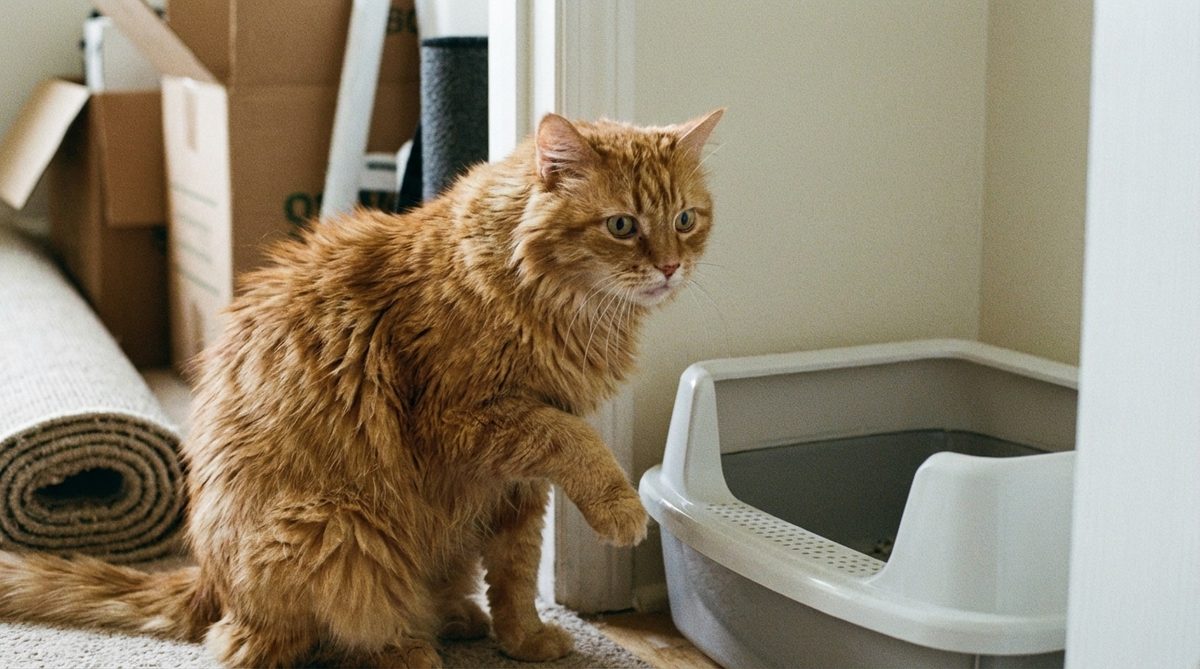
It was a rainy Sunday in early February 2026. You decided to redecorate. The logic seemed sound: hide that ugly plastic bin in the back of the hallway or a discreet corner of the bathroom. Gain space. Look cleaner. You thought you were doing a good thing.
Then came the wet spot on the living room rug.
Your cat is boycotting its toilet. It’s pristine. You cleaned it yesterday. Before you scream about revenge or question your pet’s upbringing, stop. You didn’t cause a rebellion. You triggered a sensory earthquake.
To humans, a litter box is a functional object. We tolerate it because we have to. To a cat, it is the cornerstone of its olfactory identity.
The Litter Box Is a Security Anchor, Not Just a Toilet
Cats live in a world of scents, not images. When your cat uses its box, it isn’t just relieving itself. It is depositing pheromones. It is imprinting its personal scent onto that specific spot. This is how a cat says, “This is mine. I am safe here.”
It is an emotional anchor in their daily routine.
By moving the box, even by a few meters, you did not just move an object. You erased the primary marker that allowed the cat to orient itself. It is akin to suddenly wiping away the entrance to its own home. The familiar scent trail is gone. The territory feels unknown.
Disorientation Leads to Anxiety and “Accidents”
The reaction is immediate. This isn’t spite. It is pure disorientation. When cats lose their olfactory and territorial landmarks, anxiety spikes. Their environment now feels modified and potentially hostile.
Here is the mechanism:
- The cat goes to the usual spot to find its comforting scent. It finds nothing.
- Stress levels rise. The home feels unsafe.
- To regain control and comfort, the cat seeks new strategic locations to mark its territory.
- It chooses visible spots or absorbent surfaces like sofas and beds.
What owners interpret as vengeance is actually a desperate attempt by the animal to soothe itself by re-establishing territory where it feels most vulnerable.
How to Re-adapt to the New Location
If the damage is done, know that returning to normal is not instant. Stress and inappropriate elimination can persist for several weeks after the move.
Scolding the cat or rubbing its nose in it is useless. It only increases anxiety. You need patience and consistency.
- Ensure the new spot is quiet, accessible, and far from its food bowl.
- If possible, keep a second litter box at the old location initially. Then, move it very gradually—just a few centimeters per day—towards the new destination. This is the safest method to avoid accidents.
- Use enzymatic cleaners to eliminate traces of accidents elsewhere in the house. If the cat smells its previous mistakes, it will be tempted to repeat them.
Restoring Domestic Balance by Respecting Feline Instincts
Understanding that your cat is not acting against you, but reacting to a loss of control over its environment, is the key to resolving this conflict. Respect its territorial nature. Give it time to assimilate this new geography of your apartment.
Things will return to order.
Next time you want to shake up the décor to follow the latest trends, think twice before moving Mr. Whiskers’ throne. The peace of mind and clean rugs are worth a few aesthetic concessions.
But will you really stop? The urge to rearrange rarely fades. It just waits for the next rainy Sunday.


