You probably know the kiwi. You might even know it’s a berry. But the plant family behind it? That’s a different story.
Actinidiaceae is a flowering plant group tucked into the order Ericales. It isn’t huge. It holds about 355 species across just three genera. Most people don’t realize how tightly clustered this diversity is.
These plants aren’t just random bushes. They are shrubs, small trees, or lianas—woody vines that climb. They thrive in tropical climates. If you look at a map, their heart is Southeast Asia. That’s where they are most abundant.
The Three Genera
The family splits into three distinct groups. Each has its own geographic fingerprint.
- Saurauia is the wide traveler. It contains about 300 species. It grows throughout the entire range of the family. You’ll find it anywhere the Actinidiaceae exist.
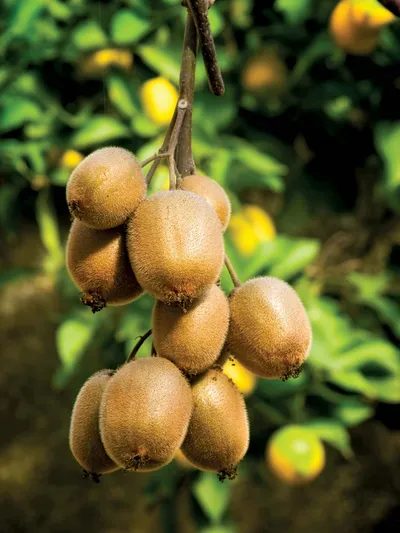
- Actinidia is smaller. It has some 30 species. It stays largely in East Asia. This is the genus that gave us the kiwi fruit, specifically Actinidia chinensis.
- Clematoclethra is the most localized. With about 20 species, it sticks to central and western China.
The leaves tell a story of their own. They grow in a spiral pattern. They are often strongly toothed. If you look closely at the edge, you will see distinct serrations.
How the Flowers Work
The flowers are usually unisexual. That means a plant is either male or female. They do not have both parts in the same bloom.
The sepals and petals do not fuse together. They remain separate. This is a key identifier for the family.
But the real trick is in the stamens. There are many of them. Just before the flower opens, the stamens invert. They turn inside out.
Then the anthers open. They dehisce through a slit. This slit is much broader toward the apex. It’s not a uniform opening. It widens at the top.
The Fruit
The result of this complex floral structure is usually a berry.
That’s it. The kiwi you slice open on a Saturday morning is the product of this specific botanical machinery. The berry grows from the female flower. The male flower provides the pollen. The inversion of the stamens helps position that pollen correctly.
It’s a simple outcome. A berry. But the path to get there involves unfused petals, spiral leaves, and a precise mechanical flip of the reproductive parts.
Why does this matter? Because understanding the structure helps us cultivate better varieties. It explains why some kiwis are fuzzy and others are smooth. It explains why some grow in China and others in New Zealand. The genetics are tied to the physical form.
The family is small. The geography is specific. The mechanics are intricate. And the fruit is everywhere.