Organic chemistry is not just a branch of science. It is the study of the stuff that makes up nearly everything you touch, eat, and breathe. At its core, an organic compound is any chemical structure where carbon atoms are covalently bonded to other elements. Usually, that partner is hydrogen. Sometimes it’s oxygen. Nitrogen shows up often too.
There are exceptions. You have to carve out specific categories to define what isn’t organic. Things like carbides, carbonates, and cyanides contain carbon but sit outside the classification. They lack the specific bonding patterns that define the rest.
The Carbon Framework
Carbon is the key. It provides the structural skeleton for a massive diversity of molecules. This isn’t just about Earth. It likely applies to life elsewhere in the universe too. Living things depend on these compounds. Without them, biology stops.
Your food is organic. The fats you store, the proteins that build your muscles, and the carbohydrates that fuel your day are all complex organic structures. Even the machinery inside your cells relies on them. Hemoglobin carries oxygen. Chlorophyll captures sunlight. Enzymes speed up reactions. Hormones signal changes. Vitamins keep systems running.
Then there is the material world. Your clothes. Cotton, wool, silk. Or synthetic fibers engineered in labs. Your fuel sources. Wood, coal, petroleum, natural gas. Protective coatings on your car or your house. Varnishes, paints, lacquers. The drugs that cure infections. Antibiotics. Synthetic painkillers. Rubber. Dyes. Plastics. Pesticides.
All of these share a common thread. Carbon.
The Myth of Vital Force
For a long time, scientists were confused. In the late 18th century, chemistry was becoming a rational science. Researchers could predict how inanimate rocks and minerals behaved. Inorganic chemistry made sense.
But organic compounds were different. They seemed to follow no rules. Their compositions were wild. Their properties were unique. Chemists couldn’t apply their existing logic to them.
The prevailing theory blamed their origin. Inorganic substances came from earth, water, and sediment. Organic substances came only from living tissue. This led to a suspicious conclusion.
Organic compounds could only be created by living organisms.
They believed a “vital force” guided this process. A mysterious power inherent in life itself. It was unmeasurable. It could not be extracted. Therefore, it seemed impossible to create organic compounds from inorganic materials in a lab.
This dogma held sway for decades. Then it broke.
The Accidental Breakthrough
Friedrich Wöhler changed everything. He was a German chemist working in Berlin. The year was 1828.
Wöhler wasn’t trying to create life. He was trying to make an inorganic salt. He mixed silver cyanate with ammonium chloride. He expected to get ammonium cyanate.
He didn’t.
He got urea.
Urea is a well-known organic compound. It’s in urine. It’s part of biological waste cycles. Yet Wöhler had made it from purely inorganic starting materials.
The molecular formula was identical. Ammonium cyanate and urea shared the same atoms. But the arrangement was different. One was inorganic in intent. The other was organic in nature.
Wöhler realized something profound. Atoms could arrange themselves in different ways. The properties of a molecule depended on its architecture, not just its ingredients. This concept is now called isomerism.
No Vital Force Needed
Wöhler’s discovery was accidental. But the conclusion was deliberate. He had debunked the vital force theory.
Other chemists picked up the baton. They synthesized more simple organic compounds from inorganic sources. By 1860, the scientific community accepted the new reality. You didn’t need a mystical life force to make organic chemicals. You just needed carbon and the right conditions.
The field exploded. Millions of compounds were synthesized. But complexity remained a hurdle. Some molecules are too intricate for standard lab synthesis.
Today, we use spectroscopy. This technology allows chemists to determine the specific architecture of complicated molecules. We can correlate molecular properties with carbon bonding patterns. We look for functional groups. These are the signature structural features that dictate behavior.
We still can’t make everything. Some structures are too stubborn. But we no longer believe in vital forces. We understand the architecture. And that understanding drives everything from pharmaceuticals to plastics.
The question isn’t how life creates these molecules anymore. It’s what we’ll build with them next.
Carbon doesn’t just sit there. It links up. It builds networks.
Most elements in the periodic table are picky. They want to take electrons or give them away entirely. Carbon sits right in the middle of the second row. Neither greedy nor generous. It prefers to share. Specifically, it has four outer-shell electrons ready to form covalent bonds.
This is the secret sauce of organic chemistry.
Other elements can get fancy with bond counts. Phosphorus grabs five. Cobalt takes six. But they can’t keep going back to themselves. Carbon can. It bonds to other carbons indefinitely.
The geometry matters. When carbon is fully bonded, those four connections point to the corners of a tetrahedron. The angle? About 109.5 degrees. This specific shape allows for infinite variety. Molecules don’t just get bigger. They get complex. Three-dimensional. Writhing in space.
And if you add hydrogen, oxygen, nitrogen, sulfur, or halogens to the mix? The possibilities explode. This sheer potential for variation is why life exists. Without carbon’s stubborn insistence on forming long, diverse chains, biology as we know it wouldn’t happen.
Drawing the Invisible
We can’t see these molecules with our eyes. So we draw them.
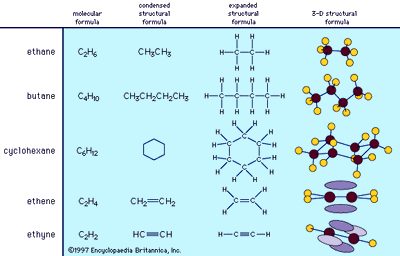
Molecular formulas are lazy. $C_2H_6$ tells you what’s in the jar. It doesn’t tell you how the atoms are arranged. For inorganic stuff, that’s usually fine. There’s only one way to stack a few atoms. Organic chemistry? Not so much.
Structural formulas fix this. Short lines represent covalent bonds. Symbols represent the atoms. But not all drawings are created equal.
Take ethane.
The simplest drawing is two-dimensional. Just lines and letters. It shows the connectivity. Carbon next to carbon. Hydrogens attached. It’s correct. But it’s flat. It lies about the third dimension. It implies a planar structure that doesn’t exist.
A better structural formula shows the tetrahedral orientation. It acknowledges that the four atoms bonded to each carbon point outward in space. This isn’t just academic decoration. The shape dictates the chemistry. If you misunderstand the 3D architecture, you misunderstand how the molecule interacts with the world.
Branches and Rings
Add more carbons. The chain grows.
Butane ($C_4H_{10}$) is a simple four-carbon chain. Straightforward. But carbon chains can branch. Or they can loop back on themselves.
Consider cyclohexane. Six carbons in a ring. Each still tetrahedral. Each still bonded to hydrogens.
Chemists are lazy in a good way. They don’t draw every hydrogen for these rings. They draw a hexagon. Each corner is a carbon. The hydrogens are implied. They just fill the gaps.
It’s a shorthand. A polygon. A 2D symbol for a 3D object. Don’t let the flat line fool you. The molecule is puckered. Twisted. Alive with motion. The polygon convention reveals bonding efficiently. It sacrifices spatial accuracy for speed. Is that a problem? Only if you need precision. For most organic discussions, the hexagon is enough.
Double and Triple Bonds
Sometimes atoms aren’t satisfied with a single handshake. They want a grip.
A double bond uses two electron pairs. A triple bond uses three.
This changes everything.
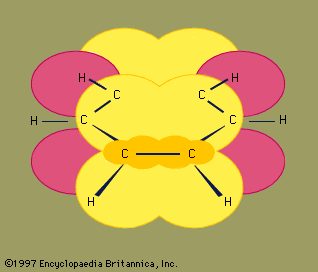
In ethene ($C_2H_4$), the six atoms lie flat. A single plane. The second bond sits above and below that plane. You can’t rotate around a double bond without breaking it. It’s rigid. Locked in place.
Acetylene ($C_2H_2$) is different. Triple bonds force a straight line. Four regions of electron density flank the axis. It’s linear. Sharp.
Multiple bonds aren’t just structural curiosities. They change electronic properties. They make molecules reactive in ways single bonds don’t. A double bond is a weak point. A target. A reactive site.
This is how nature builds complexity. By stacking simple rules. Share electrons. Tetrahedral angles. Rings. Double bonds. The result is the machinery of life. Complex. Diverse. Unpredictable.
We map it with lines. We label it with symbols. But the reality is vast. And we are just beginning to see the shape of it.
Why Functional Groups Rule Organic Chemistry
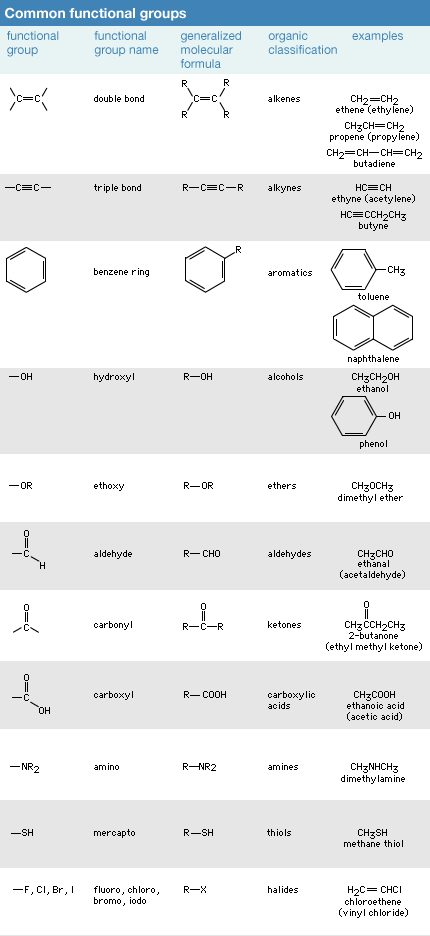
Chemists figured this out early on. Organic molecules aren’t just random collections of atoms. They follow rules. Specifically, certain clusters of atoms and their bonds—called functional groups— dictate how a molecule behaves.
Think about it. There are millions of known organic compounds. Each is unique. But if you strip away the bulk of the structure, the core reactivity remains predictable based on these groups. This makes functional groups the ultimate organizing principle of organic chemistry.
You don’t need to memorize every reaction for every single molecule. You just need to know what functional groups are present. Most molecules have more than one. Once you identify them, you can predict how the molecule will interact with others. It’s a shortcut that saves countless hours in the lab.
The Polarity Problem
Why are some molecules reactive while others sit around doing nothing? It comes down to bonds.
Hydrocarbons with only single carbon-to-carbon and carbon-to-hydrogen bonds are stubborn. These bonds are strong. The electrons are shared evenly. The charge is distributed evenly. There’s no reason for anything to happen.
Reactivity creeps in when things get uneven.
If a molecule has weak bonds or unequal electron distribution, it wakes up. Consider a covalent bond where electrons aren’t shared fairly. If the electron pair is pulled closer to one atom, that atom becomes partially negative. The neighbor becomes partially positive.
This is a polar bond.
Polarity creates potential. Chemical reactions require bond breaking and new bond formation. A region of high electron density (partial negative charge) attracts electron-deficient areas (partial positive charges). This attraction initiates the break. It starts the dance.
Molecules with these imbalances are the ones that actually change.
Where the Action Happens
So, what generates these reactive sites? Two main features.
First, multiple bonds. Double and triple bonds have regions of high electron density outside the main axis. These are functional groups themselves. They are hotspots for reaction.
Second, heteroatoms.
A heteroatom is any atom that isn’t carbon or hydrogen. Think oxygen, nitrogen, halogens. These atoms have different electron-attracting powers than carbon. When bonded to carbon, they create polar bonds. The polarity depends on the difference in electronegativity between the two.
These atomic groupings are the most important. They define the functional groups that drive chemistry.
Speaking in R
To make sense of this, chemists use shorthand.
They ignore the non-reactive parts of a molecule. They lump them into a generic placeholder: R.
This symbol represents the rest of the structure. It’s the background noise. The functional group is the signal.
So, when you see a double bond, the entire molecule can be reduced to a general formula. For an alkene, it looks like this:
R-CH=CH-R
The R’s don’t matter for the reaction mechanism at the double bond. They just fill space. This abstraction allows chemists to treat thousands of complex molecules as variations of a few simple patterns.
It’s not just about saving paper. It’s about seeing the forest instead of the trees.
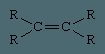
Formulae reveal behavior. If a structure contains a specific arrangement of atoms, it will likely undergo reactions typical of that feature. The action happens at the double bond. The rest of the molecule, defined by the four R groups, sits back and watches. They remain unchanged.
Things get messier with polyfunctional molecules. These have multiple functional groups. Their properties don’t just add up. They interact. The identity and interconnectedness of these groups create complex behaviors.
Natural products often look like this. Large, three-dimensional structures. Specific sites. Several functional groups working in concert.
The Inert Framework of Alkanes
Alkanes are simple. Carbon. Hydrogen. Single bonds connecting them. They are hydrocarbons, pure and basic.
The shared electron pair in a single bond sits directly between the two atoms. This creates a sigma (σ) bond. It is strong. It is nonpolar. In the hierarchy of organic reactivity, carbon-carbon and carbon-hydrogen sigma bonds are usually the least reactive.
They form the skeleton. The inert framework. Most organic compounds rely on this stable backbone. Because they are so unreactive, chemists don’t formally classify alkanes as a functional group. They are the stage, not the actor.
When an alkane chain attaches to a more complex structure, it becomes an alkyl group. A substituent. A helper.
Consider the basics:
– Methane (CH4) drives natural gas.
– Ethane (C2H6) sits nearby in the mix.
– Propane (C3H8) heats up your barbecue.
– Butane (C4H10) fuels your pocket lighter.
They can also loop back on themselves. Cyclic forms. Rings. Cyclohexane (C6H12) is the most common example of this closed-loop structure.
The Reactive Edge of Alkenes
Alkenes introduce a variable. They contain a carbon-carbon double bond.
One pair of electrons forms a sigma bond. The other pair? It occupies space on both sides of that σ bond. This is a pi (π) bond.
A π bond forms a region of increased electron density.
The electrons here are further from the positively charged carbon nuclei than the σ bond electrons are. This distance matters. It creates a zone of high electron density.
The double bond itself is strong. But that pi bond? It is vulnerable. It attracts electron-deficient atoms or groups. It draws them in.
This attraction initiates bond-breaking. The pi bond can rupture. New sigma bonds form in its place.
Take the addition of molecular hydrogen. It turns an alkene into an alkane. Only sigma bonds remain. The pi bond is gone. The electronic properties of the functional group dictate the reactivity. The double bond reacts. The single bonds stay put.
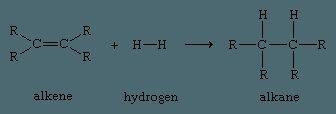
When an alkene’s pi bond breaks, it doesn’t just fall apart. It reacts. Specifically, the pi bond of an alkene reacts to form two new sigma bonds. This process is energetically favorable. The math is simple. The new bonds formed—two carbon-hydrogen sigma bonds—are stronger than the bonds broken. You are breaking one carbon-carbon pi bond and one hydrogen-hydrogen sigma bond. The energy payoff is clear.
This addition of atoms to the pi bond is a general characteristic of these molecules. It defines them. Because they can undergo these addition reactions to form more sigma bonds, alkenes are labeled as unsaturated. They have room for more.
Alkanes are different. They cannot be transformed by addition reactions into molecules with a greater number of sigma bonds. They are full. They are saturated. The distinction matters because it dictates how these compounds behave in the real world.
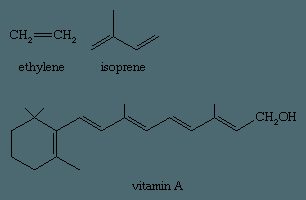
The alkene functional group is not just a textbook concept. It is widespread in nature. Its chemical structure drives everything from industrial plastics to human health.
Consider the heavy hitters. Ethylene is the precursor to polyethylene. That’s the plastic in your food containers. Isoprene (2-methyl-1,3-butadiene) is the building block for rubber. Without it, you lose tires and elastic. Then there is vitamin A. It relies on this same chemistry. It is essential for vision.
The pi bond is the engine. The reaction is the motion. And the result is everything from the soles of your feet to the clarity of your sight.
The Geometry of Ethene
Think about ethene for a second. It isn’t a floppy, three-dimensional mess. It is flat. Specifically, the two carbon atoms involved in the double bond, along with all four atoms attached to them, sit in a single, rigid plane. This planar structure isn’t just an academic curiosity; it defines how the molecule interacts with light, other chemicals, and biological receptors. If that plane twists, the pi bond breaks. That’s the constraint. That’s the energy cost.
The Triple Bond: Stronger, Sharper, Linear
Move down the group. You get alkynes. These molecules feature a carbon-carbon triple bond. It’s a heavier duty connection. It consists of one sigma bond and two pi bonds.
Those pi bonds? They aren’t stacked like pancakes. They are arranged perpendicular to each other, creating regions of high electron density that wrap around the bond axis. This geometry forces the molecule into a linear shape. Straight lines. No angles. Just 180 degrees.
Is it stronger? Absolutely. The carbon-carbon triple bond is significantly stronger than a double bond or a single bond. But strength doesn’t mean inertness. Reactions still happen. Chemistry doesn’t stop because the bond is tough. The pi bonds can be broken, allowing the formation of new, stable sigma bonds. It’s a trade-off. You lose the pi density to gain structural stability elsewhere.
Real-World Applications: Welding and Fungicides
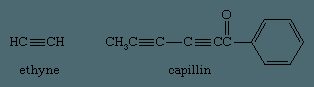
Where do we see this in the real world? The most ubiquitous example is ethyne. Also known as acetylene. It’s the fuel in oxyacetylene torches. Welders rely on this high-temperature flame to cut and join steel. The energy density of that triple bond makes it ideal for extreme heat.
Alkynes are rare in nature. Most life forms don’t bother with them. But they do exist. Consider capillin. It’s a fungicide used to combat fungal infections in plants. The molecule contains two alkyne functional groups. That’s a specific biological application of a relatively simple hydrocarbon structure. It shows how a basic chemical motif can be repurposed for defense and agriculture.
Why It Matters
Understanding these bond types isn’t just about memorizing sigma and pi counts. It’s about predicting behavior. The planar nature of alkenes and the linearity of alkynes dictate how these molecules pack together, how they react with solvents, and how they interact with enzymes. You can’t understand the material without understanding the geometry. And geometry is just atoms in space, trying to minimize energy while staying connected.
The Flat Hexagons That Define Aromatic Chemistry
The science of aromatic hydrocarbons, or arenes, begins with a specific geometric rigidity. These molecules possess a distinct functional group characterized by three pairs of doubly bonded atoms, typically carbon, arranged in a regular, planar hexagon. Visual representations often show this ring with alternating single and double bonds. It is a flat structure. This planarity is not an aesthetic choice by chemists but a physical necessity. It is forced by the electronic requirements of the six (or more) pi electrons circulating within the ring.
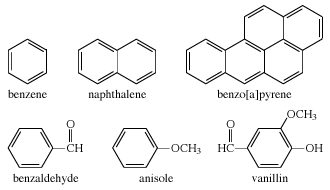
The foundational molecule here is benzene, C6H6. It holds the title of the smallest molecule capable of containing this functional group. English physicist and chemist Michael Faraday first discovered benzene in 1825. Because benzene and larger arenes carry strong, distinctive odors, they earned the name “aromatic hydrocarbons.” The term refers to smell, not just structure.
When these aromatic units act as substituents on other structural frameworks, they are designated as aryl groups. The versatility of this ring system allows for complex variations. Naphthalene, for instance, serves as the active component in traditional mothballs. Its structure consists of two fused benzene rings.
Toxicity and Environmental Presence
Not all aromatic compounds are benign. Some exhibit dangerous properties. Benzo[a]pyrene is a polycyclic aromatic hydrocarbon produced in small quantities during the combustion of organic substances. Its structure is far more complex than simple benzene, containing five fused benzene rings. Like several other polycyclic variants, benzo[a]pyrene is carcinogenic. This highlights a critical distinction in chemical safety: the structural similarity to benign aromatics does not guarantee safety.
Despite these risks, aromatic compounds are widely distributed in nature. Many possess pleasant aromas rather than harsh chemical odors. Examples include benzaldehyde, anisole, and vanillin. These substances demonstrate how the aromatic ring serves as a versatile scaffold for both industrial chemicals and natural flavorings.
Why Structure Dictates Behavior
The question of why these flat hexagons behave so differently from standard hydrocarbons lies in their electron distribution. The delocalized pi electrons create stability that standard single or double bonds do not offer. This stability allows arenes to persist in environments where other molecules might break down. It also allows them to form complex, fused structures.
Consider the contrast between the simple odor of vanilla and the toxicity of benzo[a]pyrene. Both rely on the same fundamental aromatic building blocks. The arrangement and number of fused rings change everything. Naphthalene sits in the middle. It is useful for pest control but lacks the extreme toxicity of larger fused systems.
The flat structure ensures that these rings can stack. This stacking influences how they interact with biological systems. It affects absorption, metabolism, and ultimately, toxicity. Understanding this geometry is not just academic. It is essential for predicting how new aromatic compounds will behave in the real world.
Real-World Implications of Arenes
The ubiquity of arenes means they are everywhere. They are in the air from combustion processes. They are in the food we eat. They are in the products we use. The challenge for scientists and regulators is distinguishing between the useful and the harmful.
Vanillin provides a pleasant experience. Benzo[a]pyrene poses a health
The Chemistry of the Hydroxyl Group
Oxygen doesn’t do much alone in organic chemistry. It usually forms two sigma bonds. Water, H2O, is the textbook example. Simple.
But remove one hydrogen from that water molecule. What remains? A hydroxyl group. Specifically, the ―OH unit.
Attach that hydroxyl group to a chain of carbons—an alkane framework—and you get an alcohol. Ethanol is the most famous example. It’s the stuff in drinks. But chemically, it’s just carbon chains holding onto oxygen and hydrogen.
Why Phenols Are Different
Here is where it gets tricky. If you attach that same ―OH group to a benzene ring instead of a straight alkane chain, you aren’t making an alcohol. You’re making a phenol.
The difference matters. A lot.
In an alcohol, the oxygen is bonded to an sp3 hybridized carbon. It’s flexible. It’s relatively neutral. In a phenol, the oxygen is bonded directly to an aromatic ring. The electrons in the ring interact with the oxygen’s lone pairs. This changes everything.
How Phenols React Differently
Why does this structural tweak change the chemistry? Because of resonance.
The oxygen in a phenol isn’t just hanging out. It shares electrons with the ring. This makes the oxygen less willing to let go of its hydrogen. In other words, phenols are more acidic than alcohols.
“Phenols are significantly more acidic than alcohols due to resonance stabilization of the phenoxide ion.”
This isn’t just academic trivia. It affects how these molecules behave in the real world. Alcohols like ethanol are largely neutral. They don’t react violently with bases. Phenols? They can be pulled apart by strong bases. They form salts. They dissolve.
Where You Encounter Phenols
You might not think of phenols when you brush your teeth, but they’re everywhere. Many disinfectants rely on phenolic compounds. Their acidity allows them to disrupt bacterial cell walls in ways simple alcohols can’t.
Consider cresol. It’s a methylphenol. Used in surgical antiseptics. Consider bisphenol A (BPA). A bisphenol. Used in plastics. The chemistry starts with that simple ―OH on a ring.
Which is More Stable?
Alcohols or phenols? Stability depends on the context.
Alcohols are stable in a bottle. They don’t break down easily. But chemically, the C-O bond in alcohols is strong. In phenols, the C-O bond has partial double-bond character because of the ring. It’s shorter. Stronger. Harder to break.
This is why you don’t see phenols evaporating as quickly as ethanol. The aromatic ring holds the oxygen tight.
The Real-World Impact
This distinction explains why some chemicals are useful and others are hazardous. Phenols can be toxic to human cells at low concentrations. Alcohols, generally, are safer. That’s why we drink ethanol. We don’t drink phenol.
But both are tools. Both rely on that single oxygen atom. Two bonds. One hydrogen. Or none.
The rest is just carbon.
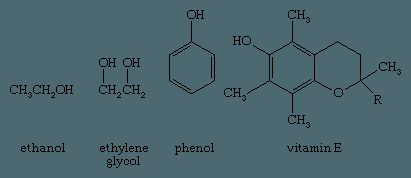
When a hydroxyl group attaches to an aryl ring, you get a phenol. Alcohols and phenols are everywhere in nature. Alcohols are particularly common. The hydroxyl group drives their unique physical and chemical behaviors.
Consider vitamin E. Its biochemical power comes from how the phenol functional group reacts. Without that specific reactivity, the molecule wouldn’t work the same way.
The Polarity Problem
Oxygen is far more electronegative than carbon or hydrogen. This creates a charge imbalance. The oxygen atom takes on a slight negative charge. The carbon and hydrogen atoms bonded to it become slightly positive.
These polar bonds define the major reaction characteristics of alcohols and phenols. Reactions usually start in one of two ways:
1. Electron-deficient groups attack the negatively charged oxygen.
2. Electron-rich groups attack the positively charged carbon or hydrogen.
This polarity is the engine behind their chemical personality.
What Are Ethers and Epoxides?
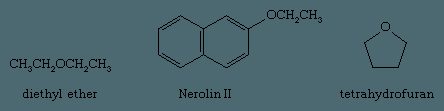
An ether forms when an oxygen atom bridges two carbon atoms via sigma bonds. These molecules are widespread. Diethyl ether was once a standard anesthetic. Today, aromatic ethers like Nerolin II (2-ethoxynaphthalene) remain in perfumes. They provide the scent of orange blossoms.
Cyclic ethers, such as tetrahydrofuran, serve as common organic solvents.
Why Ethers Are Less Reactive
Ethers contain two polar carbon-oxygen bonds. Despite this, they are far less reactive than alcohols or phenols. The lack of a hydrogen atom on the oxygen changes the game. It removes a key pathway for reaction.
The chemistry here is simpler. No hydrogen to lose. No acidic proton to donate. The oxygen is tucked between carbons. It waits. It doesn’t initiate.
This is why solvents like tetrahydrofuran are so useful. They dissolve things without getting involved in the reaction. They stay out of the way.
Is that a bad thing? Not for a solvent. But for a biological molecule? Maybe. The reactivity of the hydroxyl group is what makes alcohols and phenols biologically active. Ethers sit on the sidelines.
The difference comes down to structure. One hydrogen makes all the difference in how these molecules behave in the real world.
The Hidden Complexity of Three-Membered Rings
Oxirane, more commonly known as ethylene oxide, is the simplest example of an epoxide. But don’t let the simplicity fool you. Epoxides are cyclic ethers defined by a strained three-membered ring. That triangle structure makes them reactive—highly reactive. You might not see them in your pantry, but they are everywhere in biological systems. Consider juvenile hormone, the chemical that tells insects when to stop growing and start reproducing. One of its key functional groups is an epoxide. The molecule’s shape and reactivity hinge on that tight ring. It’s a small detail with a massive impact on development and survival.
Thiols: The Smell of Chemistry
If you’ve ever smelled a skunk or rotten eggs, you’ve encountered thiols. These are sulfur analogs of alcohols. Where an alcohol has an -OH group, a thiol has an -SH group. The sulfur atom is larger and less electronegative than oxygen. This changes everything about how these molecules behave. They are often volatile. They have distinct, pungent odors. In nature, they serve as signals. In the body, they form disulfide bonds, which lock proteins into their functional shapes. Without thiols, your hair wouldn’t hold a curl. Your body’s enzymes wouldn’t fold correctly. It’s messy chemistry, but it’s essential.
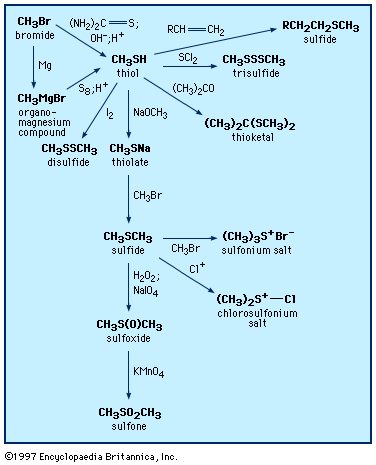
Thiols might look like alcohols, but swap that oxygen for sulfur and you get a chemical weapon of mass olfaction. The simplest example? Hydrogen sulfide ($H_2S$). It’s the sulfur twin of water and smells exactly like rotten eggs. Your nose can pick it up at concentrations measured in parts per billion. That sensitivity isn’t an accident. It’s a safety feature. Natural gas is odorless, so engineers add trace amounts of ethanethiol to it. If you smell gas, you smell this thiol. It saves lives.
The stench isn’t just industrial. Striped skunks use it. Their spray contains 3-methyl-1-butanethiol. A potent deterrent. When the SH group attaches to another structure, chemists call it mercapto. 2-mercaptoethanol is one such example. The smell is the standout feature. It dominates the chemistry.
Amines and the Basic Nitrogen
Amines change the game by introducing nitrogen. You get a nitrogen atom bonded to hydrogens or carbon groups. If those groups are all alkyl chains, you have alkyl amines. If aryl groups are involved, they are aryl amines.
Classification is simple. Primary amines have the nitrogen attached to one carbon group. Secondary links to two. Tertiary to three. The geometry around the nitrogen is a distorted tetrahedron. Three sigma bonds hold the atoms together. A lone pair of electrons sits there, unbound.
Sometimes that lone pair gets busy. It forms a fourth sigma bond to a hydrogen or carbon group. The nitrogen becomes positively charged. You now have a quaternary ammonium salt. The structure is a perfect tetrahedron.
These molecules are everywhere in biology. They are physiologically active. Amphetamine is an amine. It stimulates the central nervous system and acts as an antidepressant. Why do they matter? They are bases. They accept hydrogen ions from acidic molecules. That ability to grab protons drives their reactivity.
Organohalides and Reactivity
Halides bring a halogen into the mix. Fluorine, chlorine, bromine, iodine. They bond to carbon via a polar link. The carbon gets a slight positive charge. This charge is the source of their reactivity. It makes the carbon a target.
Marine organisms produce a huge variety of these organohalides. But humans have found commercial uses too. Chloroethane is a volatile liquid. It acts as a topical anesthetic. Chloroethene, or vinyl chloride, is the building block for PVC. It’s the plastic in your pipes. Halothane is a mixed halide used for inhalation anesthesia.
Nature’s chemistry can be potent. Epibatidine comes from glands on the back of an Ecuadorian poison frog. It is an incredibly potent painkiller. The carbon-halogen bond drives these diverse applications.
The Carbonyl Divide
When oxygen double-bonds to carbon, you create a carbonyl group. This is a pivot point in organic chemistry. The carbon is bonded to two other atoms. Change those atoms, and you change the functional group.
Aldehydes and ketones are the big ones. In a ketone, both neighbors are other carbons. In an aldehyde, at least one neighbor is hydrogen. The double bond consists of a sigma bond and a pi bond. The pi bond’s electrons hang out on both sides of the axis.
Many of these smell good. Aldehydes and ketones often provide fruity aromas. They flavor fruits and vegetables. Formalin is a 40 percent solution of formaldehyde. It preserves biological specimens. Benzaldehyde gives cherries and almonds their distinct scent. Butanedione, a ketone with two carbonyls, smells like cheese. Civetone is a large cyclic ketone from civet cats. It’s key in expensive perfumes.
The chemistry here is distinct. The pi bond allows addition reactions, similar to alkenes. But there’s a catch. Carbon-carbon double bonds are nonpolar. Carbon-oxygen bonds are polar. This polarity changes everything.
When a reaction happens, electrophiles (electron-seekers) attack the oxygen. Nucleophiles (positive-charge-seekers) attack the carbon. Breaking the pi bond requires energy. The energy landscape looks different than in alkenes.
If both substituents on the carbonyl carbon are unreactive alkane fragments (ketones), reactions are limited to additions. But if one substituent isn’t an alkane fragment, the possibilities expand. In aldehydes, the hydrogen atom attached to the carbonyl carbon distinguishes its reaction pathway from that of ketones.
The Carboxyl Convergence
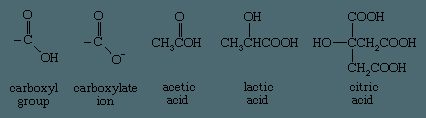
The story continues with a combination. Take a carbonyl group. Attach a hydroxyl group to the same carbon. You get a carboxyl group. This conjunction forms carboxylic acids.
Why Carboxylic Acids Taste Sour (and Why It Matters)
The defining feature of a carboxylic acid is simple chemistry with big consequences. It all comes down to that hydrogen atom in the carboxyl group. When it detaches, the molecule becomes a negatively charged carboxylate ion. This loss of a proton is what makes these compounds acidic.
This property isn’t just lab-coat theory. It dictates flavor.
Vinegar is arguably the most common example. It is a five percent solution of acetic acid in water. That sharp, stinging taste? That is the carboxylic acid at work. Without it, vinegar would just be slightly alcoholic water.
Then there is biology. Lactic acid is produced by contracting muscles. It gives pickles and sauerkraut their distinct sour punch. But it also accumulates in your legs after a sprint. The same functional group that preserves cabbage also burns your quadriceps.
Citrus fruits rely on citric acid for their defining zing. Lemons, grapefruits, oranges. The flavor profile is directly tied to this specific molecular structure.
Medicine isn’t immune. Ibuprofen contains a carboxyl group. It is an effective analgesic and anti-inflammatory agent. The chemistry that makes it dissolve and interact with your body’s pathways is the same chemistry that makes vinegar taste like vinegar.
The Acyl Group and Its Derivatives
Once you understand the acid, you look at what happens when you strip the hydroxyl part away.
The structural unit containing an alkyl group bonded to a carbonyl group is called an acyl group. It is the backbone.
This leads to a whole family of compounds known as carboxylic acid derivatives. These molecules keep the acyl group but swap out the acidic hydrogen for different substituents. Esters, amides, anhydrides. They all share that core acyl skeleton.
Why does this distinction matter? It changes how the molecule behaves. The acid form interacts with water, changes pH, and triggers taste receptors. The derivatives often do none of those things. They might be fats, they might be proteins, or they might be synthetic polymers.
The difference lies in that one missing hydrogen. Remove it, and you have a salt or an ion. Keep it, and you have an acid. Swap the rest of the group, and you have a derivative.
It seems like a small change. One atom. But in organic chemistry, small changes rewrite the rules of reactivity.
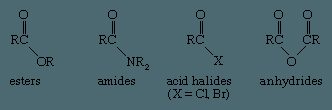
Esters. They are everywhere. You smell them in pineapples. You find them in flowers. Chemically, they look simple: an alkoxy fragment attached to an acyl group. But their smell? That is complex biology meeting simple structure. Methyl butanoate gives pineapples their signature scent. It is a small molecule with a big impact on your senses.
Then there are amides. They have amino groups attached. Acyl halides? They hold onto chlorine or bromine atoms. Anhydrides attach a carboxyl group. Each one has its own personality. Its own set of reactions.
But they all share one thing. They can all turn back into carboxylic acids. It happens under the right conditions. The right heat. The right catalyst. It is a reset button for organic chemistry.
Most people know esters for their smell. They do not know that acyl chlorides and anhydrides are the heavy lifters. They are the most reactive carboxylic acid derivatives. Useful in the lab? Absolutely. Important in nature? Not really. You will not find them hanging around in trees or animals much. They are too busy. Too reactive.
Urea: The Double Amide
Consider urea. It is in urine. It is in your garden fertilizer. It is a double amide of carbonic acid. Simple structure. Huge utility. It bridges the gap between waste and resource. Between biology and agriculture.
When Groups Interact
Now look at polyfunctional compounds. Things with multiple functional groups. It is not always predictable. You cannot just add up the reactions of each part. They interact. They fight. They cooperate.
As chemistry evolves, we understand these interactions better. We can design syntheses for complex molecules. We base these plans on reactivity trends. We know how the groups behave. We know how they clash.
This is where it gets interesting. It is not just about making things. It is about controlling chaos. Managing reactivity. Designing the path a molecule takes.
The Future of Synthesis
Chemical synthesis is evolving. We are getting better at it. More precise. More predictable. The more we learn about functional group interactions, the more we can build. Complicated molecules. Complex drugs. Advanced materials.
It is a game of patterns. Of knowing which group will react first. Which one will wait. Which one will break.
We are not just mixing chemicals anymore. We are conducting an orchestra. Each functional group is an instrument. Sometimes they play a harmony. Sometimes they create dissonance. But we are learning to read the sheet music.
What happens when we can predict every interaction? When the chaos becomes order?
The answer is not just better chemicals. It is new possibilities. New realities. Built molecule by molecule.
Chemical synthesis isn’t just about mixing stuff in beakers. It is the deliberate construction of complex molecules from simpler building blocks. And it happens for three very different reasons.
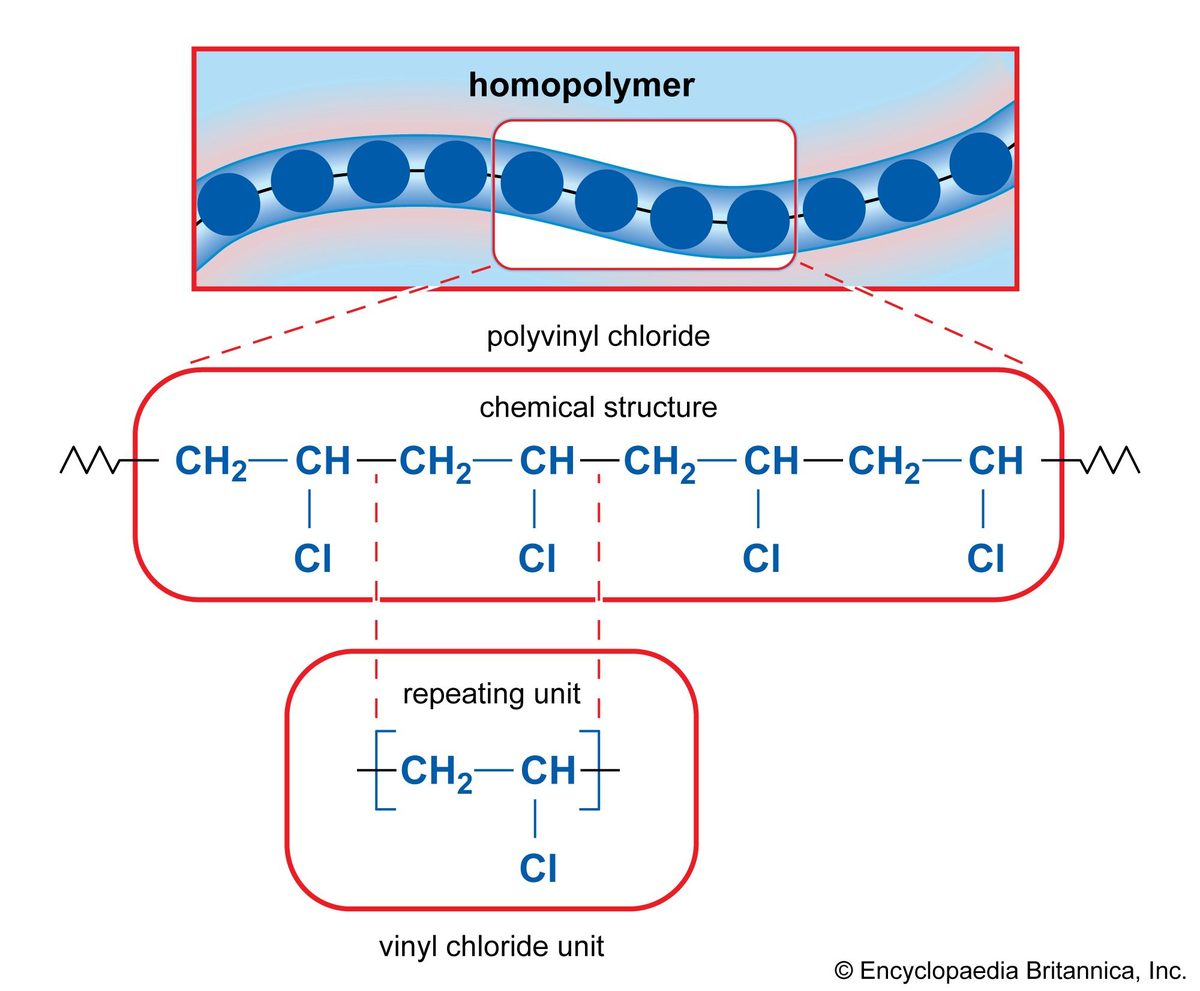
First, there is the industrial engine. We need stuff on a massive scale. Ammonia is synthesized from nitrogen and hydrogen. Why? To make ammonium sulfate for fertilizer. Vinyl chloride comes from ethylene. That is the precursor to PVC plastic. The list is endless. Fibers. Plastics. Pharmaceuticals. Herbicides. Insecticides. If society needs it, someone is synthesizing it.
Then there is the mystery solving. Nature is messy. It produces proteins in animals and alkaloids in plants. These molecules are complex. How do we know what they look like? We figure out their structure based on how they react and their physical properties. But that is just a theory. To prove it, we synthesize the compound in the lab using an unambiguous method. If our lab-made version is identical to the natural product, we have confirmed the structure. We have solved the puzzle.
Third, we synthesize things that simply do not exist. We create specific structures to see what happens. Does it react this way? Does it behave like that? We are testing theories of chemical structure and reactivity. We are playing god to see if the rules hold up.
How to Plan a Molecular Build
The range of possible syntheses is essentially limitless. But in practice, we rely on a specific logic.
Functional groups undergo transformations. These changes depend on conditions (heat, pressure, catalysts) but are largely independent of the rest of the molecule’s structure. This is the key. If we know the structure of the target and the types of transformations possible, we can plan backward.
Start with the desired end product. Let’s call it Z. Look at Z. What simpler compound, let’s call it Y, could turn into Z using a known reaction? Once you have Y, look at Y. What precursor, X, could turn into Y? Keep going. Chain the compounds together until you reach A, a material you can actually buy or make easily.
Then, run the chain. Transform A to B, B to C, and so on, until you hit Z.
Most steps change only one bond. Some change two. It is rare for more than that to happen in a single step. Simplicity is safety.
The Three Rules of Evaluation
Not all syntheses are created equal. When evaluating a plan, three factors matter.
1. Cost and Ecology
In a factory, cost is king. In a university lab, where you might synthesize a rare natural compound only once, cost matters less. Scale is small. But there is a new player in the room: environmental impact.
Green chemistry is not a buzzword. It is a requirement. Syntheses must use safe, common reagents. They must minimize harmful waste. If the process kills the planet to make the pill, it is not a viable long-term solution. The environmental footprint is now a primary metric for success.
2. Yield
Yield is the percentage of product obtained when 100 units were theoretically possible.
An 80 percent yield is generally considered good.
Sometimes, you get unlucky. Reactants take alternative paths. Products decompose. You lose material during separation. You might have to accept a 10 or 20 percent yield if the transformation is incredibly difficult.
The holy grail is 100 percent “atom efficiency.” Every atom in your reagents ends up in your product. No waste.
Why does yield matter so much? Two reasons.
First, wasted material costs money.
Second, and more importantly, yields multiply. If a synthesis has ten steps, and each step has an 80 percent yield, your overall yield is roughly 10.7 percent. If each step is only 50 percent, you have less than 0.1 percent left at the end. A synthesis with low intermediate yields may be theoretically possible but practically useless. You cannot get enough product from the starting material.
3. Rate
A reaction might be thermodynamically possible but kinetically frozen. It takes forever. If a step takes weeks to complete, it is not useful.
Can you speed it up? Yes. Raise the temperature. Add a catalyst. A catalyst increases the rate without altering the final outcome of the reaction. It is the shortcut. But finding the right catalyst is often the hardest part of the job.
This is how chemistry works. It is a balance of cost, waste, efficiency, and time. You can have the perfect molecule on paper. But if it takes too long to make, costs too much, or leaves a toxic trail, it is just a theory.
You just spent three days stirring two flammable liquids together. The reaction worked. You have a product.
It’s also a mess.
In organic synthesis, getting the thing you want is only half the battle. The other half is digging it out of the sludge. Your flask is full of unreacted starting materials, leftover reagents, side products, and maybe some solvent that didn’t evaporate. If you don’t clean this up, you aren’t holding a chemical. You’re holding a mystery.
And in multistep synthesis, that mystery is fatal.
The Multistep Trap
If you are building a complex molecule, you can’t skip steps.
Imagine trying to assemble a watch while wearing oven mitts. You tighten a screw, but you also smear grease on the gears. If you move to the next assembly step while that grease is still wet, you ruin the whole mechanism.
This is why chemists purify after every single reaction.
It’s tedious. It’s slow. It wastes material. But it works.
If you carry impurities forward, they compound. A 10% impurity in step one might become a 30% impurity in step three. By the end, you don’t have a drug candidate. You have a toxic soup that does nothing.
Purification is the filter. It’s the sieve. It’s the process of removing everything that isn’t the target.
How Do We Know What We Have?
You purified the stuff. You have a white powder. Or an oil.
Is it the right molecule?
You think so. You followed the procedure. You used the right amounts. But chemistry doesn’t care about your intentions. It cares about entropy and reactivity.
This is where spectroscopy comes in.
Spectroscopy is the way molecules talk to us. They absorb light, radio waves, or magnetic fields in specific patterns. Those patterns are like fingerprints. Unique. Reproducible.
If your spectrum matches the reference, you probably made what you think you made. If it doesn’t? You’re starting over.
The Tools of Truth
You don’t look at the molecule with your eyes. You look at it with machines.
Infrared (IR) Spectroscopy
IR looks at bonds.
Bonds vibrate. They stretch and bend. Different bonds vibrate at different frequencies. An O-H bond stretches at a different frequency than a C=O bond.
When you blast your sample with infrared light, certain frequencies get absorbed. The rest pass through. The machine graphs what was absorbed.
“IR tells you what functional groups are present, and more importantly, what are missing.”
If you’re trying to make an ester, you should see a strong carbonyl peak. You shouldn’t see the broad, messy peak of an alcohol. If you do, your reaction didn’t finish. Or it didn’t happen at all.
It’s a quick check. Cheap. Fast.
Nuclear Magnetic Resonance (NMR)
IR is the scout. NMR is the cartographer.
NMR is the gold standard for structure determination. It uses strong magnets and radio waves to look at the nuclei of atoms. Usually hydrogen (1H)
Before the mid-20th century, chemists were essentially guessing. They distinguished organic compounds by simple physical and chemical properties, but those clues only scratched the surface of what a molecule actually looked like. Determining the structure of large molecules was a headache. It involved tracking reaction pathways with careful precision. There was no visual aid. Molecules are too small for any microscope to render a complete image.
You might wonder how scientists mapped the unseen without seeing it.
One method existed: X-ray crystallography. It provided precise structural data. But it had strict requirements. The sample had to be a solid crystal. Most compounds couldn’t be forced into that form. A full X-ray determination was expensive. It was time-consuming. Chemists only used it for the most baffling structures.
They needed something faster. Something more accessible.
The Spectrum of Light and Energy
The solution lay in spectroscopy. This is a broad term for instrumental processes that reveal molecular structure. It works by analyzing how compounds absorb, scatter, or emit electromagnetic radiation.
Electromagnetic radiation is a continuous spectrum. It ranges from high-energy X-rays to low-energy radio waves. X-rays have wavelengths of about 10 nanometers. Radio waves stretch to a meter or more. Visible light sits in the middle. Humans see wavelengths between 400 and 700 nanometers.
Objects have color because they absorb specific wavelengths. The light that bounces off or passes through is what reaches your eye. The absorbed wavelengths are missing.
Molecules absorb light when the energy matches a need. The energy in the light must be precise. It must be enough to push a molecule from one energy state to a higher one. These energy levels are quantized. They are discrete. Like steps on a staircase, each level is a fixed height above the last.
By measuring the wavelengths of absorbed radiation, scientists get data on internal energy levels. They correlate this data with specific structural details. Instruments called spectrometers handle the measurement. They work across various regions of the spectrum.
For structure determination, three techniques dominate:
– Ultraviolet and visible spectroscopy
– Infrared spectroscopy
– Nuclear magnetic resonance spectroscopy
A fourth method, mass spectrometry, is also vital. It doesn’t use electromagnetic absorption. Instead, it counts atoms. It identifies their types. It tells you what the molecule is made of.
Unlocking the Secrets of Conjugation
Ultraviolet and visible (UV-visible) spectroscopy targets the high-energy end of the visible spectrum. It covers wavelengths from 200 to 400 nanometers for UV and 400 to 700 nanometers for visible light.
Most organic compounds are transparent to this radiation. They appear colorless in solution. Why? The electrons in sigma (σ) bonds are tightly held. They require even higher energy to excite. X-rays might do it. UV light generally doesn’t.
But pi (π) bonds are different. They are looser. Electrons in π bonds can be promoted to higher energy levels by UV and visible light. This makes UV-visible spectroscopy useful for molecules containing these bonds.
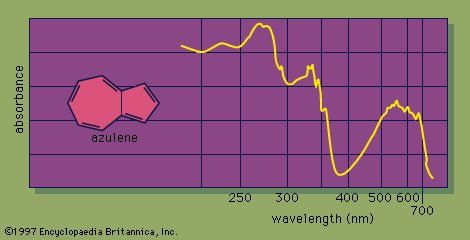
It gets more specific with conjugation. When multiple π bonds are separated by single bonds, they are conjugated. This arrangement changes how the molecule interacts with light. It shifts the energy required for excitation. It allows the molecule to absorb visible light. That is why some conjugated systems are colored.
Why Conjugation Changes Color
You can see the effect of conjugation in real life. Take azulene. It has five conjugated pi bonds. That structure makes it absorb light in the visible spectrum. The result is a deep blue color.
Carrots work the same way. They get their bright orange hue from beta-carotene. This molecule has 11 conjugated pi bonds. The more bonds you have in that chain. The longer the wavelength of light absorbed. Lower energy. Longer waves.
As conjugation increases. The UV-visible spectrum gets crowded. You see absorption at more wavelengths. Individual peaks start to merge. They coalesce into a continuous spectrum. The strongest peaks still stick out. They appear as sharp spikes on the graph.
This is why UV-visible spectroscopy is so useful. It is especially informative for molecules with conjugated pi bonds. If you are trying to identify a highly colored organic compound. Look for that extended system.
Infrared (IR) spectroscopy
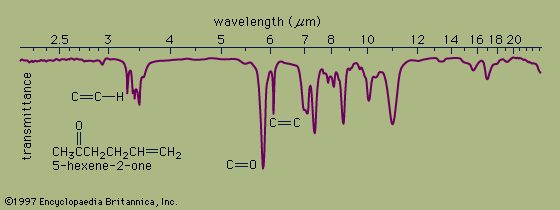
Atoms in organic compounds don’t just sit there. They vibrate. When two atoms share an electron pair to form a sigma bond, they aren’t static. They pull toward each other but maintain an average separation distance. Think of it as a constant, microscopic jiggling. This movement is a stretching vibration.
But they don’t just stretch. The bond axis—the line connecting the two atoms—can rock back and forth within a shared plane. It can bend outside that plane. These are bending vibrations.
Both movements represent different energy levels within a molecule. And here’s the kicker: those energy differences match the wavelengths of infrared radiation. Specifically, the range between 2.5 and 15 micrometers.
How Infrared Spectroscopy Identifies Functional Groups
An instrument called an infrared spectrophotometer passes this light through a sample. It plots how much light gets through on the vertical axis against the wavelength on the horizontal. The peaks point down. Why? Because the vertical axis tracks percent transmittance. When the molecule absorbs radiation, transmittance drops.
Since every bond interacts with this light, the resulting spectrum is a data goldmine.
Look at the carbon-hydrogen bonds. Strong stretching vibrations cause absorptions around 3.4 micrometers. A sharp peak at 3.2 micrometers signals a hydrogen atom attached to a carbon-carbon double bond.
Then there’s the bending. The complex web of carbon-hydrogen bending vibrations creates a messy absorption pattern from 7 to 25 micrometers. Chemists call this the fingerprint region. It’s complicated, sure. But it’s unique to every single organic structure. It’s like a molecular ID card.
Identifying other groups is easier. Carbon-carbon double bonds show up clearly at 6.1 micrometers. Carbon-oxygen double bonds appear at 5.8 micrometers. Most functional groups have these distinct IR markers. That makes infrared spectroscopy indispensable for figuring out what’s actually in the bottle.
The Physics Behind Nuclear Magnetic Resonance
Now, let’s shift gears. We’re moving from infrared light to radio waves.
Nuclear magnetic resonance (NMR) relies on low-energy, long-wavelength radiation. Most nuclei in a molecule act like tiny bar magnets. They have a small magnetic field of their own. Put them in a strong external magnetic field, and they line up.
There are two states. The lower energy state aligns with the field. The higher energy state fights it. The gap between these states depends on how strong that external magnet is.
Modern machines use fields between 1.4 and 18.0 teslas. To put that in perspective, Earth’s magnetic field is a weak 0.00007 teslas. The human-scale world is magnetically weak compared to an NMR lab.
At 1.4 teslas, the energy gap for a hydrogen nucleus (proton) is tiny. Only 0.024 joules per mole. You need radio-frequency waves around 60 megahertz to bridge that gap. Flip the nucleus from the lower state to the higher one. That transition creates an absorption peak. A resonance.
Because the energy required depends entirely on the nucleus’s environment, NMR provides more structural detail than any other spectroscopic technique. It tells you not just what atoms are there, but how they’re arranged.
Proton Magnetic Resonance Spectroscopy
The most common form is proton magnetic resonance spectroscopy. It measures the resonances of hydrogen atoms. Hydrogen is everywhere in organic chemistry. It’s the easiest to detect.
Then there’s carbon-13 magnetic resonance. Carbon-13 is a naturally occurring isotope. It has six protons and seven neutrons. It’s less abundant than the standard carbon-12, but it works just the same.
This technique yields specific resonances for carbon-13 atoms. It complements the proton data. Together, they map the skeleton of the molecule.
Why does this matter? Because you’re not just looking at a list of atoms. You’re looking at a map. The fingerprint region in IR confirms the identity. The NMR shifts tell you the connectivity. One tells you what the molecule is. The other tells you how it’s built.
There’s still more to decode. The subtle differences in chemical shifts can reveal hidden interactions. Solvent effects. Conjugation. It’s a puzzle with no final piece until you see the whole picture.
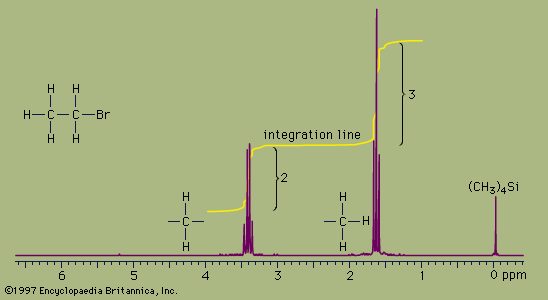
Proton NMR spectra give you a detailed map of molecular structure. Why? Because most organic molecules are packed with hydrogen atoms. These atoms don’t all behave the same. They absorb energy at different wavelengths depending on their bonding environment.
The result is a spectrum. It looks like a series of sharp spikes or peaks. There is no vertical scale to measure absolute strength, but relative height matters. It roughly corresponds to absorption intensity. The horizontal scale is the real story. It doesn’t use simple wavelength units.
Instead, positions are measured relative to tetramethylsilane, (CH3)4Si. This inert liquid is added to the sample. All 12 of its hydrogen atoms absorb at the same position. They create a single, sharp peak. Scientists arbitrarily assign this value as zero. It becomes the reference point.
Most protons in your sample appear to the left of this reference. They absorb higher-energy radiation. The distance from that zero point is the chemical shift. Each unit represents a fractional increase of one part per million (ppm) in energy relative to tetramethylsilane.
Consider bromoethane. The CH3 group hydrogens show up around 1.6 ppm. The CH2 group hydrogens appear near 3.3 ppm. Why the difference? Electrons. They generate their own magnetic fields. This reduces the total field felt by the nucleus. Atoms in high-electron-density regions are shielded. Tetramethylsilane hydrogens are heavily shielded.
In bromoethane, bromine is electronegative. It pulls electrons away from carbon and hydrogen. The CH2 hydrogens feel this pull more than the CH3 hydrogens. They are closer to the bromine. Thus, they have a greater chemical shift. All three hydrogens on the CH3 group share the same local magnetic field. They are equivalent. The two on the CH2 group are also equivalent.
Chemical shift is the most important data point. It reveals the nature of bonds around the hydrogen. But it’s not the only clue.
Integrating Peak Areas
The second feature is the area under the peaks. This space is directly proportional to the number of hydrogen atoms contributing to that signal. NMR spectrometers have an integration feature. You select it, and the machine calculates the area. It plots the result as a vertical line displaced by an amount proportional to that area.
Look at the bromoethane spectrum again. The absorption peaks around 1.6 ppm have an area 1.5 times greater than the peaks at 3.3 ppm. This supports the structure. The CH3 group has three hydrogens. The CH2 group has two. The ratio is 3:2. That equals 1.5:1. The math holds up.
Spin-Spin Splitting Patterns
The third feature is the pattern of the peaks themselves. In bromoethane, the CH3 peak isn’t a single spike. It splits into three distinct peaks. This is a triplet. The CH2 peak splits into four peaks. This is a quartet.
This splitting comes from spin-spin splitting. Nearby hydrogen atoms cause it. Each set of equivalent hydrogens on a carbon is split by adjacent, nonequivalent hydrogens. The rule is simple: n+1. If there are n adjacent hydrogens, you get n+1 peaks.
In bromoethane, the CH3 absorption is a triplet because of the two hydrogens on the adjacent CH2 group. Two adjacent hydrogens mean 2+1=3 peaks. Conversely, the CH2 absorption is a quartet. It feels the effect of the three hydrogens on the neighboring CH3 group. Three adjacent hydrogens mean 3+1=4 peaks.
These splittings generally occur for nonequivalent hydrogens bonded to one or two adjoining carbons.
Combining the Clues
Chemical shift, relative peak size, and spin-spin splitting provide detailed info. They show the number and location of hydrogen atoms. When you add carbon-13 magnetic resonance, chemists can often deduce an unambiguous structure. This is true even if you only know the molecular formula.
Carbon-13 Magnetic Resonance Spectroscopy
Natural carbon is mostly carbon-12. It has no magnetic moment. NMR can’t detect it. But carbon-13 (13C) exists. It makes up about 1% of all carbon atoms. These atoms absorb radio-frequency waves similarly to hydrogen. 13C NMR is possible.
This technique gives valuable info about the carbon skeleton. It’s just harder to get. On average, only one in 100 carbons is a 13C isotope. They absorb electromagnetic radiation very weakly. 13C NMR signals are about 6,000 times weaker than proton signals.
Modern instruments have overcome this handicap. 13C NMR is now a readily accessible analytical technique. Like proton spectra, 13C peaks are plotted as chemical shifts. They are referenced to an internal standard. Usually, this is the carbon resonance of tetramethylsilane.
The logic remains the same. Shielding, electronegativity, and adjacency dictate the signal. The difference is scale. Carbon skeletons are the framework. Hydrogens are the details. Put them together, and the molecule reveals itself.
Why do some peaks split while others don’t? It depends on symmetry. Symmetry hides information. Lack of symmetry exposes it. NMR is just listening to what the atoms have to say. Sometimes they shout. Sometimes they whisper. You just have to know how to listen.
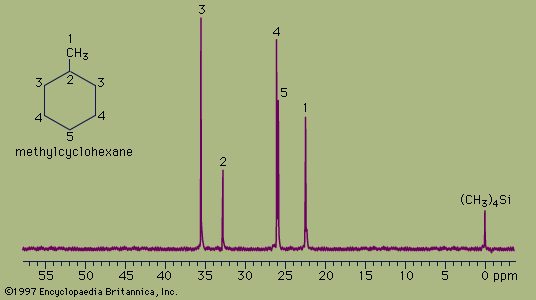
Spectroscopy is often taught as a straightforward mapping exercise. You see a peak, you assign a carbon. But methylcyclohexane complicates that narrative. It’s the standard textbook example for a reason.
Look at the 13C NMR spectrum. You get five distinct peaks. That’s it.
Why five? The molecule has seven carbons. Two pairs are magnetically equivalent due to symmetry. A vertical line splits the ring right down the middle. The two carbons at position 3 are identical to each other. The two at position 4 are identical to each other. The methyl carbon, the ring junction, and the single remaining ring carbon stand alone.
This symmetry makes counting easy. It makes interpretation tricky, though.
Peak Area Misconceptions in Carbon Spectra
In proton NMR, the area under the curve tells you exactly how many hydrogens are contributing. Double the area. Double the hydrogens.
13C NMR does not work that way.
The peaks at 35.8 ppm and 26.8 ppm are bigger. They correspond to the two equivalent carbons at positions 3 and 4. The other peaks—23.1 ppm, 33.1 ppm, and the second 26.8 ppm signal—are smaller because they represent single carbons.
Is it a perfect 2:1 ratio? No.
The intensities differ. The relaxation times vary. The nuclear Overhauser effect plays a role. The numbers on the screen are useful for identification, but they do not give you a direct count of atoms. Do not try to integrate 13C peaks like you do protons. You will get the wrong answer.
The Silence of Carbon-Carbon Coupling
You might expect to see complex splitting patterns. Multiplets everywhere.
You won’t.
The 13C spectrum of methylcyclohexane is surprisingly clean. There are no spin-spin splitting patterns arising from adjacent carbon atoms. This happens for two specific reasons.
First, the natural abundance of 13C is only about 1.1%. The rest is 12C, which has no magnetic moment. A given 13C atom is almost always surrounded by 12C neighbors. The probability of having two 13C atoms next to each other is vanishingly small. Weak coupling between them does not show up on the spectrum.
Second, the splitting that does occur between 13C and its attached hydrogens is actively removed.
We use proton decoupling.
This is an instrumental technique. It floods the sample with radio waves at the proton frequency. The protons spin randomly. Their interaction with the carbon nucleus is averaged out to zero. The result is a singlet for every unique carbon environment.
It simplifies the spectrum significantly. Without decoupling, the carbon attached to three hydrogens would be a quartet. The one attached to two would be a triplet. The rest would be doublets or singlets. Decoupling collapses all of that into single lines. It is standard practice for a reason.
Combining Data for Structure Elucidation
Why do we bother with both methods?
Mass spectrometry stands apart from other spectroscopic methods. It doesn’t rely on molecules absorbing electromagnetic radiation. Instead, it shatters them. Or rather, it turns them into ions and sorts them by weight.
Think of it as a high-speed sorting machine for atoms.
In a mass spectrometer, the sample is vaporized and bombarded with high-energy electrons. This strips away an electron, creating a positively charged molecular ion. Sometimes, these ions are too unstable to hold together. They break into smaller fragments. The machine accelerates these charged pieces through a magnetic field.
The magnetic field bends their path. Heavier ions resist the turn. Lighter ions swing wide. A detector counts them. The result is a mass spectrum.
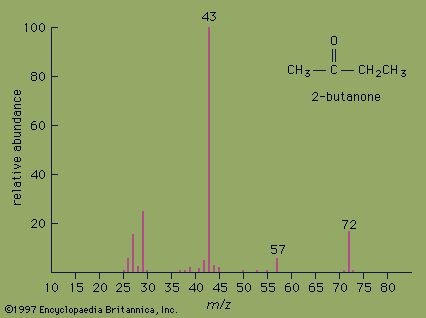
This chart plots mass-to-charge ratio (m /z ) against abundance. For single-charged ions, z is 1. So the horizontal axis is just mass.
Take 2-butanone. A simple ketone. Its spectrum tells a story of its own structure.
The peak at m /z = 72 is the molecular ion. It shows the molecule’s total mass. In high-resolution mass spectrometry, this number is precise. We’re talking accuracy within 4 parts per million. The machine reads 72.0575. That specific decimal point confirms the formula is C4H8O. No guessing. Just math and physics working together.
But the fragments are where the real clues hide.
Functional groups dictate how molecules snap apart. Ketones often break where the carbon chain meets the carbonyl group. If 2-butanone loses a methyl group (CH3), the mass drops by 15. You see a peak at m /z = 57. Lose an ethyl group (CH3CH2) instead, and the base peak appears at m /z = 43. That base peak is the most abundant fragment. Its intensity is set to 100. It’s the loudest voice in the room.
For complex natural products, spectra alone might not be enough. Even with every peak identified, ambiguity remains. Chemists then have to synthesize the molecule step-by-step. If the synthetic version matches the natural one, they have proof.
Reaction Types
Functional groups are not just structural features. They are reactive centers.
The electrons in a functional group determine how a molecule behaves. Similar electronic setups lead to similar reactions. This similarity allows us to categorize organic chemistry into manageable buckets.
Substitution. Elimination. Addition. Hydrolysis. Condensation. Acid-base. Oxidation-reduction.
These aren’t just textbook terms. They are the patterns underlying millions of chemical transformations.
Substitution Reactions
Substitution is a swap. One atom leaves. Another takes its place.
Consider benzyl bromide. Add sodium hydroxide in water. The bromine atom departs. The hydroxyl group from the sodium hydroxide slides in. You get benzyl alcohol. The bromine pairs with sodium to form sodium bromide. An inorganic by-product. But the organic molecule has changed completely.
This isn’t limited to simple chains. Substitution can close rings. If a molecule has a halide on one end and a hydroxyl group on the other, an internal substitution can occur. The chain curls around and bonds to itself. A cyclic ether forms. The molecule folds in on itself, creating structure from flexibility.
Elimination Reactions
Elimination is the opposite of addition. It removes atoms to create new bonds.
Usually, this means creating double bonds. Remove two atoms, and the carbons between them share two pairs of electrons instead of one.
Alcohols are prime candidates. Treat an alcohol with concentrated sulfuric acid. The acid pulls water out. The result is an alkene. A double bond forms where a single bond once stood.
Thermal elimination works too. Heat chloroethane. Hydrogen chloride gas escapes. Chloroethene remains. The plastic precursor. The gas byproduct. The double bond formed by loss.
It’s a clean removal. A subtraction that leads to higher energy, more reactive structures.
Most people think of chemistry as abstract equations on a chalkboard. The reality is messier. It’s about how distinct molecules smash together, break apart, or stitch themselves into something entirely new. These three mechanisms—addition, hydrolysis, and condensation—are the backbone of industrial synthesis. They dictate whether we get plastic, fuel, or pharmaceuticals.
The simplicity of addition reactions
Addition reactions are straightforward. One molecule attaches itself to another. The result is a single, heavier product. There is no waste. No byproducts. Just a bigger molecule.
Consider ethylene. It is a simple gas. Add chlorine to it. You get dichloroethane. This intermediate is not the end goal. It is the precursor to vinyl chloride. That chemical then becomes polyvinyl chloride (PVC). The pipes in your house, the vinyl siding on your neighbor’s garage. All of it starts with this basic addition step.
Then there is water. Add it to an alkene. You get an alcohol. Take propene. Add water in the presence of an acid catalyst. You create 2-propanol. Isopropyl alcohol. Rubbing alcohol. The disinfectant in your cabinet.
The addition of one molecule to another to give a single new molecule constitutes an important class of reactions.
This process is efficient. It builds complexity from simplicity. But it isn’t the only way to manipulate molecular structures. Sometimes you need to break things down.
The incomplete nature of hydrolysis
Hydrolysis is the opposite of synthesis. It involves scission. Cleavage. You take a molecule and smash it using water. The water molecules themselves split apart. The hydrogen goes one way. The hydroxyl group goes the other. They insert themselves into the bond you just broke.
Ethyl acetate is a classic example. Add water. Add an acid catalyst. You might expect a clean split into acetic acid and ethyl alcohol.
You would be wrong.
This reaction does not go to completion. It stalls. It hovers.
If you start with one mole of ethyl acetate and one mole of water, you do not get one mole of products. You get roughly one-third of the starting material converted. The rest remains unchanged.
Why? Because the reaction is reversible.
The acetic acid and ethyl alcohol do not sit idle. They react with each other. They reform ethyl acetate. They reform water. The system reaches an equilibrium. It balances itself out. The reaction arrows point in both directions. Single-headed arrows pointing left and right. A tug-of-war at the molecular level.
Getting more product requires cheating the system. You have to shift the equilibrium. You remove a product as it forms. You add excess water. You change the temperature. These are the levers chemists pull to force yield.
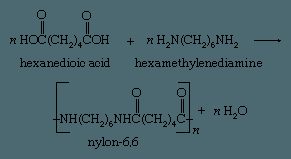
Building polymers through condensation
If hydrolysis breaks bonds using water, condensation creates bonds by removing it.
Two molecules meet. They form a single bond between them. But they cannot both keep all their atoms. Something has to leave. Usually, it is water. Sometimes it is alcohol. Or another small molecule.
This elimination is the key. It drives the reaction forward. It creates a tighter,
In organic chemistry, the simplest way to view an acid is as a proton donor. A base, conversely, is anything with a spare pair of electrons ready to grab one. When they meet, a transfer occurs. The proton moves from the acidic compound to the basic one.
This isn’t just abstract theory. It dictates how substances interact in the real world.
What happens when acids meet bases?
Take a neutral acid and a neutral base. They collide. The proton jumps ship. The result? Two ions. One positive. One negative. Chemists call this combination a salt.
Consider benzoic acid. It is a common organic acid. Pair it with sodium hydroxide. The base is strong. The reaction is straightforward. The benzoic acid donates a proton. The hydroxide takes it.
Water forms. Always. It is a by-product whenever the base is a hydroxide ion.
The leftover pieces? Sodium and benzoate. They stick together. This creates sodium benzoate. You have likely seen it on ingredient labels. It is a preservative. You will find it in breads and baked goods. Not in large quantities. Just enough to keep mold at bay and preserve freshness.
The reaction between benzoic acid and sodium hydroxide yields sodium benzoate, a common food preservative, along with water.
The other side of the coin: Oxidation-reduction
While acid-base reactions shuffle protons, oxidation-reduction (redox) reactions shuffle electrons. This is where things get trickier. And more energetic.
In a redox reaction, one species loses electrons. Another gains them. The one losing electrons is oxidized. The one gaining them is reduced. It is a simultaneous exchange. You cannot have one without the other.
Think of rust. Iron meets oxygen. The iron loses electrons to the oxygen. The iron oxidizes. It turns into iron oxide. That red flaky stuff on your old bike? That is a redox reaction playing out in slow motion.
Or consider your phone battery. Lithium ions move from one side to the other. Electrons flow through the circuit to power your screen. That is controlled redox chemistry.
Why does this matter? Because energy is stored in chemical bonds. Breaking and making those bonds via electron transfer releases or consumes energy. Batteries work because of this. Combustion works because of this. Your cells generating ATP? Redox.
Acid-base chemistry gives us salts and pH balance. Redox chemistry gives us power and decay. Both are fundamental. Both are everywhere.
Understanding Oxidation and Reduction in Carbon Chemistry
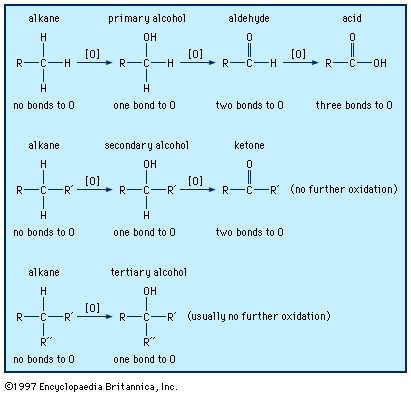
Oxidation and reduction sound intimidating. They aren’t. At their core, they are about electron density. A carbon atom gets oxidized if it loses electron density. It gets reduced if it gains electron density. How does a carbon atom change its density? It depends on who it hangs out with.
When carbon bonds to a more electronegative atom, it loses electrons. When it bonds to a less electronegative atom, it gains them. This shift drives most organic reactions.
Common Oxidation and Reduction Pathways
The most common oxidation reactions involve carbon bonding to oxygen. That’s where the term “oxidation” comes from. It’s also called oxidation when hydrogen atoms are stripped away from a carbon skeleton.
Conversely, reduction happens when hydrogen is added to carbon. Or when oxygen is removed. It’s a simple swap. Gain hydrogen, lose oxygen. It’s reduction.
An increase of electron density at one atom must always be accompanied by a decrease of electron density at a different atom.
This is the rule. You can’t have one without the other. Oxidation always occurs in tandem with reduction. They are a pair. You can’t oxidize something without reducing something else.
Real-World Chemical Examples
Take the combustion of methane. It’s a straightforward example of this tandem dance. Carbon bonds with oxygen. Electrons shift. Energy releases.
A more complex example involves ethanol. Humans need oxygen for the metabolic oxidation of foodstuffs. Our bodies break down food using oxygen. The final product is carbon dioxide. We exhale it via our lungs.
Breathalyzer kits use this chemistry to measure alcohol levels. They oxidize ethanol to acetic acid. The reaction triggers a visible color change. Potassium dichromate starts as orange. It reduces to green chromium (III) sulfate. The green color proves alcohol is present.
Why This Matters in Everyday Life
This isn’t just textbook theory. It’s why we breathe. It’s why cars run. It’s how police check for DUIs. The flow of electrons between carbon and oxygen powers modern life. Without these redox reactions, metabolism stops. Engines stall. Breathalyzers stay blue.
We rely on the transfer of electron density to live, to move, to test. Carbon doesn’t care about the context. It just follows the electronegativity. Oxygen pulls. Carbon yields. The cycle continues.