David Attenborough’s signature style—calm narration paired with breathtaking cinematography—is now the global standard for nature documentaries. Yet, when his landmark series Life on Earth premiered in 1979, it was a radical departure from television norms. A new documentary, Making Life on Earth: Attenborough’s Greatest Adventure, reveals the high-stakes gamble that transformed natural history broadcasting and cemented Attenborough’s legacy.
A Career Gamble on Natural History
Before becoming a household name, Attenborough was a BBC executive on track to become Director General. However, he chose a riskier path: writing and producing content focused on his true passion, natural history. Life on Earth was not just a show; it was an ambitious 13-episode saga detailing the evolution of life on the planet.
The production was logistically daunting and financially risky for its time. Key details included:
* Global Scale: Filming took place across 100 locations worldwide.
* Massive Budget: The series cost £1 million, a gargantuan sum in 1979.
* Slow Communication: Logistics were primitive. Securing permission to film gorillas in Rwanda, facilitated by primatologist Dian Fossey, required three weeks of correspondence for a single letter exchange. Setting up that single shoot took a year and a half.
Attenborough bet that the rollout of colour television would make the vibrant natural world a must-see spectacle for audiences eager for vivid visual experiences.
Chaos and Courage on Location
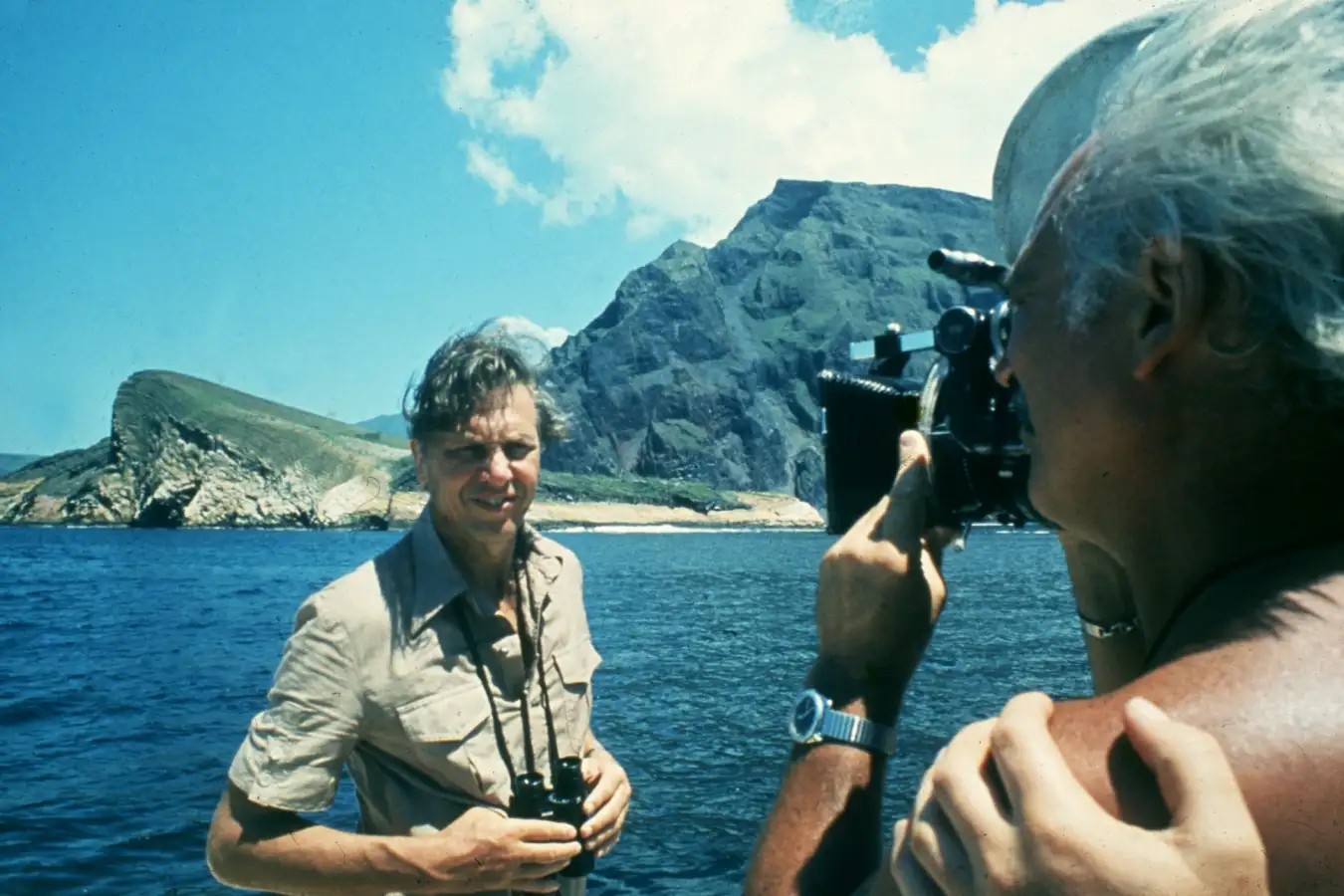
The new BBC documentary, released to mark Attenborough’s 100th birthday, uses unseen footage, diary entries, and crew interviews to depict a team that often succeeded through improvisation rather than perfect planning. The production faced significant geopolitical and physical dangers:
- Political Instability: Attenborough had to charm his way out of a coup to capture footage of the coelacanth, a “living fossil” fish.
- Military Conflict: The crew was expelled from their hotel in Iraq by Saddam Hussein’s army.
- Exhausting Dedication: Crew members endured extreme conditions, such as a young cameraman tasked with monitoring a “Darwin’s frog” around the clock to capture its rare mouth-birth process.
The series was a triumph of perseverance. Despite being a “motley crew” muddling through by the seat of their pants, they delivered groundbreaking content that had never been seen before.
A Cultural Phenomenon
The risk paid off spectacularly. Aired twice a week on BBC2, Life on Earth became a cultural event. Producers recall pubs clearing out as viewers rushed home to watch the episodes. By the series’ conclusion, it had captivated 15 million viewers, proving that serious natural history could be mass entertainment.
Conclusion
Making Life on Earth: Attenborough’s Greatest Adventure is more than a nostalgic look back; it is a celebration of the ingenuity and courage required to bring the natural world into millions of homes. It highlights how one person’s passion, combined with technological shifts and relentless dedication, can redefine a medium and inspire generations.