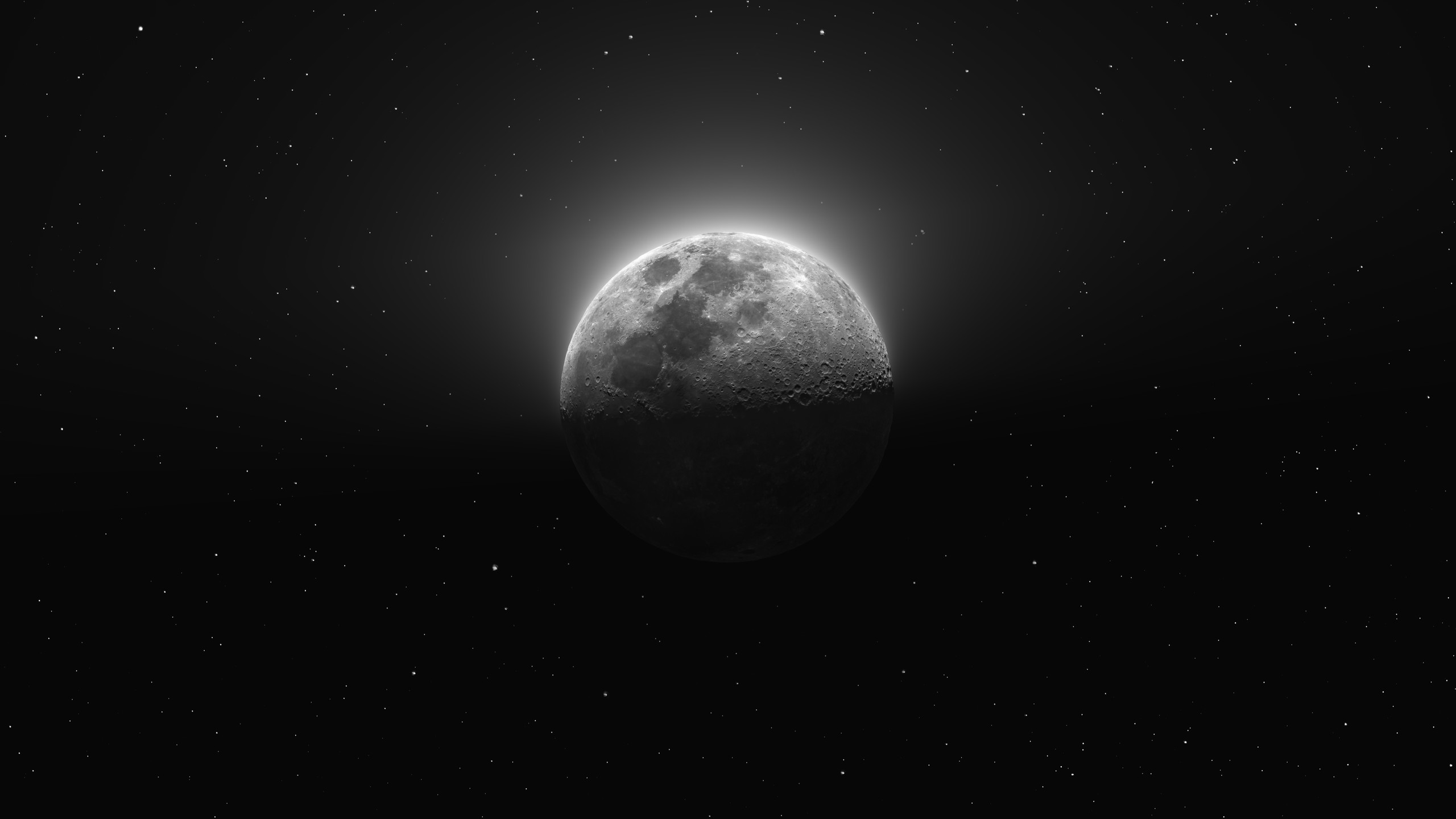
Astrophotographer Zachary Cooper has produced a striking new portrait of the first quarter moon, revealing a level of detail that the human eye—and standard cameras—often struggle to capture in a single shot. By utilizing advanced composite techniques, Cooper has managed to bridge the gap between the moon’s brilliant sunlit face and its ghostly, dimly lit dark side.
The Challenge of Extreme Contrast
Photographing the moon during its first quarter phase presents a significant technical hurdle: the extreme difference in light levels. On one side, the moon is bathed in direct sunlight, creating harsh shadows and brilliant highlights; on the other, it sits in darkness, illuminated only by a faint, secondary light source.
To capture this, Cooper focused on the terminator —the dividing line between day and night on the lunar surface. He refers to this boundary as the “sunset strip,” as it is where the most dramatic shadows and topographical details, such as craters and lunar seas, are most visible.
The Secret Behind the Glow: Earthshine
One of the most compelling aspects of the image is the visibility of the “dark” side of the moon. While it appears black to the naked eye, the lunar night side is actually subtly illuminated by a phenomenon known as Earthshine.
“Many people are surprised to learn that the night side of the Moon, when facing Earth, isn’t actually completely dark. Sunlight reflecting off the oceans and clouds of Earth slightly illuminates the unlit portion of the Moon.”
Because Earthshine is incredibly faint compared to direct sunlight, a single exposure cannot capture both simultaneously. A setting that reveals the craters on the bright side will leave the dark side pitch black, while a setting bright enough to see Earthshine will completely overexpose (wash out) the sunlit side.
The Technical Process: A Two-Step Composite
To overcome this limitation, Cooper employed a meticulous multi-exposure strategy:
- Capturing the Daylight Side: He took 150 individual exposures, each lasting only 5 milliseconds. He then selected and merged the best 15 frames to produce a crisp, highly detailed view of the sunlit half.
- Capturing the Night Side: He then switched to much longer 5-second exposures, capturing 100 frames. By merging the top 10, he was able to tease out the subtle, ethereal glow of the Earthshine.
- The Final Merge: The most difficult stage was blending these two distinct datasets. Cooper had to carefully stitch the images together at the terminator, where the contrast is most intense, while softly integrating the stars and lunar glow to provide a sense of depth and realism.
A New Perspective on Lunar Exploration
Beyond the technical achievement, the image serves a larger purpose. Cooper noted that while working on the project, he thought of the perspective upcoming Artemis II astronauts will have as they approach the moon.
By capturing both the brilliant daylight and the subtle Earthshine, the photograph moves away from being a simple observation of a distant object and instead presents the moon as a tangible, three-dimensional destination.
Conclusion
Through the use of composite photography, Zachary Cooper has successfully bypassed the physical limitations of camera sensors to create a complete portrait of the moon. This technique allows us to see the lunar surface not just as a bright disc, but as a complex world defined by the interplay of light from both the Sun and the Earth.