The sky just got a lot brighter for remote medicine. Literally.
For decades, astronauts dealing with a broken bone in zero gravity had one tool. Ultrasound. It’s great if sound waves can travel, which means you need a medium. You’re floating in a vacuum though. X-rays don’t care about air. They work fine without it. The catch? Traditional X-ray machines are huge. Power-hungry. Delicate. One rough launch or atmospheric re-entry and snap, your diagnostic tool is toast.
Enter the miniature X-ray machine. Small enough to fit in a suitcase. Rugged enough to survive spaceflight. And it just passed its ultimate test.
Proof of Concept
It wasn’t just a theoretical exercise. Back in 2022, researchers simulated microgravity using those famous parabolic flights—the “Vomit Comet” trajectory that throws people between heavy and light G-force. The team used a portable X-ray to image a hand. It worked. But simulation is one thing. Orbit is another.
March 31, 2015 saw the launch of the private Fram2 mission. Four first-time astronauts boarded a SpaceX Crew Dragon for a short, three-and-a-half-day stint around Earth. None were doctors. They got four hours of training. Just four. Then they were up there, expected to use the device like pros.
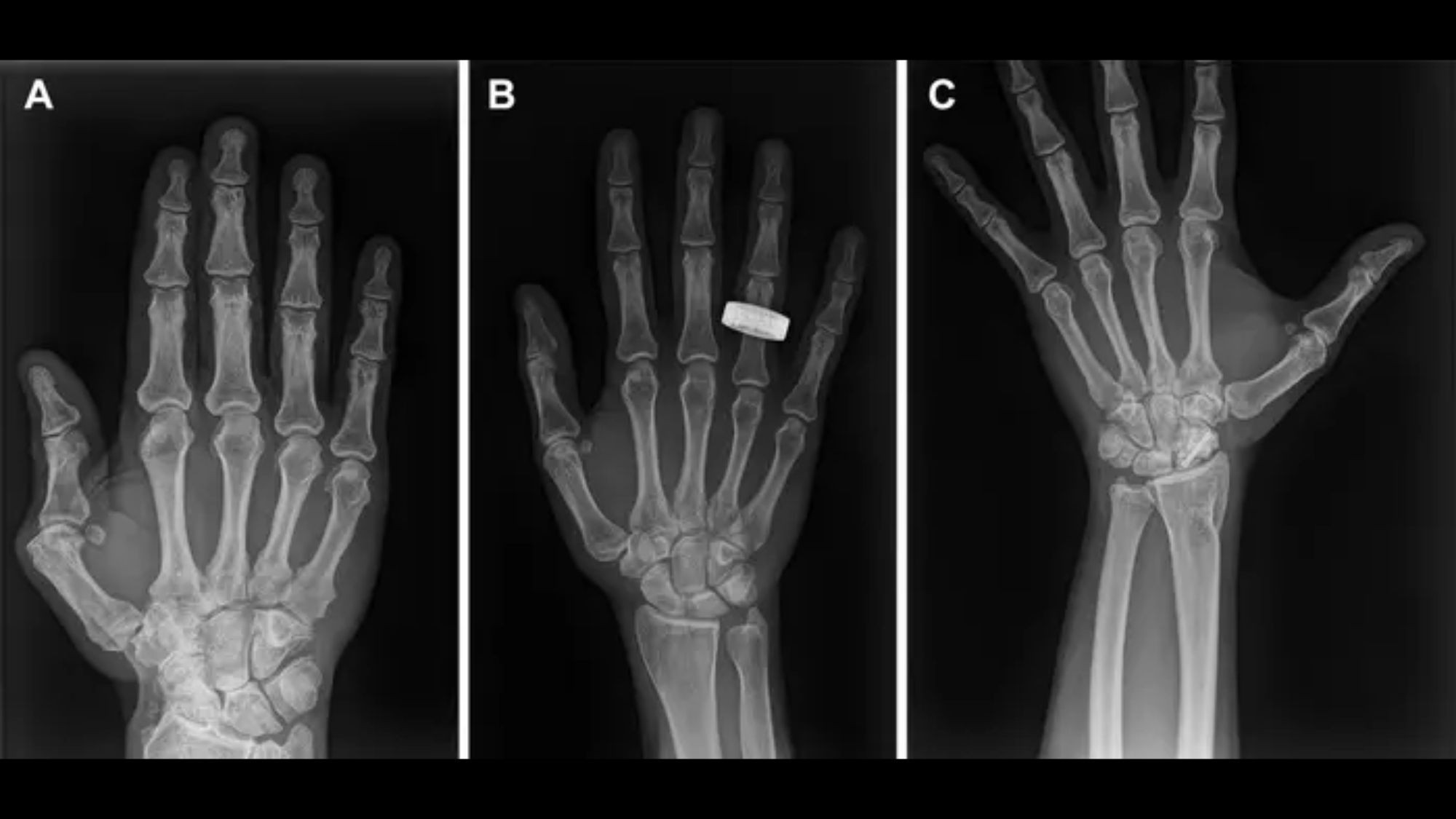
Their task list was specific. Take an X-ray of a smartwatch. A hand. An abdomen. A pelvis. A chest. All while floating. The images went digital. No developing film. They reviewed the shots right in the cockpit.
So, did the machine survive?
“We believed an off-the-shelf portable system… [could be] operational in space by crew members with Minimal training,” said Dr. Sheyna Gifford of Mayo Clinic. “Our study demonstrates the feasibility of in-orbid radiography.”
Three independent experts back on Earth reviewed the images. Verdict? The ground-based scans were cleaner, sharper. The space shots were a bit noisier. But were they useless? Not at all. Good enough to diagnose a broken bone. Good enough for the job.
The hardware took a beating coming down. The exterior had some wear. Minor damage. The crew reported the device was easy to use but hard to clamp down. In zero-g, everything wants to drift. That’s the only design flaw they found. Everything else just worked.
Why It Matters (Besides Saving Astronauts)
Why go to such lengths to take an X-ray in space? Because humans are going to the moon soon. Probably. When we do, things will break. Bones break. Equipment fails. If an astronaut is on a lunar outpost and cracks a femur, an ultrasound won’t show you the fracture line clearly. X-ray will.
And it’s not just about hips and shoulders. You can X-ray the suit. The rover. The satellite. You strap one of these mini-devices to a lunar vehicle and analyze the moon’s surface composition. It turns diagnostic imaging into a utility tool, not just a medical one.
Sheyna Gifford wants them even smaller. Tougher. She calls it a “game-changer” for public health, which might sound like hype until you picture a village in the mountains. No hospital nearby. No electricity grid. You’ve got solar power, a tablet, and this little X-ray box. A local health worker takes a picture. Sends it digitally to a specialist in a city. Diagnosis happens in hours, not days.
Who doesn’t want that?
It shifts the burden. Small towns keep care local. Big hospitals don’t become chokepoints for every minor fracture. The tech used for moon walks becomes standard equipment for rescue teams in collapsed buildings or remote wilderness zones.
What Comes Next
The data dropped on July 14. Published in Radiology. The consensus is clear. The hardware is ready. Now comes the refinement.
Can they shrink it more? Yes. Can they make it lock down better inside a moving vehicle? Probably. The real question isn’t if it works. It works. The question is where else do we put these things.
The limit really wasn’t the sky. It was just physics, engineering, and budget. All three just moved up.
“Disseminating autonomous miniature X-ray system around the globe could… change the game.”
So maybe your next X-ray won’t be at a sterile clinic with bad waiting room magazines. Maybe it’ll be taken by someone who just wants to make sure you didn’t break something, anywhere in the world.
The moon gets it first. But we get it eventually. That’s how it works.