Look west. Do it now, after the sun dips. The sky on May 21 is packed. It’s not just stars. It’s a whole party.
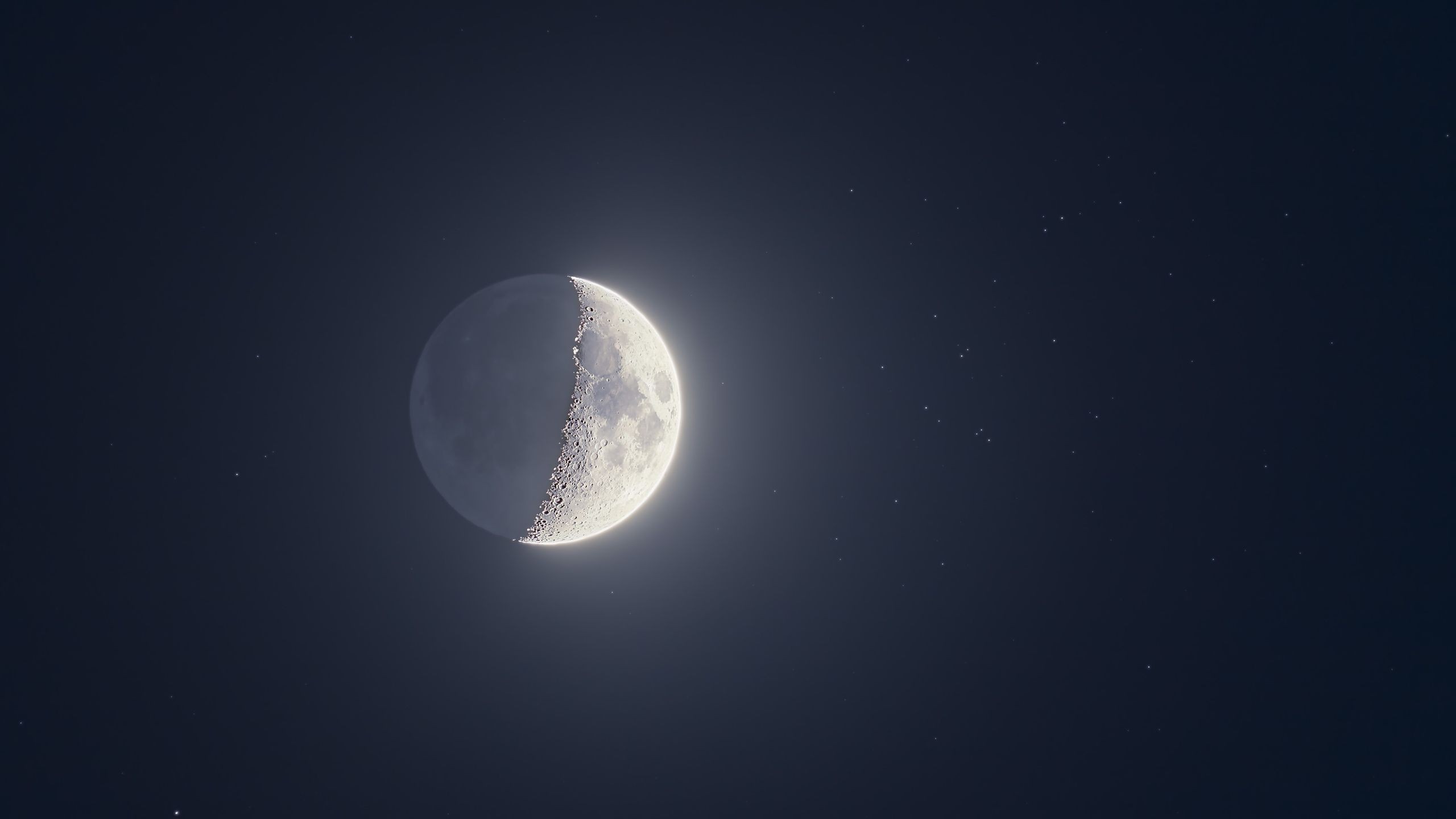
The moon shows up as a silvery crescent. It hangs low, almost lazy, right above the western horizon. Wait until the daylight bleeds out. Less than 5 degrees upper left of that moon sits the Beehive Cluster. Astronomers call it Messier 44 or Praesepe, but “Beehive” sounds better. It fits the shape.
Now scan down and right. About 20 degrees from the moon’s edge? Jupiter. Bright. Obvious. You won’t miss it. Beyond Jupiter, a diagonal line stretches into the dusk. Venus joins in. Mercury? That one is shy.
Mercury is the lowest of the three. Less than 5 degrees above where the earth ends. Hard to find. Really hard. You need a clear western horizon and good eyesight. The sunset’s yellow glow tries to erase it. It fights back. Can you actually spot it? Maybe. Don’t get your hopes up too high.
Grab a pair of binoculars. 10X50 works well.
Put the moon and the cluster in your frame at the same time. It fits. Neatly. The cluster is full of young stars, burning bright even against the waxing moon—which is only 36% lit anyway. They stand out. A small telescope helps if you want to see the moon’s scars. Craters. Dark seas. The stuff that made astronauts scream in awe (or boredom, depending on your mood).
Focus on the terminator. That line between day and night. It highlights depth. Look for Theophilus crater. It’s right on that line. Its eastern walls are terraced, layered like stone cake, currently swallowing shadow. Further south, Piccolomini sits with its own central peak. Rock rebounding inward after a violent impact. Violence, preserved in stone. It looks dramatic in the dim light.
The moon won’t stay put. It drifts away from the Beehive as night turns into early morning. By May 22, it’s gone. Set below the horizon.
Wanna keep it forever? Take a photo. Get a tripod. Maybe a lens. Or just look. Looking costs nothing.