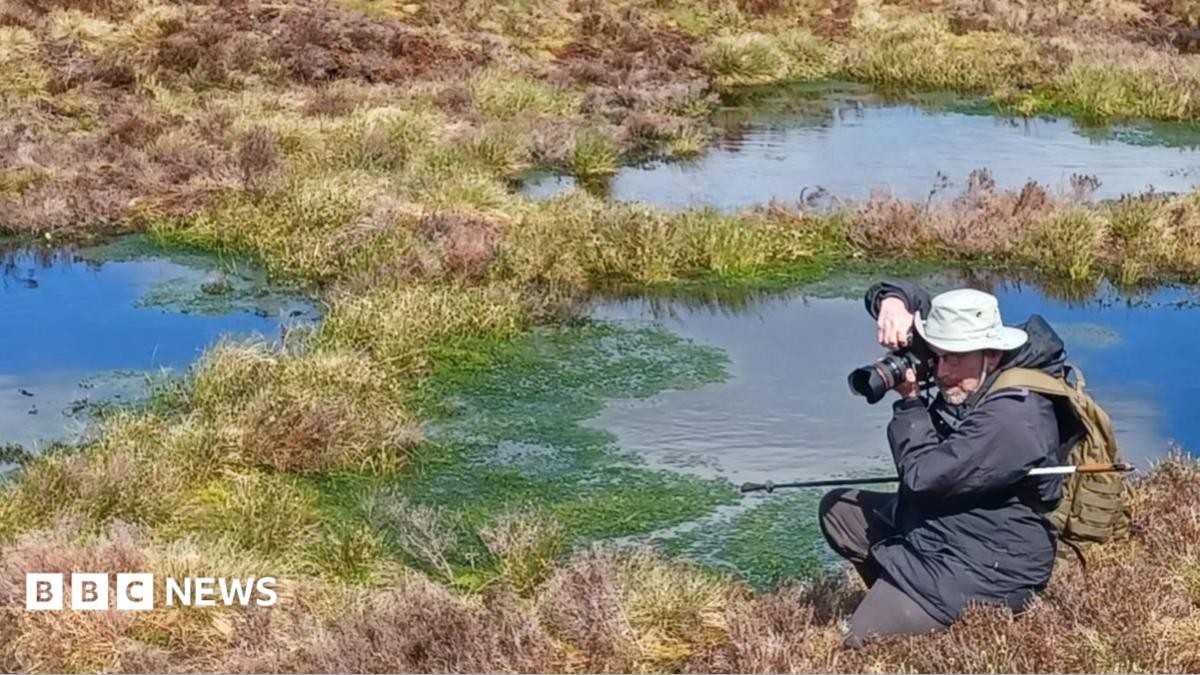
Dr Peter Jones spends his life in bogs. Fens. Wetlands. Thirty years deep in the mud. They call him “The Bogfather”.
It sounds ominous. It’s actually pretty cool.
“A couple of our younger, enthusiastic colleagues start calling me that,” he laughs. “I certainly wouldn’t have come up with it myself.”
The nickname stuck. Maybe because he deserves it. Jones offers politicians something rare. A fix for almost everything at once. Climate change? Handled. Flooding? Slowed. Wildfires? Blocked. Biodiversity? Saved. It’s a nature-based solution, and policymakers find it hard to say no.
Consider the numbers.
Peatlands cover only 4% of Wales. But they store 30% of its land-based carbon. Big difference.
Most of it is broken though. 90% degraded. Instead of locking carbon away, these sites leak greenhouse gases.
Sphagnum moss fixes this.
This tiny plant holds twenty times its weight in water. It builds peat. It creates life. When a peatland is healthy, it acts like a sponge. Slows water. Prevents floods. Acts as a natural firebreak during dry summers. Both floods and fires are getting worse as the planet warms.
Jones has cared about this since he was eight. A drizzly trip to Cors Caron ignited his passion.
He still stops mid-walk to check the mud. His family hates it.
“Probably much to the annoyance of my long suffering family,” he jokes.
But the mud talks back. It traps everything. Pollen. Dust. Volcanic ash. Even bodies. It is a partial record of plant remains, endlessly interesting. Wild places remain rare in the UK. These are some of the last truly natural spots left.
Why is 90% damaged?
Simple. We thought it was worthless. We planted trees on it. We drained it for farming. We burned it for heat. Peat was cheap fuel when money and wood were scarce.
That damage caused erosion. “Peat cliffs” appeared where wind and rain stripped the earth down to bedrock.
To spot a healthy bog, look for the grass. The sedges. The heathers. The Sphagnum.
Restoring these sites helps landowners too. It brings back animals, many scarce invertebrates. It protects soil.
Is it getting harder? Yes. Summers are getting drier. Less rain makes restoration difficult.
But teams are working everywhere. At conferences, you realize you’re part of something larger. A collective effort.
“Every peatland in Wales gets a different story to tell.”
Jones knows the history. The social weight of it.
It’s pressing. It’s wild. And it’s far from fixed.