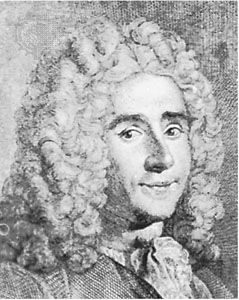
René Antoine Féchaux de Réaumur was more than just a scientist. He was a learned but restless man. Born in La Rochelle on February 28, 1683, he spent his life analyzing the world around him. He died on 17 Oct 1757 in Saint-Julien-du-Terroux. But his legacy is everywhere.
In 1710, Louis XIV appointed him in charge of recording France’s industry and natural resources. This is a difficult task. Réaumur didn’t just watch. He acted.
He invented the temperature scale. It is still named after him. Used in parts of Europe and in certain scientific contexts. But his research goes far beyond measuring heat.
The Iron That Built Industries
One of his most enduring contributions was technical. Réaumur built the first cupola in 1720. This equipment changed the way metals were smelted.
The cupola furnace are still the cheapest way to melt gray iron. This is still the standard procedure used around the world. Until this invention, steel production was not very efficient. Réaumur has improved the manufacturing technology of both materials. His furnace design allowed for higher temperatures and better control.
This is not just a theory. This is practical engineering. It met the growing industrial needs of the 18th century.
Decoding Crayfish and Porcelain
Réaumur’s curiosity knows no bounds. As he observed the crustacean, he noticed something strange. Crayfish can regenerate lost appendages. This is a new discovery. It challenges existing views of biology and growth.
We also focus on luxury products. Chinese porcelain is highly valued in Europe. Réaumur studied its chemical composition. He didn’t just copy it. He created his own recipe in 1740. This material was later known as Réaumur porcelain. This was an important step for European ceramics.
The First Insect Memoirs
In 1734, he published the first part of his memoirs on the history of insects. The title means “Memoir as a Natural History of Insects”.
He continued to publish until 1742, when five more volumes were published. The work is not finished yet. it doesn’t matter. This is a milestone in the history of entomology. It sets new standards for scientific observation.
“His study of insects is a milestone in the history of entomology.”
Digestion and Biological Mystery
He didn’t stop at rocks and insects. In 1752, he isolated gastric fluid. He studied how food breaks down. This was an early study of digestion. This set the stage for future physiological research.
Réaumur’s life illustrates the diversity of scientific research. One day he was smelting iron. Next he looked at the claws of the crayfish. At that time, the connections between industry, biology and chemistry were not as rigid as they are now.
We still use his furnace. We’re still talking about his temperature scale. We are still grappling with questions about his life and matter. Details of his pottery recipes may have been lost. But the method still exists. To observe. test. improve
What other fields could he have branched into if he had lived longer? we’ll never know.