The #TV Puppets that defined a generation
Puppets are more than just toys for children. They were the backbone of early television history. Before the advent of CGI and stop-motion animation, live ventriloquists, hand puppets and marionettes ruled the airwaves. Animation may have pushed many classics to their limits, but the Muppets and their successors have kept the tradition alive.
Let’s look at the titans. Here are the most popular puppets that have taken TV by storm:
Kukla, Fran, Ollie
The show began airing in 1947 and was advertised as a children’s show. It becomes something completely different.
Kukla shows the way. he looks like a clown. He is not one of them. And then there’s Ollie, Oliver J. Dragon. He was feisty. He only has one tooth. Fran is by no means a puppet. She is the older sister. She kept the chaotic puppets.
The cast has expanded. Madame Ooglepuss was a diva. Beulah Witch adds to the spookiness. Fletcher Rabbit belong to this group.
Parents think it’s for their kids. On the other hand, adults love it. Why? Character development. humor. It wasn’t silly. Very sharp.
Charlie McCarthy
Bing Crosby called him the greatest comedian of all time
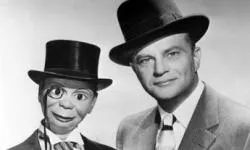
The golden age of #puppetry: From radio dummies to TV icons
Edgar Bergen and his sidekick Charlie McCarthy didn’t just talk on the radio. They defined an era. Bergen bought the dummy as a teenager in the late 1910s. They stayed together until Bergen’s death in 1978. It wasn’t just an act. This is a partnership. In 1936, after becoming popular on Rudy Vallee’s show, they started their own show. It lasted until 1956. Listeners couldn’t see Charlie’s top hat or monocle. I didn’t see Bergen’s lips move. it’s okay. The chemistry was electric. They played with legends like Mae West and W. C. Fields. The jokes were risqué for the time. In 1938, Bergen received the prestigious Academy Award. It was a small wooden statue. A fitting prize for a wooden man.
Nestle Advertising and Texaco Star Theatre
Jimmy Nelson’s Farfel and Danny O’Day have different kind of fame. You saw them in grocery stores. They are Nestlé Quik promotional dummys. Danny sang the jingle. “N-E-S-T-L-E-S, Nestle’s makes the very best…” Farfel just yelled “Chawk-lit!” Simple. It worked. But the real boost came in the 1950s when they joined the Texaco Star Theater Milton Berle hosted. Jimmy Nelson performed. The trio became a national staple.
The global rise of Topo Gigio
Maria Perego created Topo Gigio in 1958. He is a mouse with huge ears. Friendly. Innocent. In the early 1960s, he appeared in an Italian children’s program. Italy loved him. And in 1963, he appeared on “The Ed Sullivan Show.” The world noticed. He became a worldwide sensation. Today, he remains an integral part of Italian pop culture. You can still see him at festivals all over Italy. A mouse with ears that big attract people’s attention.
Howdy Doody
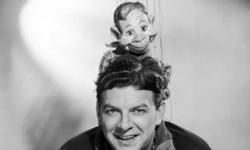
If you grew up in the 40s, you probably remember the clowns. You remember high-five. Howdy Doody is more than just a dummy. He is a phenomenon. Created by Buffalo Bob Smith and airs on NBC. The marionette has red hair and freckles. The studio audience was a real crowd of kids. they cheered. They screamed. They got high-fives from the star. It’s not just entertainment. It is a daily ritual for millions of children. The show ran from 1947 to 1960. Merchandise flew off shelves. Wooden Hello dummy. Lunchboxes. Paper dummy. The line between television and reality blurred. Kids didn’t just watch. they participated. “Clown Prince” Smith always maintains high energy. He knew the power of a live audience. Their reactions drove the show forward. The scene was chaotic. Very interesting. Before television was sophisticated, it was television. Hey, you proved that dummies can lead a population. It’s not just about making them happy. Please guide them. This tradition is maintained in all children’s shows where the audience participates live. The design starts there.
6: Andy Pandy
Across the pond in Great Britain, Andy Pandy’s debut changed the landscape of children’s television a bit. The series hit British screens in 1950, tells the story of a marionette who made his home inside a picnic basket. But it’s not just about Andy. The show introduced a trio of characters with unique social dynamics. Teddy, a teddy bear, served as Andy’s loyal sidekick. Then there was Looby Loo, a rag doll who operated on a peculiar rule. she only appeared when the boys weren’t looking.
A few decades later, the format changed dramatically. In 2002, producers revived the show using stop-motion animation instead of traditional puppets. They didn’t stop at updating the tech, either. New characters have been added to the universe, including Missy Hissy, a snake; Tiffo, a dog; and Orbie, a yellow and blue ball. Although the medium evolves from live puppetry to animation, the central attraction remains.
7: Lamb chops
If Andy Pandy represents eccentricity, Lambchop represents wisdom. Created in 1957 by comedian and ventriloquist Shari Lewis, this sock puppet sheep quickly became a cultural staple. During the 1960s, Lamb Chop wasn’t just a prop. she was the star of Lewis’s musical-comedy television show. The character’s sharp tongue and cheerful energy resonate with viewers tired of boring tutorials.
Lewis didn’t rest on her laurels. In 1992, she launched Lamb Chop’s Play-Along for PBS. The show was a huge success and won five Emmy Awards. This is proof that sock puppets can lead to educational franchises. In 1998, tragedy struck and Shari Lewis died, but her legacy lived on. Her daughter, Mallory Lewis, stepped in to keep the character alive for fans who still wanted to play along.
8: Bert and Ernie
And then there’s the duo that defined an era in public broadcasting. Bert and Ernie weren’t just on screen. They became famous through “Sesame Street”. Although their origins can be traced back to early experiments in children’s entertainment, their collaboration on the show set a new standard for puppetry.
The dynamic between the two is based on contrast. Bart is a serious and decent man who likes to collect rubber ducks. Ernie is a chaotic and playful person who loves baths and bubbles. This conflict is more than just comedy. It is a mirror of childhood friendships. Children see themselves in both characters. One of them is always right. The other was always fun.
Its impact extends beyond ratings. They become a symbol of acceptance and friendship. The show uses their interactions to teach lessons about sharing, empathy, and problem solving. Parents trust these characters. Kids loved them. Puppetry requires precise timing and emotional expression, which have been honed over decades.
Where did these puppets fit in the broader history of children’s media? They represent a shift towards more nuanced storytelling. Early performances were often based on simple repetition. Sesame Street uses humor and character development to capture the attention of young people. Bert and
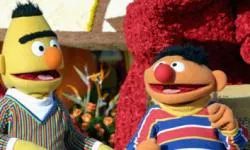
Bert and Ernie first appeared on screen in 1969 in the groundbreaking PBS series “Sesame Street.” Created by Jim Henson himself, the two quickly became icons. They perfectly play the classic odd couple dynamic. Ernie is a chaotic and naive force of nature. Bert was the straight-laced, practical foil who is often annoyed by his roommate’s antics.
Their relationship has always been a weird cultural misunderstanding. Despite some speculation, the producers have always maintained that they are just roommates. They are not a gay couple. They are two Muppets sharing a bathtub. It worked. fans love them. Ernie had success with “Rubber Ducky” in 1970, reaching the Top 40 on the Billboard charts. That’s quite an impressive resume for two best friends.
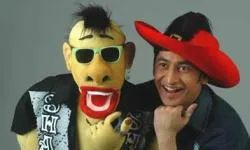
Triumph the Insult Comic Dog’s Darker Humor
Then you had Triumph the Insult Comic Dog. Rottweilers may look ferocious, but they move as smoothly as a rubber hand puppet. He made his acting debut in 1997 on The Late Show with Conan O’Brien, a comedy about the Westminster Kennel Club dog show. But he stayed. He became a staple.
Triumph speaks with a thick Eastern European accent. He continued to smoke his cigar. His only mission is to offend everyone. He borrowed his style from Don Rickles. If a guest tried to compliment him, Triumph immediately shuts them down. The line is always the same.
“You’re the best… for me to poop on!”
This is cruel. It was funny. This is the perfect antidote to late night etiquette.
The Green Icon: Kermit the Frog
Kermit the Frog is the other side of the coin. If Bert and Ernie are the chaotic duo, Kermit is the jaded centerpiece of the Muppet empire. He is more than just a character. He was the face of the franchise. While Bert and Ernie handled the domestic squabbles, Kermit deals with the turmoil of show business. He was the straight man to the insanity that surrounded him. Her journey from a mere doll to a touchstone of culture is as important as the stories of other dolls.
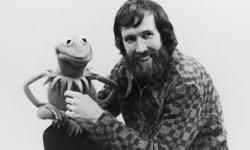
The surprising lizard origin of #Kermit the Frog
The swamp is a long way from the drawing board. Kermit didn’t start out as the amphibious icon we know today. In 1955, Jim Henson gave him a more reptilian look. The original prototype was a lizard-like creature. Henson made the body from discarded green coat. The eyes? Two ping pong balls. Simple. cheap. Effective.
He was never meant to be a frog.
By 1969, the change was complete. The lizard vanished. The frog emerged. That same year, Kermit landed a recurring spot on “Sesame Street.” This role catapulted him into the spotlight. Overnight he became a household name. The green coat remained, but the identity changed permanently.
His popularity exploded. He is more than just an sidekick. He was a star. The Muppet Show became his stage. Movies followed. The Muppets Take Manhattan brought him to the big screen. He recorded hits such as “Bein’ Green” and “The Rainbow Connection”. He also made a guest appearance on The Tonight Show. One of the most popular puppets of all time had arrived.
Why Kermit’s origin story matters
Many fans believe that Kermit was always a frog. History is different. Henson’s early experiments shaped the character. His lizard roots explain some of his quirky mannerisms. This is an interesting fact that adds depth to his legacy. The coat’s evolution from a piece to a cultural icon is a testament to Henson’s creativity.
The journey from 1955 to 1969 was an pivotal shift. It’s not just a costume change. This is a reinvention. Kermit’s voice, mannerisms and soul changed. The frog resonated with audiences in a way the lizard never could. The swamp became his home. The world became his audience.
The Legacy of the Green Coat
That abandoned green coat is still part of his DNA. It’s a reminder of humble beginnings. Henson had no budget. He had imagination. The ping-pong eyes have disappeared and been replaced by something more expressive. But the spirit remains. Kermit continues to entertain. He is the symbol of resilience.
The Muppets’ influence on pop culture is undeniable. Kermit is at the center of it. His songs are anthems. All his movies are classics. His appearances on talk shows are legendary. He’s not just a puppet. He is part of television history.
More Muppet stories
If you’re interested in the behind-the-scenes details, check out the creation of other Muppet characters. Each one has a unique backstory. Henson’s studio is an factory of whimsy. The transformation from lizard to frog is only part of the story. It’s a small detail that makes the bigger picture richer.
The Muppets continue to thrive. New generations discover Kermit through streaming services and movie remakes. The basic elements remain the same. green coat. Ping-pong eyes (figuratively). Swamp. But the audience grew. The sphere of influence has expanded.
On the other side of the swamp
Kermit’s influence extends beyond entertainment. He is a cultural touchstone. His name is in the news, politics and everyday conversation. He is a universal symbol. Travel