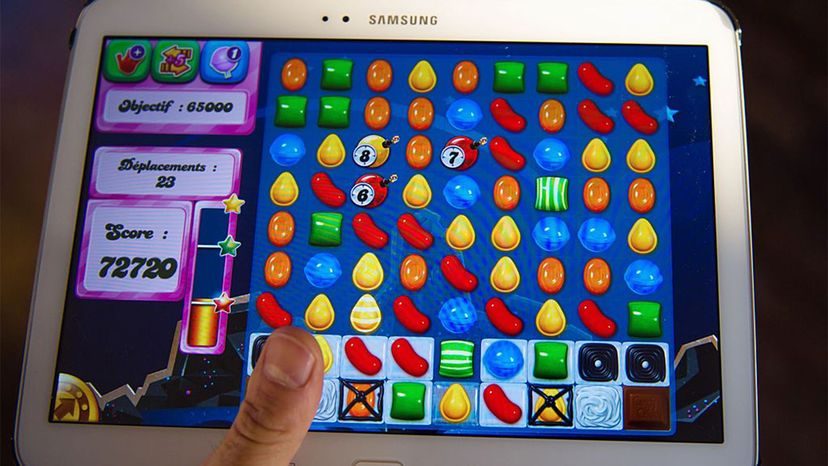
It looks simple. You swipe three candies of the same color. They vanish. Points tally up. The screen fills with confetti. But if it were that easy, we wouldn’t be tapping our screens until our thumbs cramp. Candy Crush isn’t just a game. It’s a psychological trap wrapped in sugary graphics. And to understand why you can’t stop playing, you have to look under the hood.
The Predecessors of Match-Three
Candy Crush didn’t invent the match-three genre. It just perfected the monetization.
Most people assume Bejeweled was the pioneer. It was certainly the most successful predecessor. But the true origin story likely begins in Russia in the early 1990s with a game called Shariki, which translates to “the balls.” It laid the groundwork for the genre, even if it didn’t capture the global imagination quite like its later, more polished successors.
The Objective You’re Supposed to Miss
In Candy Crush Friends Saga, the goals are specific: free the octopuses. Dunk the cookies. Spread the jam. Fill the empty hearts.
But there is one objective that sounds plausible but is actually a trap: Capture the hearts.
You want to fill the hearts to complete the level, sure. But you don’t want to “capture” them. Because if you did, that would be weird. The game rewards completion, not possession.
The Social Engineering of Progress
Stuck on a level? You don’t need a cheat code. You need a friend.
The game is designed to make you lean on your social network. You can ask friends for tickets and hearts. This does two things. First, it gives you the resources to advance. Second, it reminds your friends that the game exists. It keeps the ecosystem alive. You aren’t just playing. You are marketing to your own contact list.
Where to Match for Maximum Chaos
Novices match wherever they can see a set. Veterans match at the bottom of the screen.
Why? Gravity.
By making matches lower down, you force the board to cascade more aggressively. Candies drop into new spots. Cookies get pushed closer to the bottom, where they are easier to activate. It’s not about the immediate points. It’s about controlling the flow of the board.
The First Rule: Clear the Blockers
Don’t start by matching three candies. Start by eliminating blockers.
If a candy is trapped behind a wrapper, a shell, or a troll, you can’t touch it. Progress halts. Target the obstacles first. Gain sweet freedom. Then, and only then, go for the matches.
Why Saving Candies Matters
You might think using special candies is the key to winning. It’s not.
The game awards bonuses based on performance metrics, specifically how many candies you have left at the end of a level. Finish with fewer moves and extra candies, and you get merit-based prizes. These bonuses can push you from a one-star rating to a three-star rating.
Using candies unnecessarily hurts your score. It works against you. Save them. Let the game reward efficiency, not extravagance.
The Villain in the Candy Kingdom
Who is the bad guy? Bubblegum Troll.
His name sounds like a dessert. His actions do not. He first appears in the Bubblegum Bridge level, stealing candy from the main character, Tiffi. He wreaks havoc. He is the antagonist in a world that usually pretends to be pure innocence.
Meet Tiffi
You play as Tiffi. Her full name? Toffette.
Tiffi is an avatar for your emotional investment. She gets excited when you pass a level. She cries when you fail. She is the face of the frustration and joy you feel. The game personifies the gameplay loop.
The Avatar Frame Economy
Want a new frame around your Tiffi avatar? You need to pass five levels.
Your rank is displayed under your avatar. Every five levels conquered, you unlock a new frame. It’s a visual marker of prowess. It shows off your dedication. It turns progress into collectible status.
The Social Media Hierarchy
How popular is Candy Crush really?
In 2019, it ranked as the third most popular app people logged into via Facebook.
Only Spotify and Pinterest were more popular. Tinder ranked fourth. Candy Crush isn’t just a game. It’s a social utility. It’s a reason to log in. It’s a reason to message your friends.
The Verdict
Candy Crush is more than a match-three game. It’s a study in behavioral psychology. It uses social pressure, visual rewards, and strategic depth to keep you engaged. The mechanics are simple. The addiction is complex.
You might think you’re just matching candies. But you’re actually managing resources, optimizing board flow, and performing for an algorithm.
And the next time you see Bubblegum Troll steal your candy, don’t be surprised. He’s just part of the game.