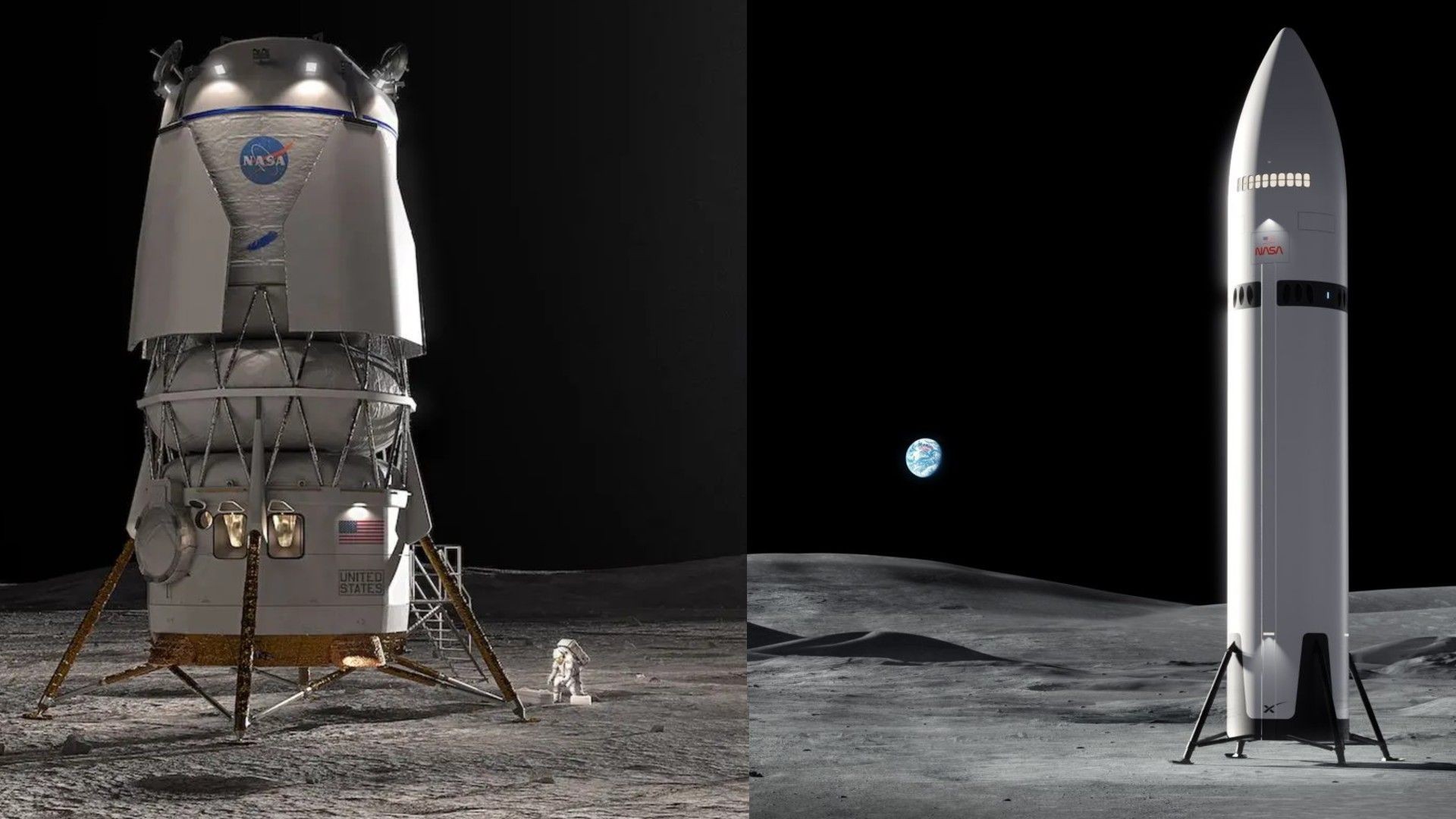
With the Artemis 2 crew safely back on Earth after their historic flyby, the focus of humanity’s return to the Moon has shifted from orbit to the surface. The goal is ambitious: land astronauts on the lunar surface by late 2028. However, this timeline hinges entirely on two private companies—SpaceX and Blue Origin—delivering functional, crew-rated landers on a schedule that many experts consider perilously tight.
NASA has recently revised its strategy, prioritizing safety and testing over speed. The agency plans to conduct a critical “dress rehearsal” in Earth orbit in late 2027, where the Orion spacecraft will dock with the lunar landers. This test, reminiscent of the Apollo 9 mission, is designed to verify that the landers can support life and operate in space before attempting a landing during the Artemis 4 mission in late 2028.
The Core Challenge: The success of NASA’s entire Artemis program now rests on whether private industry can accelerate complex engineering feats without cutting corners.
SpaceX: The High-Stakes Leap
SpaceX’s Starship Human Landing System (HLS) is the primary vehicle slated for the near-term missions. Selected by NASA in 2021, the Starship HLS is a modified version of SpaceX’s fully reusable super-heavy lift launch vehicle. While CEO Elon Musk has historically viewed the Moon as a stepping stone to Mars, he has recently embraced lunar settlement, signaling a strategic shift in the company’s priorities.
As of late 2023, SpaceX reported hitting 49 key milestones in developing the subsystems required for lunar landing. These include testing lunar life support systems, demonstrating the “cold start” capability of Raptor engines (essential for landing after a long journey), and verifying debris protection.
The Critical Path: Version 3 and Refueling
The immediate future of the program depends on the success of Starship Version 3. Expected to debut in its 12th test flight later this month, V3 features more powerful Raptor engines and structural upgrades necessary for orbital operations.
However, flying the rocket is only half the battle. The HLS Starship requires orbital refueling to reach the Moon. The vehicle must dock with tanker Starships in Earth orbit to transfer propellant, a process that has never been attempted in space. This requirement creates a massive logistical bottleneck:
* High Launch Cadence: Multiple tanker flights are needed to fuel a single lunar mission.
* Unproven Technology: Demonstrating reliable propellant transfer between two massive vehicles in orbit is a first for aerospace history.
* Life Support Validation: Long-duration crew habitat systems must be proven reliable in the vacuum of space.
A successful V3 test flight is crucial, but it is merely the first step. The company must rapidly scale up its launch frequency and prove that orbital refueling is not just possible, but routine.
Blue Origin: The Steady Approach
Blue Origin’s Blue Moon lander offers a different philosophy. Selected in 2023 for the Artemis 5 mission and beyond, Blue Moon was originally intended for a later date than SpaceX’s Starship. However, recent shifts in NASA’s planning have opened the possibility for Blue Moon to participate earlier, provided it can accelerate its development.
Unlike SpaceX’s “big bang” approach, Blue Origin is pursuing a stepwise verification strategy :
1. Uncrewed Cargo Lander (Blue Moon Mk1): Prove the ability to land and operate on the Moon without astronauts.
2. Crewed Variant (Blue Moon Mk2): Add life support and crew accommodations for human missions.
The New Glenn Hurdle
The biggest immediate hurdle for Blue Origin is its launch vehicle, New Glenn. This heavy-lift rocket, designed to carry the Blue Moon lander, is currently grounded following a recent launch anomaly. Before Blue Moon can even attempt a lunar landing, New Glenn must return to flight readiness.
The upcoming launch of the smaller Blue Moon Mk1 cargo lander, expected later this year after vacuum chamber testing, is a critical milestone. Success here would validate the landing system’s design and navigation capabilities. Failure, however, would significantly delay the crewed variant, potentially pushing Blue Moon out of the running for the 2028 timeline.
Blue Origin has been notably quiet regarding public updates, but behind-the-scenes assurances to NASA suggest confidence in meeting the aggressive deadlines.
The Official Stance: Confidence Amidst Uncertainty
Despite the technical complexities and tight schedules, NASA leadership remains optimistic. During a House Appropriations Committee hearing in April, NASA Administrator Jared Isaacman stated that both vendors have assured the agency of their commitment and capability.
“I’ve received responses from both vendors, both SpaceX and Blue Origin, to meet our needs for a late 2027 rendezvous docking and test the interoperability out of both landers in advance of a landing attempt in 2028,” Isaacman said.
This statement highlights a crucial aspect of the Artemis program: interoperability. NASA is not betting on a single horse. By requiring both landers to demonstrate docking capabilities in 2027, the agency ensures redundancy. If one system fails, the other can potentially step in, keeping the broader goal of lunar exploration alive.
Conclusion
The race to land astronauts on the Moon by 2028 is no longer just about government funding; it is a test of private sector agility and engineering prowess. SpaceX must master orbital refueling and high-frequency launches, while Blue Origin must clear its launch vehicle issues and prove its landing system. The late 2027 Earth-orbit docking tests will serve as the ultimate litmus test, determining whether humanity’s return to the lunar surface is a reality or a delayed promise.