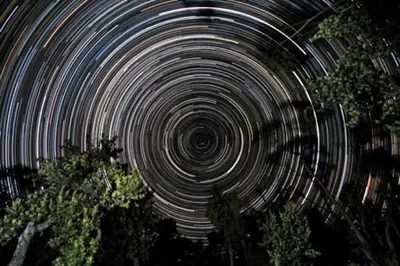
Finding a reliable guide in the southern sky remains a surprisingly difficult task for navigators and stargazers. While the Northern Hemisphere has Polaris, a bright beacon hovering near the celestial pole, the Southern Hemisphere relies on why Sigma Octantis fails as a southern polestar in practical terms. The constellation Octans, home to this faint star, covers the south celestial pole but offers no substitute for the bright northern counterpart.
The Faintness of the Southern Polestar
The issue is simple physics: brightness. Polaris, the famous north polestar, is bright enough to spot with the naked eye in most dark skies. Its southern twin, Polis Australis (also known as Sigma Octantis ), sits at magnitude 5.4. That is a significant drop in visibility compared to Polaris. Most people cannot find it without aid. It is dim, unremarkable, and easily lost in the background stars.
This makes navigation challenging. Sailors and explorers cannot rely on Sigma Octantis for quick orientation. They need brighter reference points or instruments. The star exists, but it does not serve its intended purpose well.
Who Drew Octans and Why It Exists
The constellation Octans was not an ancient designation. It was created in 1754 by the French astronomer Nicolas Louis de Lacaille. He mapped the southern sky with precision, filling gaps left by older catalogs. The name comes from the octant, a navigational instrument used to measure angles between celestial objects and the horizon.
Lacaille’s work standardized the southern constellations, giving them names tied to scientific tools and mythology.
The octant itself had a short lifespan. It was replaced by the sextant in the latter half of the 18th century. The sextant offered better accuracy and durability. Yet Octans remains in the sky, a memorial to an obsolete tool.
Navigational Implications and Modern Relevance
Does this matter today? For professional astronomy, yes. Octans marks a critical coordinate. The south celestial pole is essential for mapping the galaxy and understanding stellar motion. But for casual stargazing, the region is frustratingly underwhelming. There is no bright star to anchor the view.
This contrasts sharply with the north. Polaris is a fixed point. Sigma Octantis is not. It shifts slightly over time due to precession, but its faintness is the primary obstacle. Users searching how to find the south celestial pole will need more than just knowledge of Sigma Octantis. They must use surrounding stars like Nu Octantis, the brightest star in Octans at magnitude 3.8, as a starting point.
Comparing Northern and Southern Polestars
The asymmetry between the hemispheres is stark. Polaris is a Cepheid variable star, bright and useful. Sigma Octantis is a red dwarf, dim and distant. This difference shapes how hemispheres interact with their skies. Northern navigators have had a reliable anchor for centuries. Southern navigators had to improvise until modern instruments took over.
Why does this discrepancy exist? It is a matter of chance in stellar distribution. No bright star happens to sit near the south celestial pole. The universe did not plan a symmetry. This lack of a bright southern polestar is a known limitation