A recent capture by a backyard astronomer has provided a chilling new perspective on solar activity. By converting radio wavelengths into sound, the footage offers a rare glimpse into the violent energy of a solar flare, turning a visual phenomenon into an unnerving auditory experience.
A Rare Capture of Solar Violence
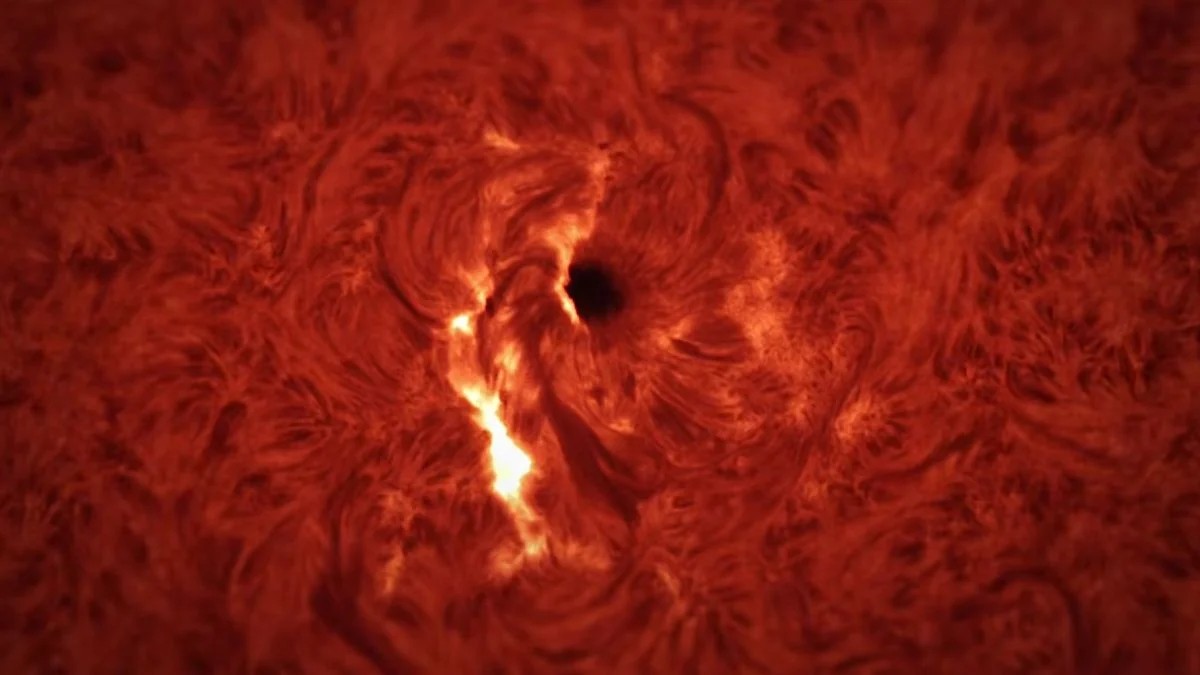
In March 2026, amateur astronomer DudeLovesSpace captured a significant event involving sunspot region AR4392. As the sunspot erupted in a burst of radiation, the astronomer used ground-based radio data to perform data sonification —the process of converting scientific data into sound.
The resulting audio is not a literal recording of sound (as space is a vacuum and cannot carry traditional sound waves), but rather a translation of radio light. The result is a jarring, rhythmic series of sounds that accompany the visual explosion of the flare.
Understanding the Mechanics of a Flare
To understand why this event was so significant, one must look at the relationship between sunspots and solar eruptions:
- Sunspots: These are areas on the Sun’s surface where magnetic fields are exceptionally strong. They act as “pressure points” for solar activity.
- The Trigger: Solar flares occur when magnetic field lines become tangled and snap. This process, known as magnetic reconnection, releases massive amounts of energy.
- The Output: These eruptions can manifest as solar flares (bursts of light) and coronal mass ejections (expulsions of billions of tons of solar particles).
The specific event captured was an M2.7 flare, a moderate-strength eruption that lasted approximately 16 minutes. While not the largest flare ever recorded, its intensity and the timing of its capture make it a standout moment for both amateur and professional observation.
The Context: The Solar Cycle
This event occurs as the Sun moves away from its solar maximum. The Sun operates on an 11-year cycle driven by its magnetic poles, which periodically flip.
During a solar maximum, the Sun’s magnetic field becomes chaotic and complex, leading to a surge in sunspots, flares, and potential disruptions to Earth’s communication systems.
While the Sun is currently transitioning toward a quieter period, the activity from AR4392 serves as a reminder of the immense power residing in even “moderate” solar regions.
Why “Hearing” the Sun Matters
While the sonified audio may sound like an “unnerving horror,” the technique is a vital tool in modern astrophysics. Data sonification allows scientists to:
1. Identify Patterns: The human ear is incredibly sensitive to subtle changes in rhythm and pitch, which can help researchers spot patterns in data that might be missed visually.
2. Enhance Accessibility: It provides a different sensory way to interact with complex cosmic data.
3. Bridge the Gap: For the public, it transforms abstract scientific measurements into an visceral, emotional experience, making the vastness of space feel much more immediate.
Conclusion
By translating radio waves into sound, we gain a deeper, more intuitive understanding of the Sun’s volatile nature. This audiovisual encounter highlights the sheer scale of solar energy and the sophisticated methods scientists use to decode the mysteries of our star.