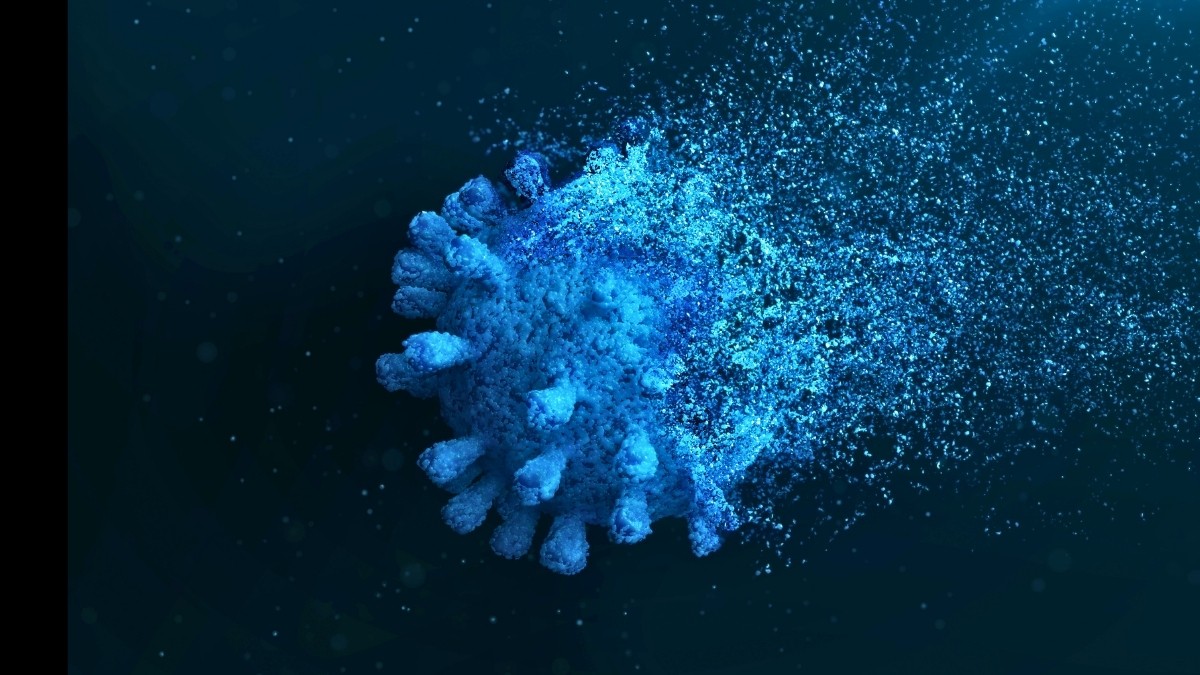
Recent research reveals that remnants of the COVID-19 virus don’t just trigger inflammation in long-COVID patients; they actively destroy key immune cells. A study with over 30 international authors demonstrates how viral fragments, left behind after infection, target specific immune cells, potentially explaining the persistent and debilitating symptoms experienced by millions.
Viral Fragments as Immune Attackers
Bioengineer Gerard Wong from UCLA explains that these fragments hone in on cells with unique membrane structures—specifically those that are “spiky,” star-shaped, or have tentacle-like protrusions. This includes critical early-warning dendritic cells, which alert the body to viral threats, as well as CD8+ and CD4+ T cells responsible for eliminating infected cells. This depletion of T cells has already been noted in previous research and is now being investigated as a potential diagnostic marker.
“Viruses do so many things that we don’t understand,” says Wong. “We want to understand what all the leftover viral matter does to us, both during COVID and after.”
The fact that multiple types of viral fragments can attack immune cells suggests why individuals with pre-existing immune conditions may be more vulnerable, even if otherwise healthy.
Omicron’s Milder Impact Explained
Interestingly, the Omicron variant—notorious for high transmissibility but generally milder symptoms—breaks down into a wider range of protein fragments within the body than earlier strains. Yue Zhang, a bioengineer at Westlake University in China, explains that Omicron’s spike proteins are less capable of killing crucial immune cells. This suggests that Omicron infections may lead to less severe immune depletion.
Ongoing Threat and Public Health Implications
Despite the waning public perception of the pandemic, COVID-19 continues to claim roughly 100,000 lives annually in the US, and many more suffer long-term disabilities. As of 2024, an estimated 17 million Americans live with long COVID.
The lingering consequences of long COVID remain a significant public health concern. Recent studies indicate that the risk of developing long COVID increases with repeated infections, impacting both children and adults. As pediatrician Ravi Jhaveri of Lurie Children’s Hospital in Chicago urged last year, vaccination remains a critical strategy to reduce infections and, consequently, the incidence of long COVID.
These findings underscore that even after acute infection, COVID-19 leaves behind dangerous remnants that disrupt the immune system. Further research into these viral fragments is essential for developing targeted therapies and preventing long-term health complications.