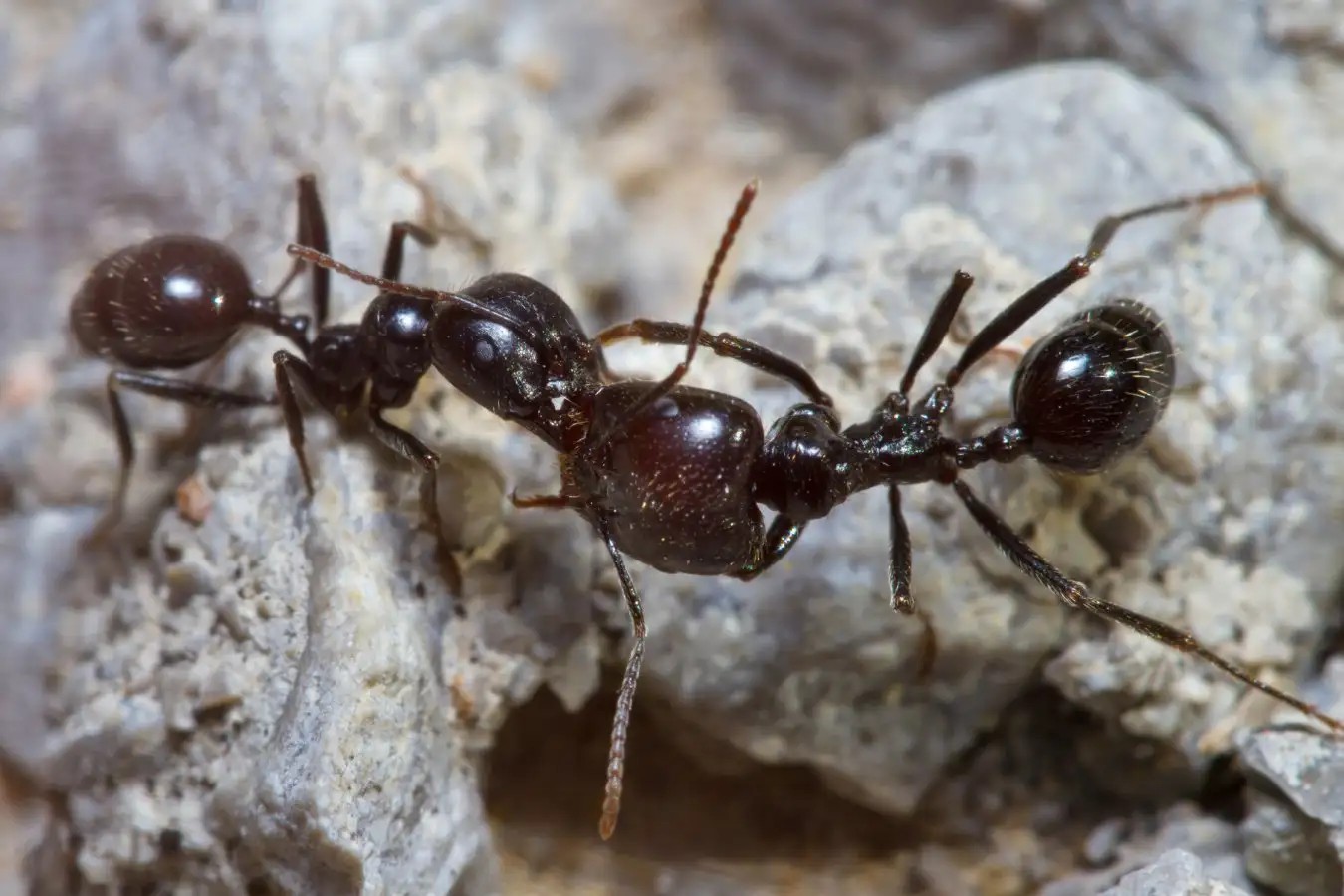
Common air pollutants, including ozone and nitric oxide, are now confirmed to alter the chemical scents of ants, causing their own nest-mates to attack them as if they were foreign invaders. This startling discovery highlights how human-caused pollution is directly interfering with fundamental animal behaviors, even at the insect level.
How Pollution Masks Ant Identity
Ants rely on scent for colony recognition. When an ant’s natural odor is altered by pollutants like ozone, its peers perceive it as an intruder. Ozone, a byproduct of vehicle exhaust and industrial emissions, degrades alkenes – key compounds in an ant’s unique scent profile. While alkenes make up only a small part of the scent blend, even minor changes are enough to trigger aggressive responses such as biting and, in some cases, lethal attacks.
Experimental Evidence: Ozone-Induced Hostility
Researchers at the Max Planck Institute for Chemical Ecology in Germany conducted experiments using artificial ant colonies. They exposed individual ants to ozone levels mimicking those found in polluted urban areas. When these ants were reintroduced to their colonies, they were immediately attacked by their nest-mates. The study found that even low concentrations of ozone were sufficient to cause this hostile reaction.
“We didn’t expect it,” said Markus Knaden, lead researcher. “We knew ozone would only change a small percentage of the scent, but it was enough to trigger aggression.”
Broader Ecological Implications
The disruption of ant behavior extends beyond simple aggression. Ozone exposure also leads to neglect of larvae by clonal raider ants, suggesting that pollution can interfere with essential parental care. Given that ants play a critical role in ecosystems – dispersing seeds, aerating soil, and supporting countless organisms – these changes could destabilize entire food webs.
As Daniel Kronauer of The Rockefeller University explains, ants are so integral to terrestrial ecosystems that their removal could cause widespread collapse. Insect populations are already in decline worldwide, and studies like this reinforce the growing evidence that air pollution is a major contributing factor.
A Hidden Cost of Pollution
The study underscores that pollution’s effects are far more pervasive than previously understood. Even if ozone levels remain within human safety thresholds, the damage to insect life and ecosystems is undeniable.
“We just should know that what we are doing has additional costs that we have maybe not thought about before,” Knaden concluded.
The findings serve as a stark reminder that environmental degradation has cascading consequences, impacting even the smallest creatures in ways that could reshape the natural world.