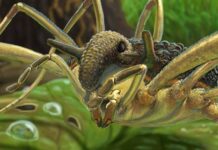
For decades, science fiction has conditioned us to expect aliens to look… vaguely human. Two arms, two legs, maybe some prosthetics. But the most memorable extraterrestrials break this mold, showcasing truly alien biology and behavior. From creatures that defy anatomical norms to hive minds with terrifying efficiency, here are 17 species that prove infinite diversity isn’t just a Vulcan maxim—it’s a fundamental reality of imagination.
The Challenge of Alien Design
The tendency to anthropomorphize aliens stems from practical filmmaking concerns. It’s easier to cast human actors in prosthetics than to animate truly bizarre lifeforms. But the most compelling sci-fi pushes beyond this limitation, exploring what intelligence might look like when unconstrained by Earth’s evolutionary path. This often means confronting the unsettling, the grotesque, or the utterly incomprehensible.
The Standouts: From Starfish to Hive Minds
Here’s a breakdown of aliens who look nothing like us:
-
Eridians (“Project Hail Mary”) : Rocky, the alien protagonist, embodies this principle. Five limbs, no face, and a digestive system that defies human squeamishness. He “sees” through echolocation, a concept far removed from our visual dominance.
-
Heptapods (“Arrival”) : These squid-like beings communicate through ink pictograms and possess a non-linear perception of time. Their language alters how you experience reality—a concept that puts Duolingo to shame.
-
The 456 (“Torchwood: Children of Earth”) : Shrouded in mist, these three-headed entities excrete noxious goo and hijack human children for chemical highs. Their physiology is obscured, but their depravity is clear.
-
Medusans (“Star Trek”) : Super-intelligent but so hideous that looking at them induces madness. One Medusan adapted by inhabiting a mechanical suit, proving even the most alien minds can find a way to bridge the gap.
-
Starro (“The Suicide Squad”) : A giant starfish with a singular eye, capable of growing to kaiju size. Its spores control humans, turning them into puppets in its conquest.
-
Rigellians (“The Simpsons”) : Octopus-like beings with tentacles, a single eye, and saliva that leaks profusely. They communicate in English and exchange protein strands through handshakes.
-
Mysterons (“Captain Scarlet”) : Invisible entities who project green rings and threaten Earth with the ability to “reverse matter,” essentially resurrecting anything destroyed.
-
Spores (“Invasion of the Body Snatchers”) : Microscopic invaders that grow human replacements in seed pods. Sleep too long, and you become a mindless pod person.
-
The Thing (“The Thing”) : A shapeshifting creature whose every cell is an independent organism. It’s virtually indestructible and driven by an insatiable need to consume and spread.
-
Brain Bug (“Starship Troopers”) : Giant arachnids that control swarms of drones. They suck thoughts from victims’ brains, making them strategic masterminds with a terrifying efficiency.
-
Mulefa (“His Dark Materials”) : Tapir-like beings from a parallel Earth who can see dark matter, or “Sraf.” They invented the wheel using seed pods and possess a unique understanding of the universe.
-
The Masters (“The Tripods”) : Three-legged aliens from Trion who thrive in extreme environments. Their physiology is designed for domination, and their society is built on conquest.
-
Vashta Nerada (“Doctor Who”) : Microscopic creatures that strip flesh from bone in seconds. They reanimate corpses and communicate through neural relays, making them an unstoppable microscopic force.
-
Symbiotes (“Venom”) : Sentient oil slicks that bond with hosts, granting superpowers at the cost of sanity and a disturbing hunger for human brains.
-
Mimics (“Edge of Tomorrow”) : Hive-minded aliens who can travel through time, making them nearly impossible to defeat.
-
The Long One (“Slither”) : A worm-like parasite that infects humans, turning them into vessels for its offspring. Its obsession with its host’s wife adds a disturbing layer of psychological horror.
-
B’omarr Monks (“Star Wars”) : Brains in jars carried by mechanical spiders. These monks have severed themselves from physical sensation in pursuit of enlightenment, a testament to the galaxy’s strangest religious practices.
The Future of Alien Design
The examples above demonstrate a trend toward more imaginative and unsettling alien forms. As sci-fi matures, it’s moving beyond the familiar humanoid template to explore the true diversity of possible life. This shift reflects a deeper understanding of biology, evolution, and the sheer unpredictability of the universe.
Ultimately, the most memorable aliens aren’t those that look like us. They’re the ones that force us to confront the limits of our imagination and question what it truly means to be “other.”