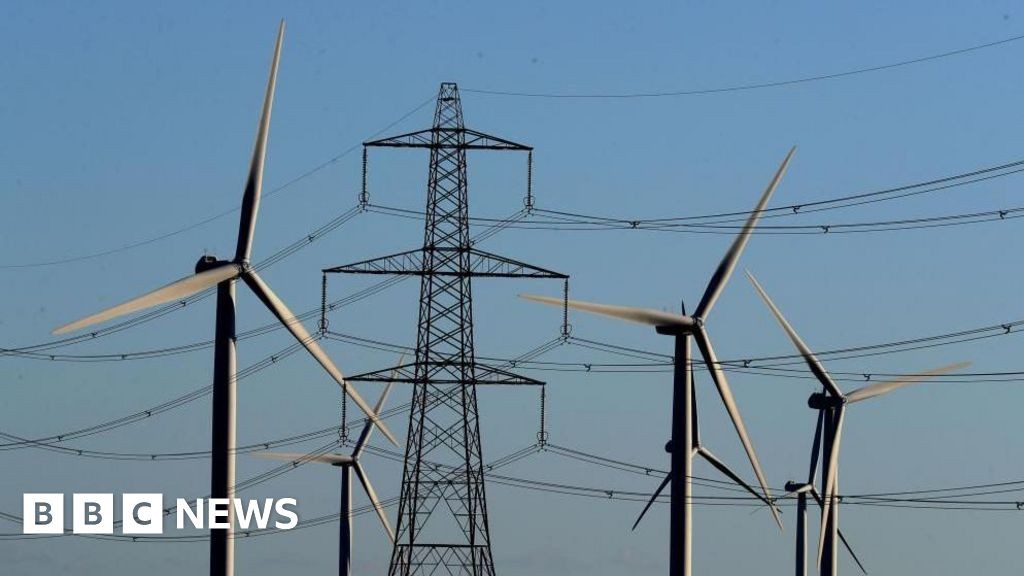
The UK government is set to announce a major policy shift aimed at insulating consumers from the unpredictable price swings of the global gas market. On Tuesday, Chancellor Rachel Reeves and Energy Secretary Ed Miliband will unveil plans to weaken the link between wholesale electricity prices and fossil fuel costs, a move designed to enhance both financial and national energy security.
Breaking the Gas-Electricity Link
Under the current market mechanism, the wholesale price of electricity is determined by the “marginal” unit of energy required to meet demand. In the UK, this final unit is frequently provided by natural gas. Consequently, even when renewable sources like wind and solar are providing much of the nation’s power, electricity bills often spike alongside gas prices during periods of geopolitical tension or supply shortages.
To address this, the government intends to move older renewable energy projects—which currently account for roughly one-third of Britain’s electricity generation —away from variable pricing and onto fixed-price contracts.
Why this matters:
- Price Stability: By transitioning older renewables to fixed contracts, the government aims to ensure that the low running costs of wind and solar are actually reflected in consumer bills.
- Mitigating Shocks: Decoupling these prices reduces the impact of international conflicts (such as those in the Middle East) on the domestic cost of living.
- Market Alignment: This shift would bring older renewable assets in line with more recent green energy developments that already operate under more stable pricing models.
The “Carrot and Stick” Approach
The government is not just proposing a voluntary transition; it is utilizing fiscal pressure to accelerate the change. Alongside these plans, the Chancellor may announce an increase in the windfall tax on electricity generators.
This tax currently targets generators with older contracts that reap disproportionately high profits when gas prices surge. By increasing this tax, the government aims to create a financial incentive for these companies to “voluntarily” switch to fixed-price contracts, which would exempt them from such levies.
Expanding Green Infrastructure
Beyond pricing mechanics, Energy Secretary Ed Miliband is expected to announce broader reforms to support the transition to clean power:
– Planning Law Reforms: Amending regulations to make it easier for businesses to install solar panels.
– EV Accessibility: Streamlining the process for residents without private driveways to install electric vehicle (EV) charging points.
Political Reaction and Criticism
The announcement has drawn a sharp divide among political parties:
- The Opposition (Conservatives): Shadow Energy Secretary Claire Coutinho criticized the move, arguing that new taxes and levies will ultimately increase the burden on households rather than lowering costs.
- Liberal Democrats: Supported the plan, echoing the sentiment that increased renewable generation should directly result in lower household bills.
- Green Party: While expressing relief at the direction of the policy, the party argued the government has been too slow to act in preventing energy crises.
“For Britain and so many other countries, clean energy is now the only route to financial security, energy security and national security,” stated Ed Miliband.
Conclusion
The proposed policy represents a significant attempt to restructure the UK energy market to favor long-term stability over short-term volatility. If successful, the transition to fixed-price renewable contracts could provide a much-needed buffer for households against the unpredictable nature of global fossil fuel markets.