Severe, multi-century droughts were a primary driver in the decline of the Indus Valley Civilization, one of the earliest urban societies in the world. New research confirms that a series of extended dry periods, lasting over 85 years each, likely forced populations to abandon cities and ultimately led to the civilization’s collapse around 3,500 years ago.
The Indus Valley: An Ancient Civilization
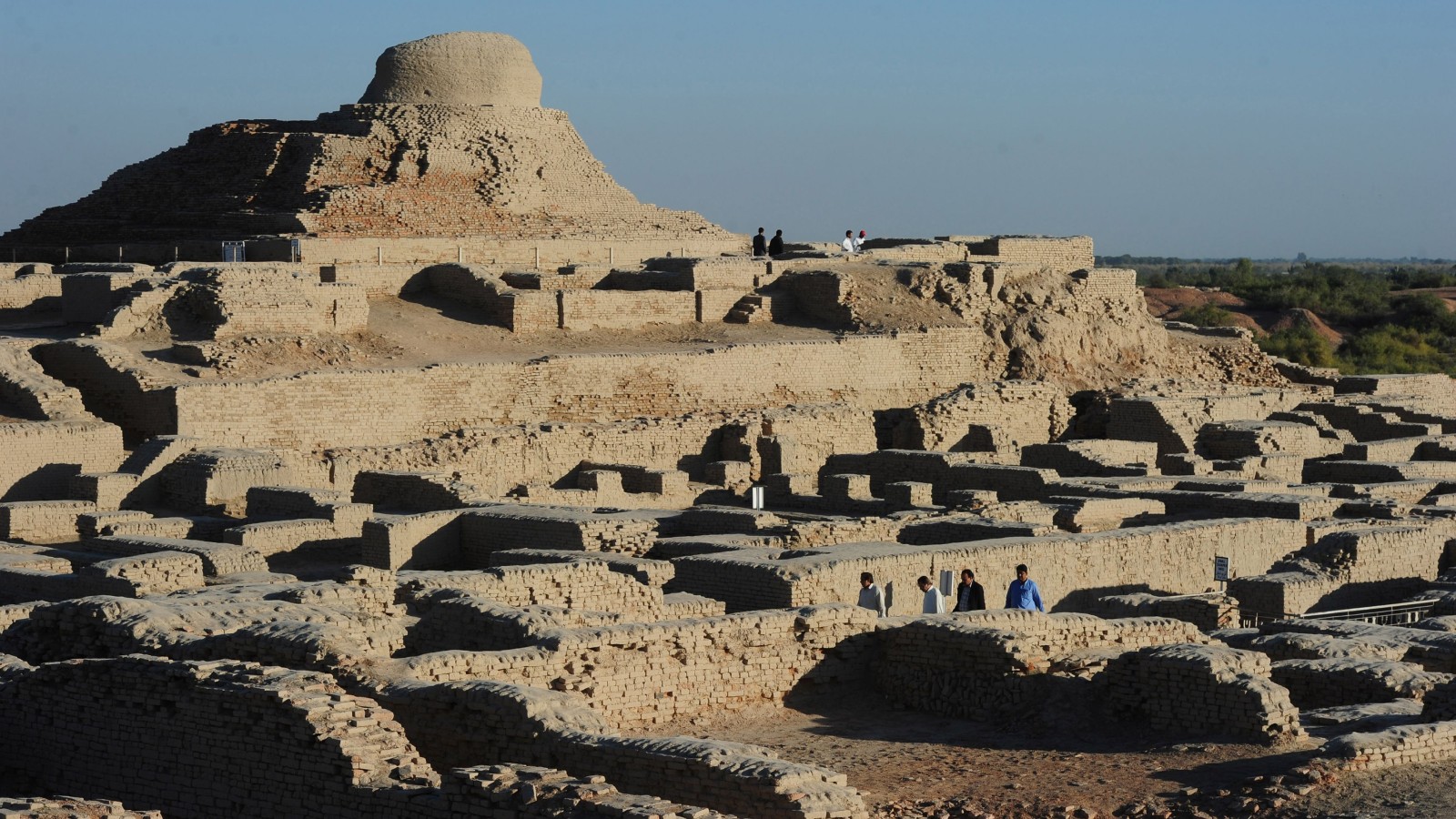
The Indus Valley Civilization (also called the Harappan civilization) flourished from roughly 5,000 to 3,500 years ago in the region of modern-day India and Pakistan. Its people built sophisticated cities like Harappa and Mohenjo Daro, equipped with advanced water management systems. They developed a unique, still-undeciphered written script and engaged in long-distance trade with Mesopotamia. The civilization’s decline has been debated for decades, with theories ranging from invasion to climate change.
Evidence of Prolonged Drought
Researchers analyzed three independent global climate simulations to reconstruct rainfall patterns over the past 5,000 years in the Indus region. All three models showed consistent evidence of prolonged droughts. The study confirms that rainfall declined steadily between 5,000 and 3,000 years ago, with particularly severe droughts lasting for over a century. These droughts appear to have directly impacted settlement patterns, as people migrated toward remaining water sources.
How the Study Worked
The team used climate simulations to understand how rainfall and temperature changed. They combined this data with hydrological models to track shifts in rivers and streams. Comparing these findings with archaeological records showed a clear link between water availability and where settlements were located over time. To verify their results, they cross-referenced the simulation data with indirect evidence from cave formations (stalagmites and stalactites) and lake sediment deposits, which also indicated long periods of drought.
Expert Validation
Nick Scroxton, a paleoclimate scientist at University College Dublin, praised the study’s methodology, stating that modeling river flows helps us understand how rainfall patterns could have impacted agriculture and urban settlement. The Indus River played a crucial role in supporting the civilization, and changes in its flow likely had devastating consequences.
The Indus Valley Civilization’s downfall serves as a stark reminder of how climate change can destabilize even the most advanced societies. The research highlights the vulnerability of early urban systems to prolonged drought, and provides valuable insights into the complex relationship between civilization, water, and climate.