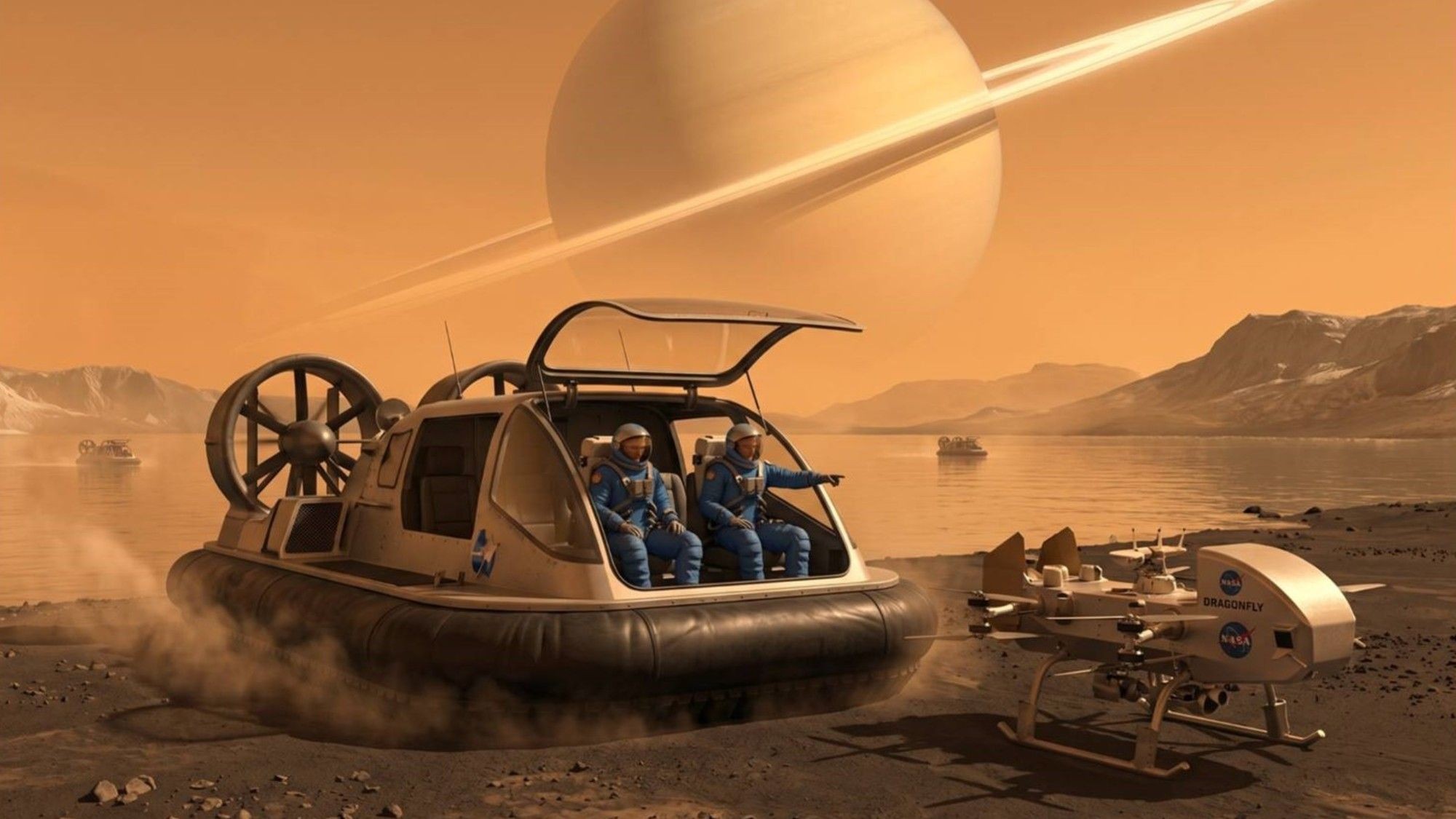
Earth. Moon. Mars. And then?
June in Boulder, Colorado felt like a departure from the usual script. The “Humans to Titan Summit 2016” wasn’t some sci-fi convention for fun. It was work. Hard work. Experts gathered June 11 through 12 to treat Titan, Saturn’s giant moon, not as a fantasy but as a logistical reality.
“Everyone recognizes that the reality of this… is a long way off.”
Amanda Hendrix put it bluntly. Director of the Planetary Science Institute and co-author of Beyond Earth, she argued that normalizing the concept matters. It keeps the momentum alive after Mars.
The atmosphere is key. Titan is dense. Nitrogen-rich.
Why does this matter?
Because radiation eats astronauts. Titan’s thick air blocks it. Hendrix sees this as the single best feature for human survival.
The environment
Hydrocarbons rule there. Not water.
Rain falls, but it’s liquid methane. Floods happen. Monsoons might wreck your day.
Hendrix noted that planning for these exotic weather patterns is already underway. But the upside is massive. Titan is a factory.
- Methane
- Nitrogen
- Oxygen
All fuel. All present. Use Titan as a base, and you can launch sample return missions to neighbors like Enceladus. It’s not just a destination. It’s a hub.
“The top reason in my mind that Titan… is such a good spot,” Hendrix said.
Precedents and predecessors
We’ve been there before. Kind of.
In 2005, ESA’s Huygens probe touched down. It was robotic, brief, and historic.
Now comes Dragonfly. NASA’s nuclear-powered rotorcraft. Launching no earlier than 202 eight. The six-year trip ends in over three years of surface hopping.
It won’t be human. Not yet. But Dragonfly will scout the dunes. Analyze samples. Auto-pilot its way through terrain no one else has seen.
Extraordinary ambition
Scot Rafkin runs the Space Studies department at the Southwest Research Institute. SwRI hosted the summit.
He admitted the goal looks impossible. History laughs at impossibility, though.
“Sending humans to Titan is extraordinarily ambitious.”
But necessary.
Titan has rivers. Lakes. Dunes. Complex chemistry. It breaks the mold of every other world we know. Going there forces a long-term scientific framework that the Moon and Mars can’t provide alone.
“It is not a question of physics.”
Rafkin insists on this. Time. Technology. Commitment.
We know the gaps. Life support. Propulsion. Radiation shielding. Each advance helps. Every new battery, every comms breakthrough, gets us closer.
A movement, not a plan
This wasn’t a mission planning meeting.
It was a spark.
“It was about starting a movement.”
Some steps are easy. Send an orbiter. Better mapping. Now.
Other steps? Generations of development.
Hendrix confirmed the next summit is scheduled around the 2028 launch window of Dragonfly.
The path isn’t drawn in sand. It’s still fuzzy. But people are drawing it anyway.
Maybe that’s the point. 🪐