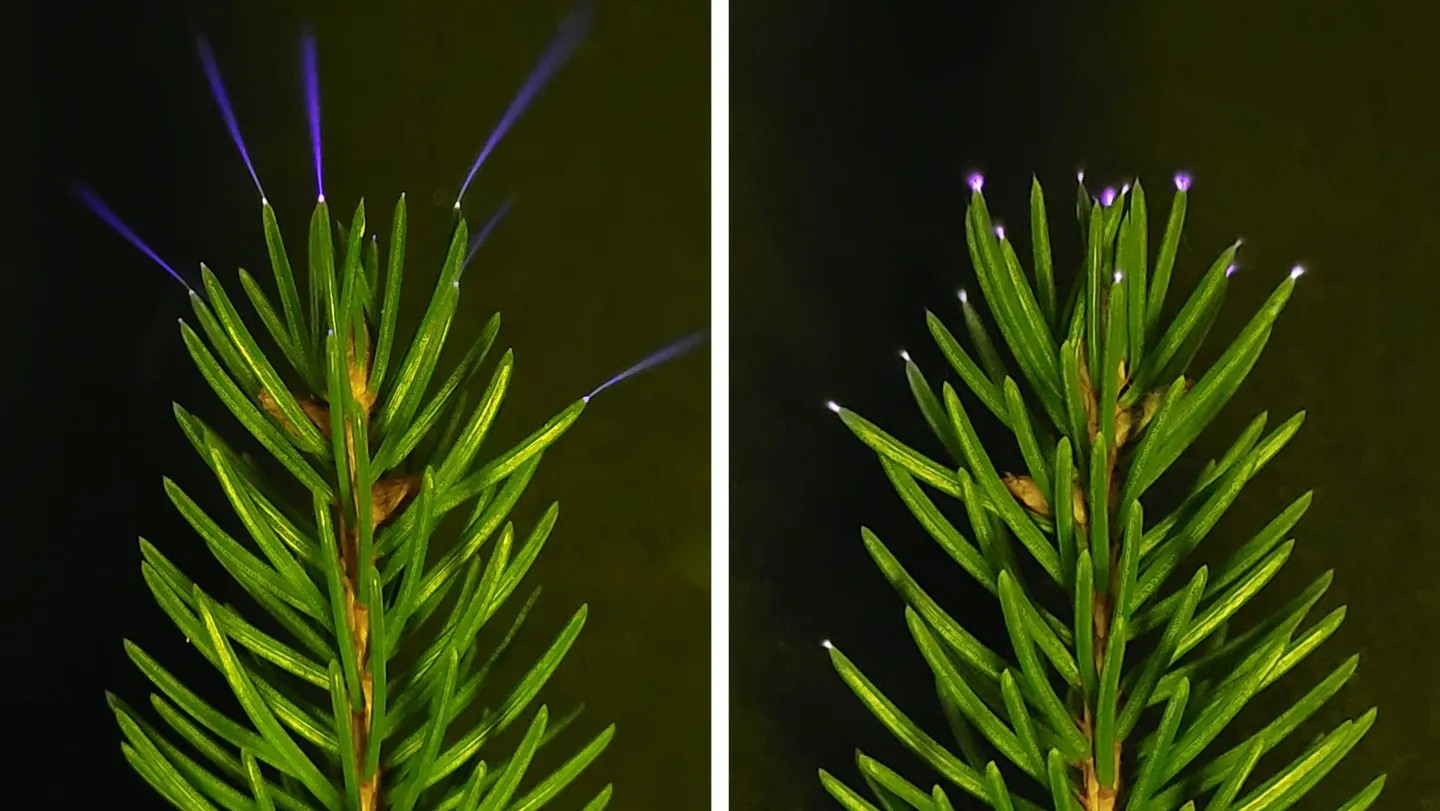
A Surprising Atmospheric Phenomenon
When a thunderstorm rolls in, we typically look up at the sky for flashes of lightning and listen for the rumble of thunder. However, recent scientific observation has revealed a much quieter, yet equally spectacular, phenomenon happening on the ground: trees can actually twinkle with an electric glow during storms.
This isn’t a metaphor for the eerie atmosphere of a storm; it is a literal electrical discharge. During intense thunderstorms, trees can emit faint, flickering lights. This visual effect transforms ordinary forests into landscapes dotted with subtle, electric sparks, offering a rare glimpse into the complex electrical interactions between the atmosphere and the Earth’s surface.
The Science Behind the Spark
To understand why trees glow, we must look at the physics of electricity and electric fields.
A thunderstorm is essentially a massive battery in the sky. As ice crystals and water droplets collide within storm clouds, they separate electrical charges. This creates a powerful electric field —a region around a charged object where forces are exerted on other charged particles. When this field becomes strong enough, it can ionize the air, stripping electrons from atoms to create ions. This process turns the air into a conductive plasma.
Usually, this discharge happens dramatically as lightning, a massive flash of light caused by the sudden flow of electricity between clouds or between a cloud and the ground. But trees, being tall and often wet, act as natural antennas. They concentrate the electric field at their tips. When the field strength exceeds a certain threshold, it causes a small, continuous discharge of air around the tree branches. This ionized air emits a faint, bluish-white light, causing the tree to appear as if it is twinkling or shimmering.
Key Concepts in Context
To fully grasp this phenomenon, it helps to clarify the underlying scientific terms:
- Electric Current: This is the flow of electric charge. In the case of glowing trees, a small, continuous current flows through the ionized air around the branches, rather than the massive surge seen in lightning.
- Ionization: An ion is an atom or molecule that has gained or lost an electron, giving it an electric charge. When the electric field from the storm is strong enough, it forces air molecules to become ions, creating a visible glow.
- Forces and Fields: The electric field exerts a force on charged particles. In a storm, this force pulls electrons away from atoms in the air (and potentially from the moisture on the tree), facilitating the flow of electricity.
Why This Matters
While a glowing tree is a beautiful sight, this phenomenon is also a significant indicator for meteorologists and atmospheric scientists.
- Storm Intensity Indicator: The presence of these glows suggests that the electric field strength near the ground is extremely high. This can help researchers predict the likelihood of lightning strikes in specific areas, potentially improving safety warnings for outdoor activities.
- Understanding Electrical Pathways: Studying how electricity interacts with natural objects like trees helps scientists model how lightning travels. This data is crucial for designing better lightning protection systems for structures and power grids.
- Atmospheric Chemistry: The ionization process affects local air chemistry. Understanding these micro-discharges can provide insights into how storms influence air quality and the formation of certain atmospheric molecules.
Conclusion
The sight of trees twinkling with an electric glow is a rare and captivating reminder of the invisible forces at work during a thunderstorm. It bridges the gap between the dramatic violence of lightning and the subtle, continuous flow of electricity in our environment. By studying these glowing sentinels of the forest, scientists gain valuable insights into the mechanics of storms, helping us better understand and prepare for one of nature’s most powerful displays.