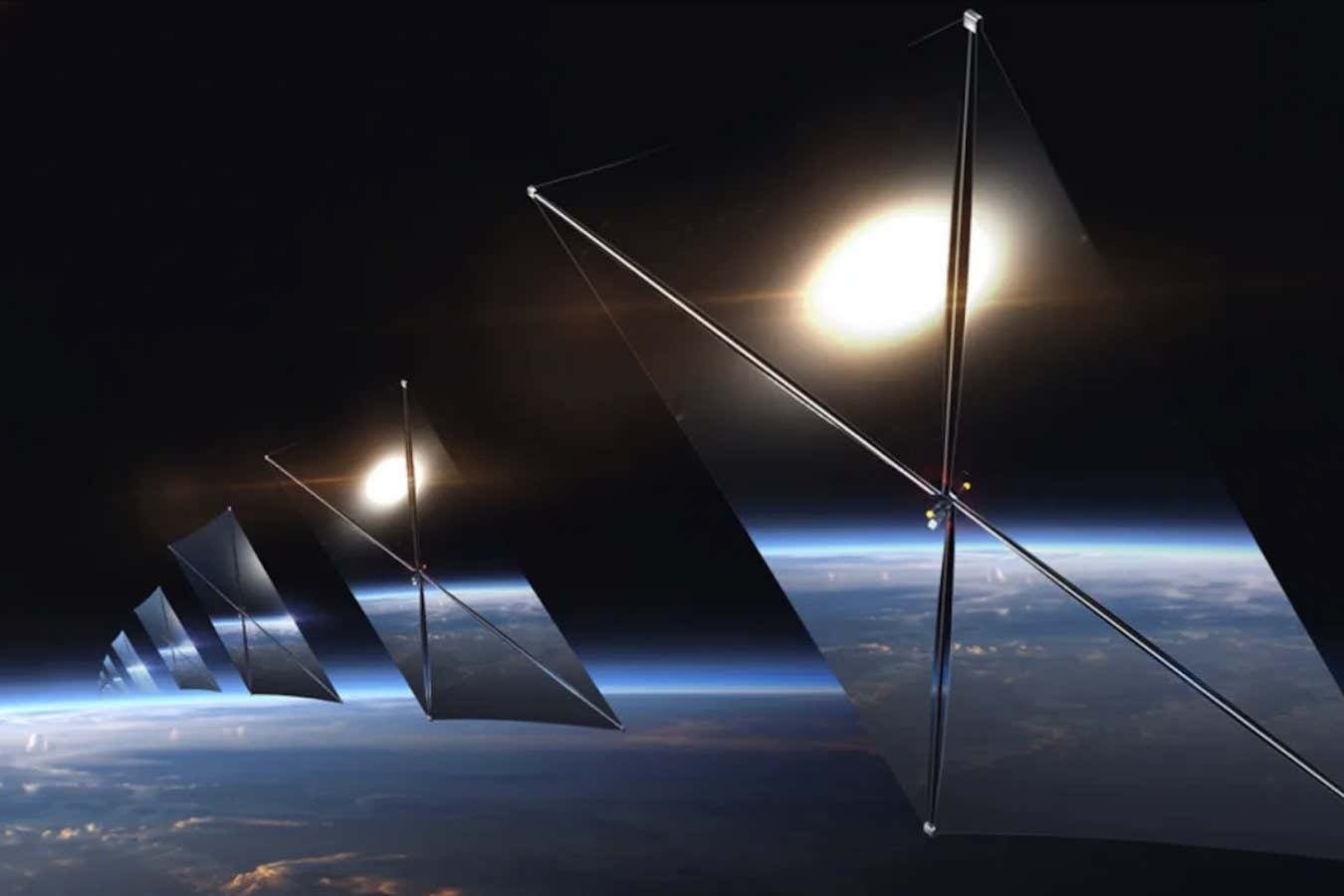
A U.S. company, Reflect Orbital, plans to begin deploying satellites in 2026 designed to reflect sunlight to Earth. The goal is to provide artificial illumination for energy production, remote operations, and other applications. However, experts express doubts about the project’s effectiveness and raise concerns about potential interference with astronomical observations.
The Concept: Artificial Sunlight from Space
Reflect Orbital envisions a network of satellites equipped with large mirrors that redirect sunlight to designated locations. The initial phase, dubbed the “World Tour”, aims to beam light to ten sites, with plans for thousands of satellites by 2030. The company claims this could deliver up to 200 watts per square meter to solar farms in regions with limited sunlight.
Doubts About Energy Output
Analysis of Reflect Orbital’s filings with the U.S. Federal Communications Commission (FCC) suggests the actual energy output may be significantly lower. According to John Barentine of Dark Sky Consulting, a single reflector would generate insufficient power for practical solar energy applications. Achieving meaningful output would require an impractical number of satellites with thousands of reflectors, making the project prohibitively expensive.
Potential Interference with Astronomy
Beyond energy production, the satellites could disrupt astronomical research. The shifting mirrors may cause momentary flashes of sunlight, interfering with observations. Light scattering and dissipation in the atmosphere are unavoidable, especially if reflectors are damaged by micrometeorites.
Industry Response
Reflect Orbital has engaged with scientists to address these concerns, though the company declined an interview request for this report.
The idea of artificial sunlight from space is ambitious, but current projections suggest it may be more theoretical than practical. The project’s feasibility and impact on astronomical research remain significant obstacles.