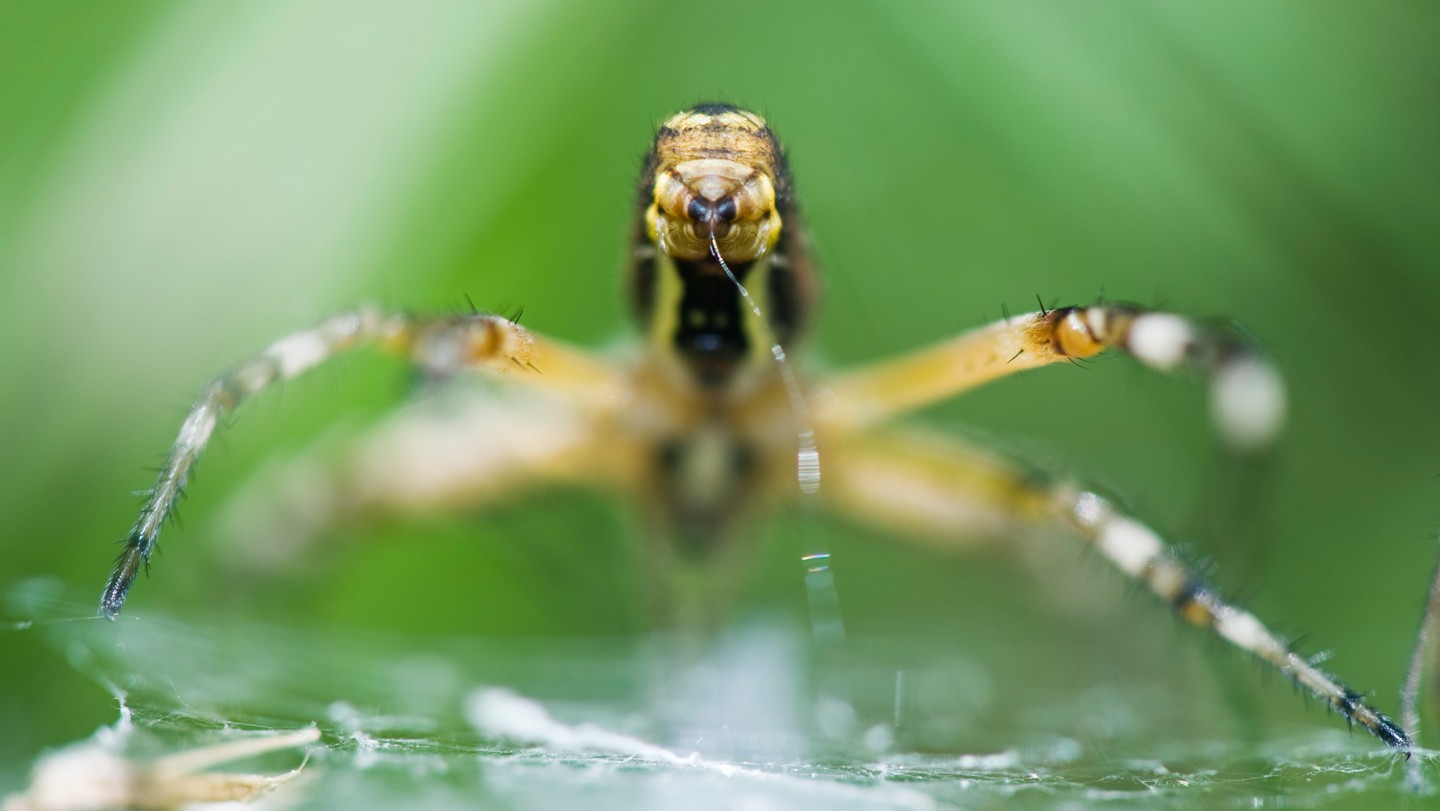
A whole-genome duplication event roughly 400 million years ago may be responsible for the evolution of spider silk-spinning organs, according to a new study published in Science Advances. This suggests that one of nature’s most remarkable biological tools emerged from a massive genetic accident.
The Accidental Origin of Spinnerets
For years, scientists have wondered how spiders developed the complex structures called spinnerets, which produce the incredibly strong and versatile silk they use for webs, hunting, and reproduction. The leading theory suggested these organs arose from modifications to existing limb-patterning genes. However, the underlying genetic mechanisms remained unclear.
Researchers led by Shuqiang Li from Anhui Normal University in China analyzed the genomes of two spider species and a whip scorpion, comparing them to other arachnid relatives. Their findings revealed that an ancient ancestor of spiders, scorpions, and whip scorpions experienced a complete duplication of its entire genome. This meant every gene was copied, creating a massive surge in genetic material.
The Role of Abdominal-A Genes
The study pinpointed a specific gene pair, abdominal-A, as critical in the development of spinnerets. Experiments on spider embryos showed that disabling this gene resulted in embryos lacking spinnerets altogether.
“The duplicated genes appear to have evolved different roles after the duplication,” Li explained. “Working together, they create the specialized spinnerets we see today.” This suggests the initial duplication wasn’t just a random event but a key step in shaping spider evolution.
Why Genome Duplication Matters
Whole-genome duplication is common in plant evolution but relatively rare among animals. When it happens, it creates opportunities for new gene interactions and major evolutionary changes. It has been linked to the diversification of jawed vertebrates and may explain why spiders evolved silk-spinning organs in the first place.
Prashant Sharma, a biologist at the University of Wisconsin–Madison, notes that while the research is “beautiful,” it doesn’t entirely rule out alternative explanations. Some arthropods lack the abdominal-A gene but still have truncated bodies, suggesting the gene might govern more than just spinneret development.
“The researchers may have stumbled upon a genetic route to making a sea spider-like or mitelike animal instead,” Sharma says.
Despite this uncertainty, Li emphasizes that genome duplication is a recurring driver of animal diversity. This accidental genetic event may have been the catalyst for one of nature’s most fascinating adaptations.
The study highlights how major evolutionary shifts can arise from unexpected genetic errors, turning accidents into adaptations over millions of years. The origin of spider silk is a vivid example of how randomness and opportunity collide in the history of life on Earth.