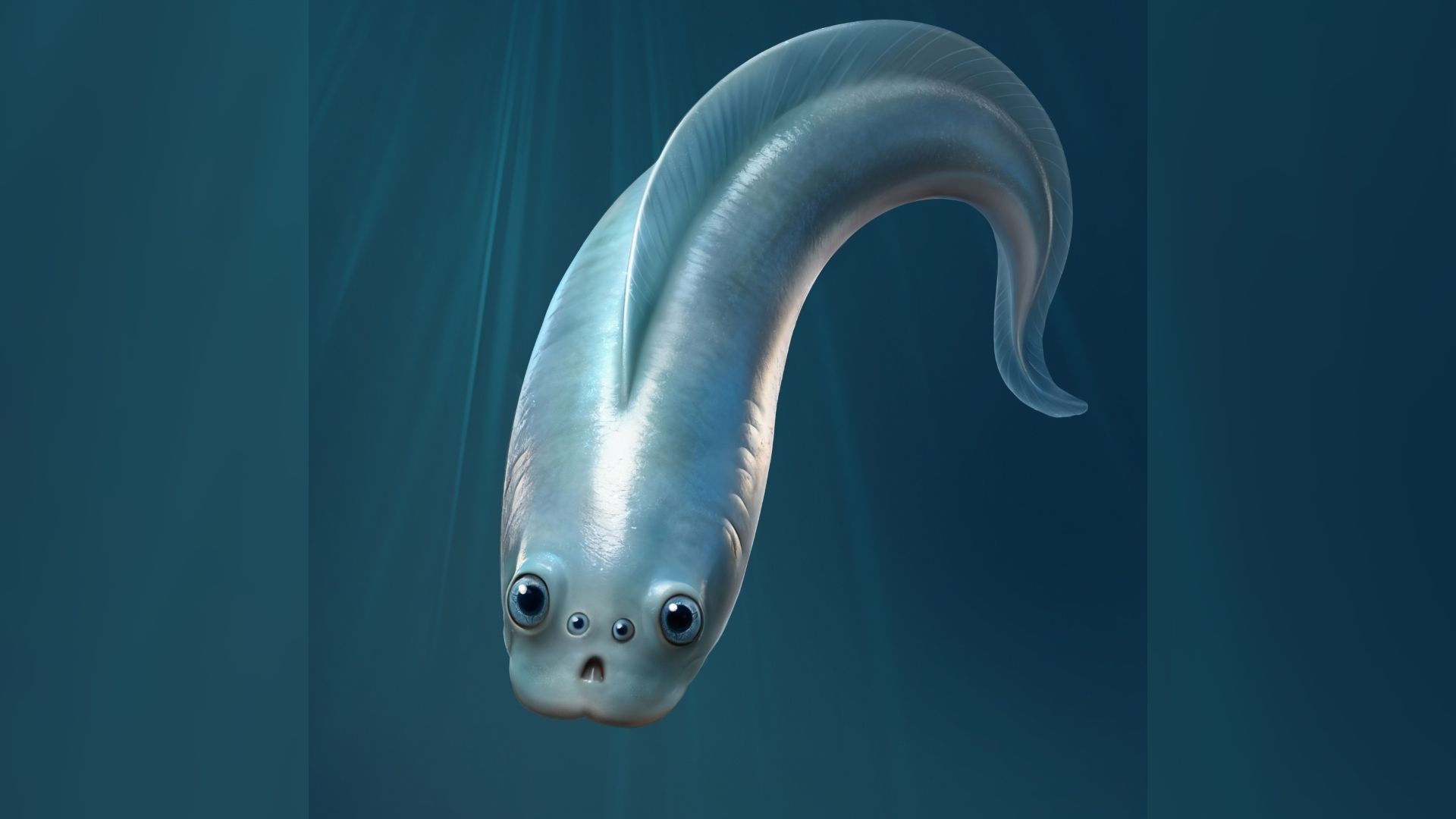
Half a billion years ago, our vertebrate ancestors weren’t just primitive – they were equipped with an evolutionary advantage we’ve long forgotten: four eyes. Newly analyzed fossils from China reveal that these early fish, known as myllokunmingids, possessed two pairs of functional eyes. This discovery reshapes our understanding of early vertebrate evolution, demonstrating that visual sophistication arose far earlier than previously thought.
The Cambrian Advantage
The Cambrian period (541–485.4 million years ago) was a time of escalating predation. Soft-bodied ancestors faced growing threats in the oceans, and having more eyes likely improved their chances of survival. Researchers believe the second set of eyes provided a wider field of vision, aiding in predator detection.
The fossils, exceptionally well-preserved in the Chengjiang fossil beds in southern China, show two large eyes on either side of the head, alongside a smaller, fully functional pair positioned between them. The team confirmed these structures were not vestigial; they had lenses and light-absorbing pigments, meaning they formed images.
From Four Eyes to the Pineal Gland
What’s particularly striking is what happened to these extra eyes over time. Modern vertebrates—including humans—have a remnant of this ancient feature in the pineal gland. In living fish, reptiles, and amphibians, this manifests as a parietal eye or “third eye” that detects light but doesn’t form images.
The study suggests the pineal gland evolved from a fully functional second pair of eyes. Early vertebrates used this structure for vision; later, it shrank and lost its imaging capabilities, instead becoming crucial for regulating sleep through melatonin production.
Why This Matters
This discovery underscores how evolution isn’t always a straight line. Traits once vital for survival can be repurposed over millions of years. It also highlights the importance of exceptional fossil finds like these, which provide rare insight into the soft-bodied anatomy of ancient creatures.
“This changes how we think about the early evolution of vertebrates,” says Jakob Vinther, co-author of the study. “It turns out our ancestors were visually sophisticated animals navigating a dangerous world.”
The four-eyed myllokunmingids weren’t just cute; they were well-adapted to a dangerous world. Their evolutionary legacy lives on in our own brains, reminding us that even the most seemingly primitive creatures can possess surprising complexity.