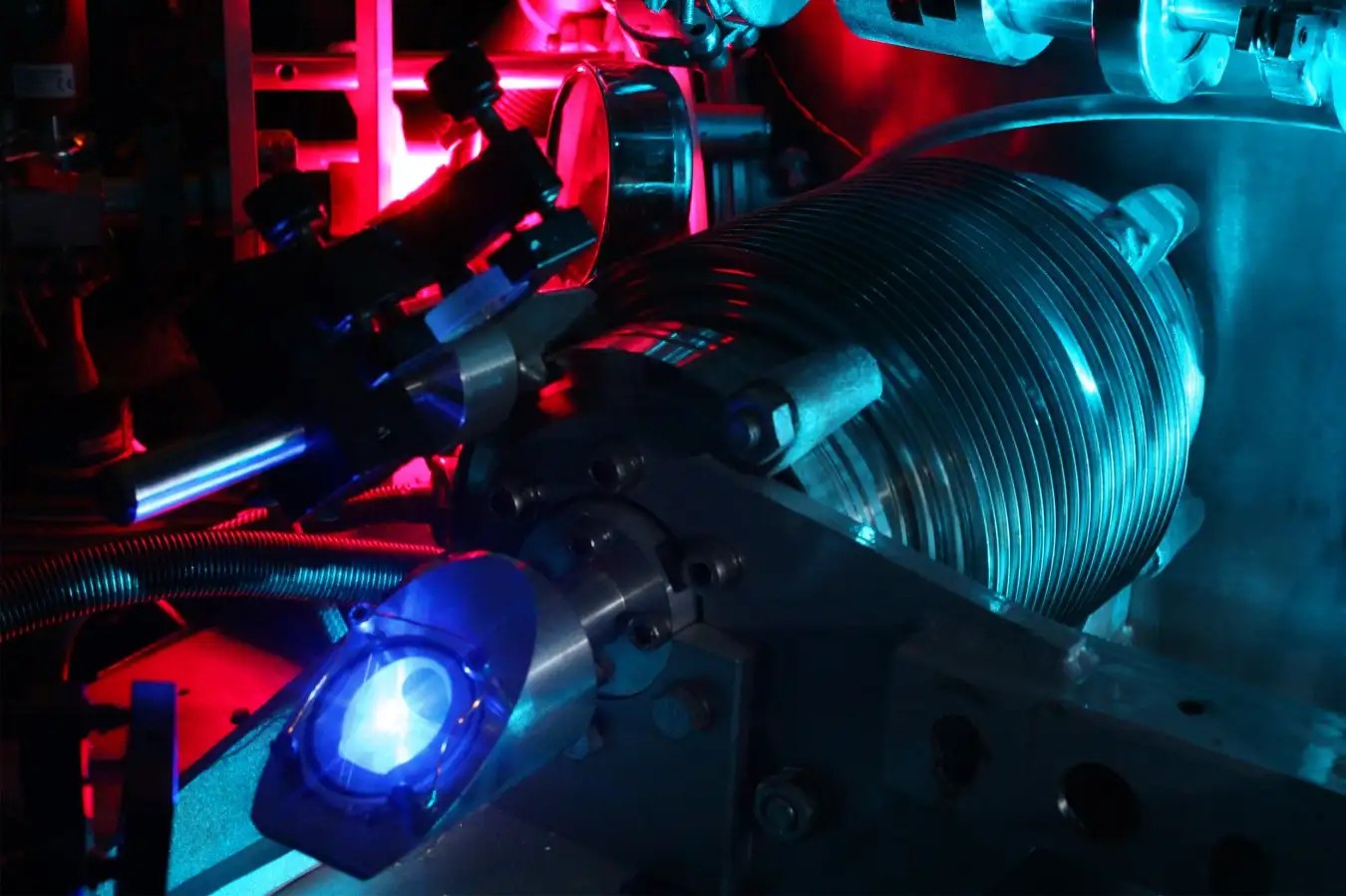
For over a decade, a discrepancy in the measurements of the proton’s size has unsettled the world of particle physics. Now, through high-precision laser experiments, researchers appear to have finally resolved this “proton radius puzzle,” confirming that the fundamental building block of our universe is smaller than previously believed.
The Decade-Long Discrepancy
Until 2010, the scientific community operated under a stable understanding of the proton: a particle composed of three quarks with a well-established radius. However, that stability was shattered when an experiment involving exotic hydrogen atoms suggested the proton was approximately 4% smaller than the established value.
This discrepancy created a crisis in physics. Scientists were forced to ask whether the error lay in experimental technique or if the mismatch signaled “new physics”—the existence of undiscovered particles or forces that standard models could not explain.
How the Measurement Works
To understand why measuring a subatomic particle is so difficult, one must look at the relationship between the proton and the electron. In a hydrogen atom, the proton (positively charged) and the electron (negatively charged) interact via electromagnetic forces.
The exact size of the proton influences how much energy is required for an electron to jump between different energy states. By using ultra-precise lasers to observe these electronic transitions, physicists can work backward to calculate the proton’s physical dimensions.
Two Paths to One Conclusion
The resolution came not from a single breakthrough, but from the convergence of two independent, highly complex experiments:
- Methodology: One team utilized specialized laser setups to measure electron transitions that had never been recorded before.
- Consistency: Despite using different experimental approaches, both teams arrived at the same result: a proton radius of approximately 0.84 femtometres (less than one quadrillionth of a metre).
“The proton radius should be a universal property; it should give the same result no matter how you look at it.” — Juan Rojo, Vrije University Amsterdam
The fact that two distinct methods—each with its own unique potential for error—produced the same number provides the scientific community with a high level of confidence that the “puzzle” is officially solved.
Why This Matters for the Future of Physics
While resolving the size of the proton might seem like a matter of mere bookkeeping, it has profound implications for how we search for the unknown.
- Testing Quantum Electrodynamics (QED): The precision of these new measurements allowed researchers to test QED—our most successful mathematical model of electromagnetism—to an accuracy of 0.5 parts per million. So far, the model holds firm.
- A New Tool for Discovery: Unlike massive particle colliders (such as the LHC) which are designed to find heavy, high-energy particles, these “tabletop” laser experiments are uniquely suited to hunting for extremely light, elusive particles that might otherwise remain undetected.
By pinning down the proton’s size, physicists have cleared the “background noise” of the known universe, allowing them to more accurately search for the subtle signals of new physical laws.
Conclusion: By reconciling long-standing measurement discrepancies through independent laser experiments, physicists have confirmed a smaller proton radius, providing a stable foundation for future searches for new particles and forces.